The global automotive industry is undergoing a powerful transformation. Battery Electric Vehicles (BEVs) have dominated the market for a long time. However, a new technology is gradually asserting its position: the EREV architecture, also known as the Extended Range Electric Vehicle [1].
Many experts believe that EREV is the key to solving range anxiety. It combines the convenience of gasoline vehicles with the advantages of electric vehicles. This is a significant step forward in the roadmap for green energy transition [2].
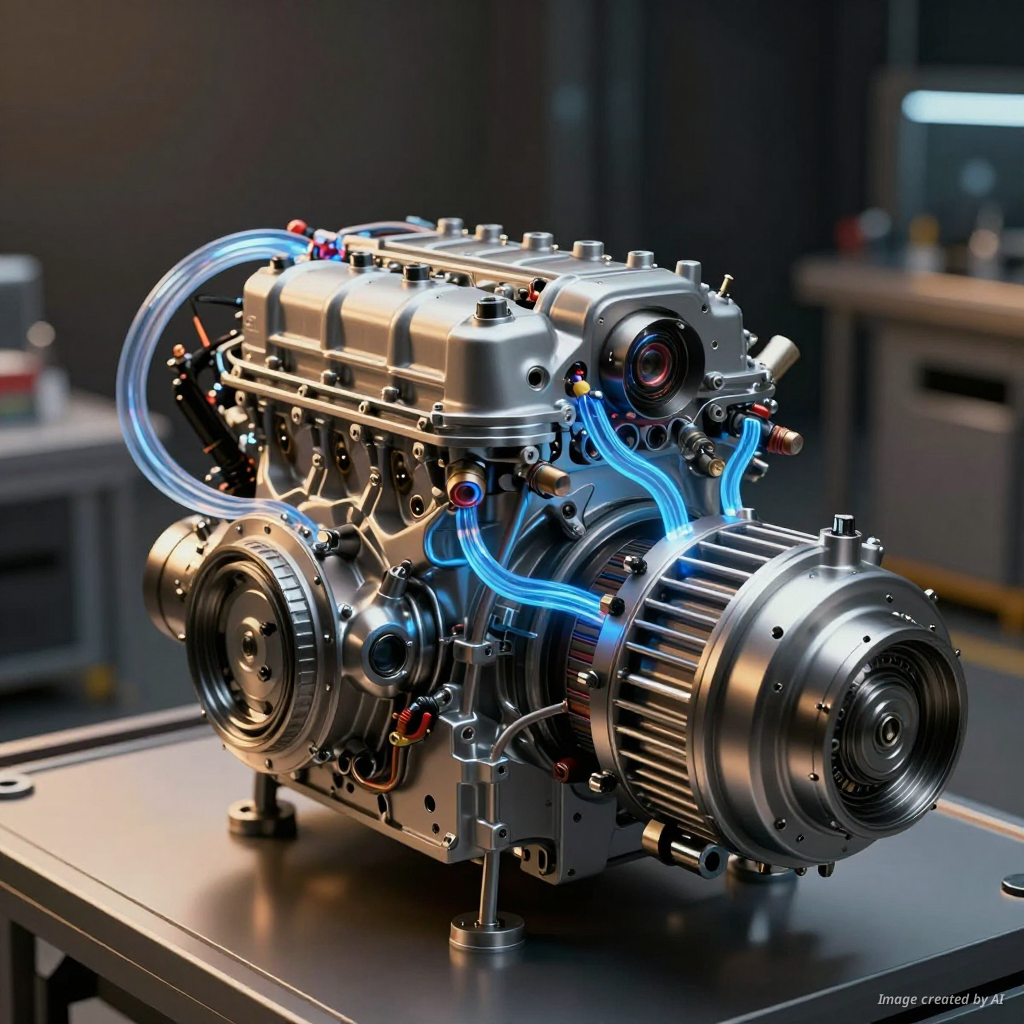
Understanding EREV architecture
EREV stands for Extended Range Electric Vehicle. In essence, it is a true electric vehicle. The wheels are driven solely by the electric motor [3].
The difference lies in the range extender component. It consists of a compact internal combustion engine. This engine does not directly transmit power to the wheels. Instead, it acts as a portable generator [4].
When the battery is depleted, the gasoline engine starts. It provides energy to charge the battery or supply power directly to the motor. As a result, drivers no longer have to worry about finding charging stations on long journeys [5].
Why EREV is the future of electric vehicles
The popularity of EREV is not accidental. It offers many practical benefits for modern users. Below are the main reasons why this technology is so attractive.
- Completely eliminates range anxiety.
- Reduces reliance on public charging station infrastructure.
- Optimizes battery production costs compared to pure electric vehicles.
- Provides a smooth driving experience similar to traditional electric vehicles.
You can learn more about why EREV architecture is the future of electric vehicle manufacturing to catch up on the latest technology trends. Adopting this architecture helps manufacturers balance performance and economy.
Flexibility in daily operation
In urban environments, an EREV operates like a pure electric vehicle. Users can charge at home overnight, which helps save significantly on fuel costs compared to conventional gasoline cars.
When long-distance travel is needed, the range extender comes into play. You do not need to stop for hours to charge the battery. Simply refuel with gasoline, and you can continue your journey immediately.
This flexibility is the biggest advantage of EREV. It removes the psychological barriers for customers who are still hesitant to switch to electric vehicles. This is the optimal electric vehicle design: the future of the automotive industry that many car manufacturers are aiming for.
Impact on infrastructure and the environment
Developing EREV helps reduce the pressure on the national power grid. Instead of requiring high-capacity super-fast charging stations, users can charge slowly at home. This helps keep the power infrastructure more stable.
In terms of the environment, EREV still significantly reduces emissions. The gasoline engine in an EREV usually operates within an optimal RPM range. Consequently, fuel consumption and emissions are much lower than those of traditional gasoline vehicles.
Challenges and development prospects
Despite its many advantages, EREV still faces some challenges. Maintaining a dual system requires higher technical expertise. However, with the advancement of technology, these issues are gradually being overcome.
Many major car manufacturers have begun investing heavily in EREV. They view it as the perfect intermediary solution, helping users gradually get accustomed to electric vehicles before transitioning to fully electric ones.
The future of the automotive industry does not lie in a single technology. EREV acts as an important bridge, accelerating the green transition process more quickly and effectively.
Conclusion
The EREV architecture is truly a breakthrough. It combines the best of both the gasoline and electric vehicle worlds. With its convenience and efficiency, EREV deserves to be the future of electric vehicle manufacturing.
Vietnamese consumers will soon have access to many models using this technology. This is an opportunity to improve quality of life and protect the environment. Let us look forward to the positive changes that EREV will bring in the near future.
Additional Information
- EREV [1]: Extended Range Electric Vehicle is a type of vehicle that uses an electric motor to drive the wheels, combined with a small internal combustion engine acting as a generator to extend the driving range.
- BEV [2]: Battery Electric Vehicle is an electric vehicle that uses energy entirely from a storage battery, has no internal combustion engine, and requires charging from an external source.
- Electric Motor [3]: A device that converts electrical energy into mechanical energy to rotate the wheels, providing fast acceleration and smooth operation for modern vehicles.
- Range Extender [4]: A component in an EREV that includes a gasoline engine and a generator, helping to provide additional energy to the battery when the vehicle is operating over long distances.
- Green Transition [5]: The process of replacing vehicles that use fossil fuels with vehicles that use clean energy to minimize negative impacts on the global environment.