The Vietnamese automotive industry is undergoing a significant transformation. From traditional assembly, businesses are moving toward localization and electric vehicles. However, the automotive supply chain is inherently complex, involving tens of thousands of components. Ensuring transparency has become a critical challenge for managers.
Blockchain technology has emerged as a groundbreaking solution to address these challenges. By creating a decentralized ledger, Blockchain helps record every transaction in an immutable manner. This ensures absolute authenticity for the entire supply process [1].
Why the automotive supply chain needs Blockchain
The lack of transparency regarding component origins is a pressing issue. Counterfeit or low-quality parts can easily penetrate the market. This poses risks to users and affects brand reputation.
Blockchain provides a single "version of the truth" for all parties. From Tier 3 suppliers to OEM assemblers, all data is synchronized. Businesses can learn more about Blockchain solutions for supply chains to optimize operations [4].
Traceability and anti-counterfeiting
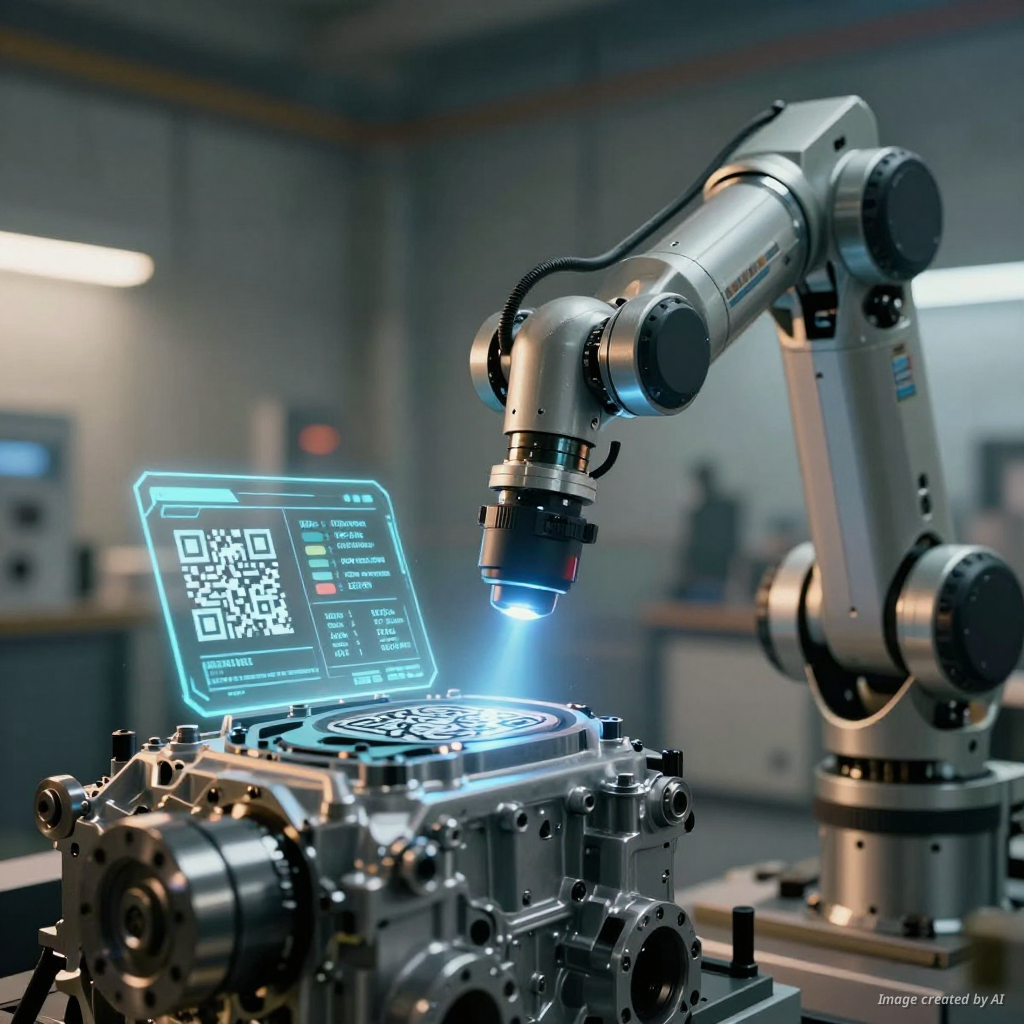
Each automotive component today can be assigned a digital identifier. QR codes or RFID chips help connect components directly to the Blockchain. This data records the journey from the raw material factory to the distribution dealership.
When a technical issue arises, manufacturers can precisely identify the faulty batch. Instead of recalling the entire vehicle, they only need to address the affected units. This significantly reduces costs and the time required for troubleshooting.
Electric vehicle battery passports and ESG standards
Electric vehicles are the future of the Vietnamese automotive industry. However, battery production requires strict ESG standards. Markets such as Europe have mandated the application of "Battery Passports" starting in 2027 [1].
Blockchain stores the entire lifecycle of a battery. From raw material extraction to the recycling process, all information remains transparent. This helps electric vehicle exporters easily overcome international technical barriers.
Technology solutions in Vietnam
Vietnam currently has several robust enterprise Blockchain platforms. Entities such as FPT akaChain are supporting businesses in digitizing their processes [3]. Applying this technology helps domestic enterprises participate more deeply in the global value chain.
Additionally, the Vietnam Blockchain Association is also promoting digitalization standards [2]. The combination of government policy and technology will drive the sustainable development of the supporting industry.
Logistics management and customs procedures
Logistics is a vital link in the automotive supply chain. Traditional paperwork often causes delays at seaports. Blockchain enables the automation of electronic invoices and bills of lading.
Customs clearance time can be reduced from several days to just a few hours. This helps optimize the flow of goods and reduces storage costs. You can refer to AI for smart vehicle predictive maintenance to combine with Blockchain in operational management [5].
Challenges and opportunities for businesses
Initial investment costs remain the biggest barrier. Integrating IoT devices to collect data for the Blockchain requires significant capital. Furthermore, the technological proficiency of small and medium-sized suppliers is still uneven.
However, pressure from export markets is an undeniable driver. Major automakers are demanding higher transparency from their suppliers. Businesses that undergo digital transformation early will hold a significant competitive advantage.
The future of a transparent automotive industry
Blockchain is not just a trend but the foundation of Industry 4.0. Transparency helps build trust between manufacturers and consumers. In the future, vehicle maintenance history will also be stored on the Blockchain.
This helps eliminate odometer tampering in used cars. Used car buyers will be more confident regarding the actual quality of their vehicles. This is a major step toward a healthy automotive market in Vietnam.
More Information
- MOBI (Mobility Open Blockchain Initiative): A global alliance building open standards for Blockchain applications in the transportation and automotive supply chain industries [1].
- Vietnam Blockchain Association (VBA): An organization promoting the application and development of Blockchain technology in Vietnam, connecting businesses with national digitalization solutions [2].
- FPT akaChain: An enterprise Blockchain platform developed in Vietnam, supporting traceability and data identification for manufacturing and retail industries [3].
- IBM Blockchain: An enterprise-grade technology solution that enhances transparency and efficiency in global supply chain management [4].
- Smart Contracts: Code snippets that automatically execute transactions when conditions are met, helping to eliminate intermediaries in supply chain management [5].