The automotive industry is at a historic turning point thanks to the rise of artificial intelligence. In particular, Generative AI is no longer a science fiction concept but has become a powerful tool for designers and R&D engineers. This technology is fundamentally changing how we envision and manufacture vehicles.
The transition from traditional CAD processes to algorithm-based design helps significantly shorten product development time. Instead of taking years to perfect a car model, manufacturers can now generate thousands of optimal options in just a few days [2].
Shifting Mindsets in Concept Sketching
Previously, the conceptual sketching process relied entirely on the creativity and hand-drawing skills of the designer. Today, Generative AI allows designers to input technical specifications directly into the system. Models like Midjourney or Stable Diffusion help transform abstract ideas into detailed concept images [1].
The Toyota Research Institute has pioneered the integration of technical constraints into AI. The system not only creates an aesthetic appearance but also ensures that factors such as the drag coefficient and cabin space meet standards from the very first step. This helps minimize conflicts between the design and engineering departments [1].
Structural Optimization and Vehicle Weight Reduction
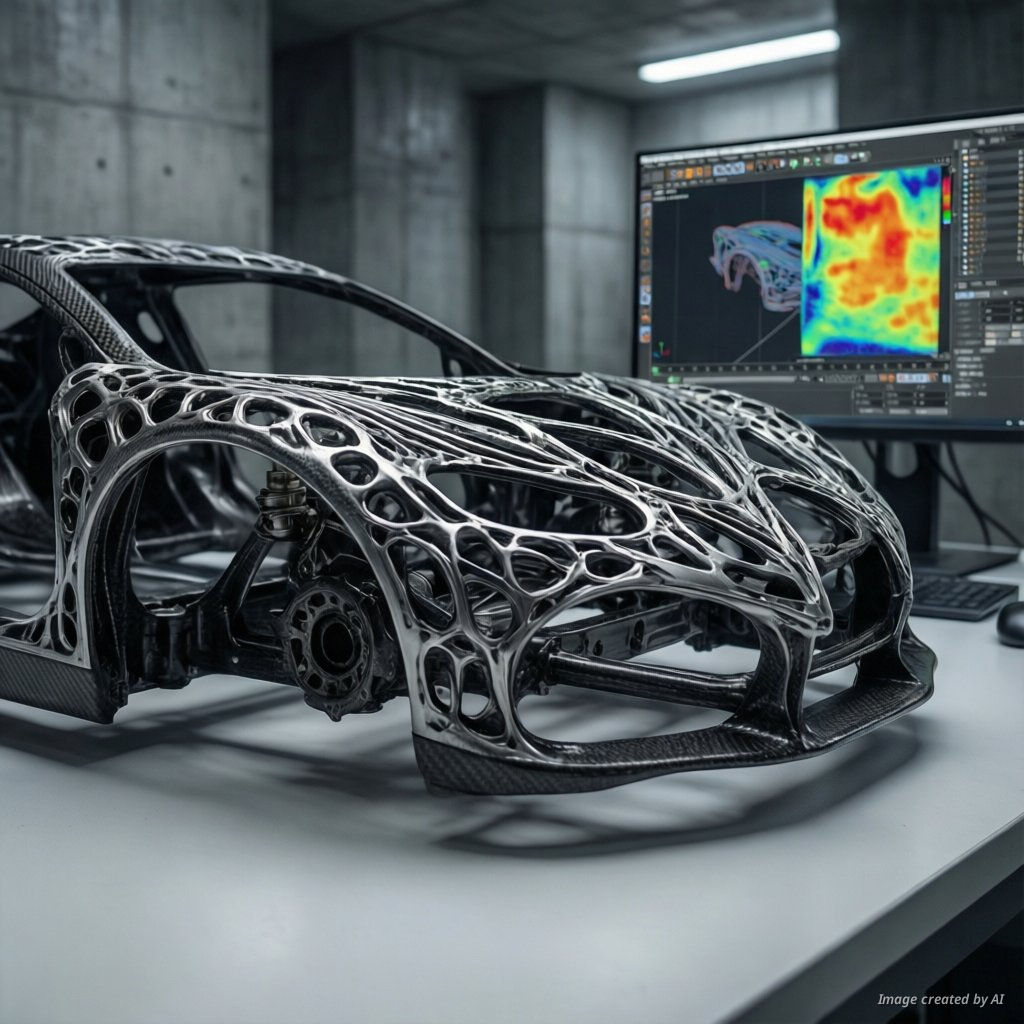
For electric vehicles, weight is a vital factor determining driving range. Generative Design technology allows AI to calculate stress distribution on the chassis. As a result, organic structures resembling biological skeletons are formed [3].
These structures completely eliminate excess material while maintaining maximum rigidity. Applying AI helps reduce component weight by 10% to 40% compared to traditional methods. This is key for automakers to optimize energy efficiency for future electric vehicle lines.
Improving Aerodynamics Through Numerical Simulation
Aerodynamics directly affects cabin noise and energy consumption. Generative AI combined with CFD models helps analyze airflow around the vehicle body in real-time. The system automatically adjusts design lines to achieve the most optimal drag coefficient [2].
Applying this technology brings great benefits to R&D engineers in Vietnam. It helps domestic enterprises like VinFast shorten the development cycle of new vehicles to 18-24 months. You can learn more about user-centric car interior design to better understand how to optimize the user experience.
Challenges and Opportunities in the Vietnamese Market
Vietnam is in a phase of strong green transition with the goal of reaching net-zero emissions by 2050. The emergence of AI technology companies like VinAI and FPT Smart Cloud creates a solid foundation for the smart automotive industry [2]. However, the biggest challenge remains the workforce.
The automotive industry needs engineers with a hybrid mindset between traditional mechanical engineering and data science. In addition, integrating AI-generated designs into mass production processes requires strict control. Engineers need to ensure that every detail created by AI can be produced using existing stamping or casting technologies [3].
The Future of Smart Automotive Design
Generative AI does not replace humans but becomes a powerful partner. It frees designers from repetitive tasks. Consequently, they have more time to focus on user experience and personalization within the cabin [1].
Applying AI in R&D is not just a trend but a mandatory requirement for global competition. Vietnamese businesses need to invest heavily in data infrastructure and engineer training. You can refer to AI for smart car predictive maintenance to see the synchronization in the current automotive technology ecosystem.
More Information
- Generative AI: A branch of artificial intelligence that uses algorithms to automatically create new content, including images, 3D models, and source code based on specific input parameters [1].
- Generative Design: An engineering design process in which software automatically generates multiple optimal design options based on constraints regarding materials, weight, and cost [2].
- CFD (Computational Fluid Dynamics): A numerical simulation method that uses computers to analyze and predict fluid flow, which is especially important in optimizing automotive aerodynamics [3].
- R&D (Research and Development): Research and development activities, playing a core role in creating new technologies and improving products in the automotive industry [4].
- HMI (Human-Machine Interface): An interactive interface between humans and machines, focusing on optimizing control experiences and information in smart car cabins [5].