When it comes to electric vehicles (EVs), many people often focus solely on battery capacity or motor power. However, there is a silent factor that plays a decisive role in operational efficiency: aerodynamics. This is considered the secret weapon that helps modern EV models optimize driving range and enhance the user experience [1].
Aerodynamics is more than just highly aesthetic design lines. It is the science of how air moves around the vehicle body when operating at high speeds. For electric vehicles, reducing air resistance helps save significant energy, especially on the expressways that are developing rapidly in Vietnam [2].
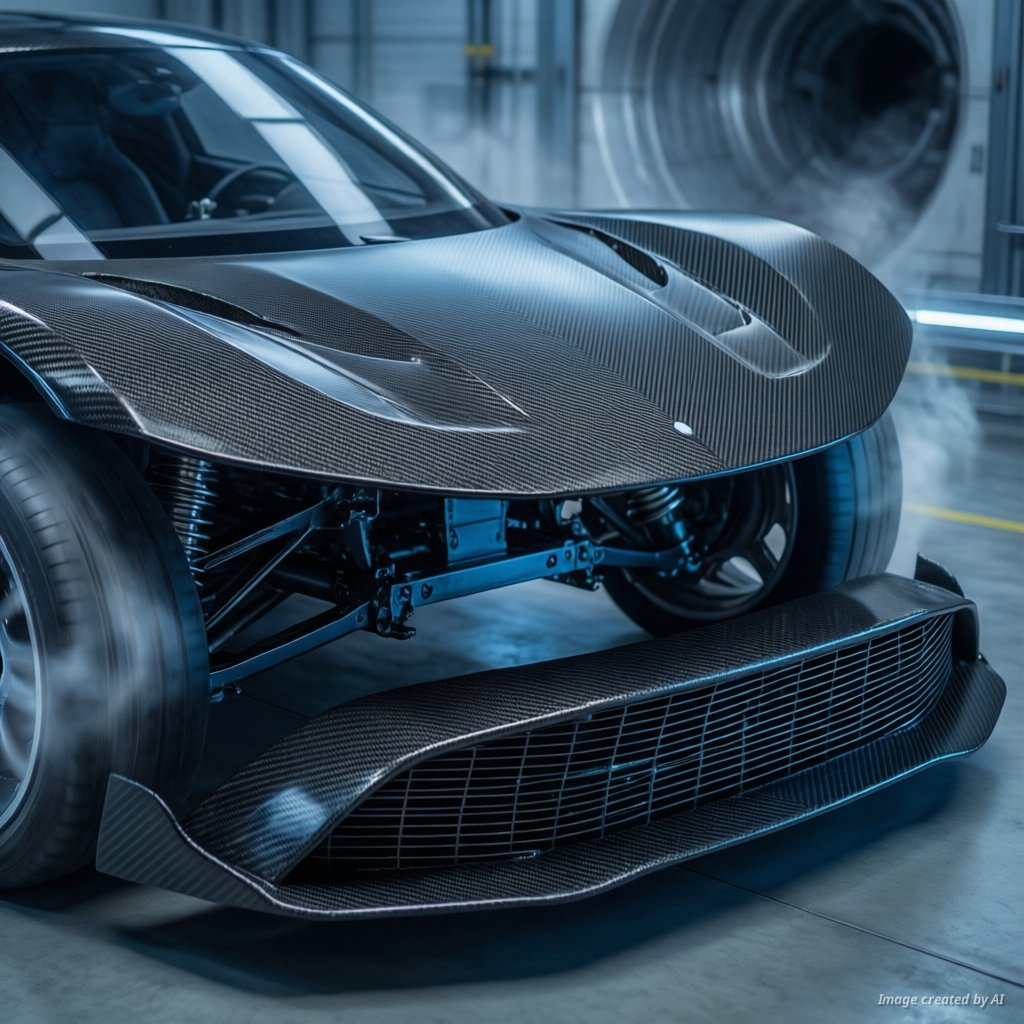
Why aerodynamics is important for electric vehicles
At low urban speeds, tire rolling resistance is the primary energy-consuming factor. But when the vehicle accelerates above 80 km/h, air resistance becomes the greatest "enemy." It accounts for 50% - 60% of the vehicle's total energy consumption [1].
Reducing the drag coefficient ($C_d$) even slightly yields significant results. Specifically, a 10% reduction in the drag coefficient can extend the driving range by 3% to 5% without changing the battery. You can learn more about aerodynamic design in automobiles to better understand how engineers optimize the vehicle body. This helps address range anxiety for Vietnamese users.
Technical solutions on modern electric vehicles
Automakers are applying many advanced technologies to "slice through the wind" more effectively. Here are the key differences compared to traditional gasoline vehicles:
- Flat underbody: Electric vehicles do not need complex exhaust systems. The underbody is completely sealed, allowing airflow to pass through more smoothly.
- Closed front end: Without the need for a large grille like internal combustion engine vehicles, the front of an EV is smoothed out to reduce turbulence.
- Flush door handles: This design helps keep the body seamless, eliminating unnecessary air vortices [2].
Optimizing the cabin experience
Aerodynamics not only helps the vehicle travel further but also makes it quieter. Because electric motors are inherently very quiet, wind noise becomes the dominant sound in the cabin. Optimizing exterior details helps minimize annoying wind turbulence. This provides a quiet, relaxing space for passengers on every journey.
Users can now personalize the head-up display (HUD) on the windshield to monitor operating parameters intuitively. The combination of smart display technology and aerodynamic design creates a perfect vehicle. You can also explore generative AI in future car design to see how technology shapes the look of vehicles.
Reality in the Vietnamese market
With the expansion of the North-South expressways, the demand for long-distance travel by electric vehicle is increasing. Brands like VinFast have focused on applying international aerodynamic standards to their products [1]. Models like the VF 8 and VF 9 are designed with a streamlined shape to balance aesthetics and performance.
Optimizing aerodynamics is not just a trend but a mandatory requirement. It helps compensate for the electrical energy consumed by air conditioning systems operating in the hot climate of Vietnam. This is the "secret weapon" that makes electric vehicles more practical in the eyes of consumers.
More Information
- Drag Coefficient (Cd): A metric measuring the degree of air resistance against a vehicle when moving. The lower this index, the more smoothly the vehicle glides and the more energy it saves.
- Active Air Shutters: An intelligent air vent system that automatically closes when driving at high speeds to reduce wind resistance and opens when cooling for the motor or battery is needed.
- Aero Wheels: Wheels designed with a flatter surface, preventing air from entering the wheel wells, which would otherwise cause turbulence and increase drag.
- Range Anxiety: The psychological concern of EV users about the vehicle running out of battery before reaching a charging station or their desired destination.
- Smooth Underbody: A completely sealed underbody design that helps airflow pass smoothly under the vehicle, minimizing air turbulence.