The automotive market in Vietnam is witnessing a strong shift toward the era of connected cars. For mobile app developers, this is a fertile ground for creating breakthrough solutions. Building a smart car management ecosystem is not just about utility features; it is also a challenge of user experience and data security.
Currently, Vietnamese users are increasingly demanding higher levels of interaction with their vehicles. Applications such as the VinFast app have set a new standard for remote vehicle control [1]. Developers need to grasp this trend to optimize their products.
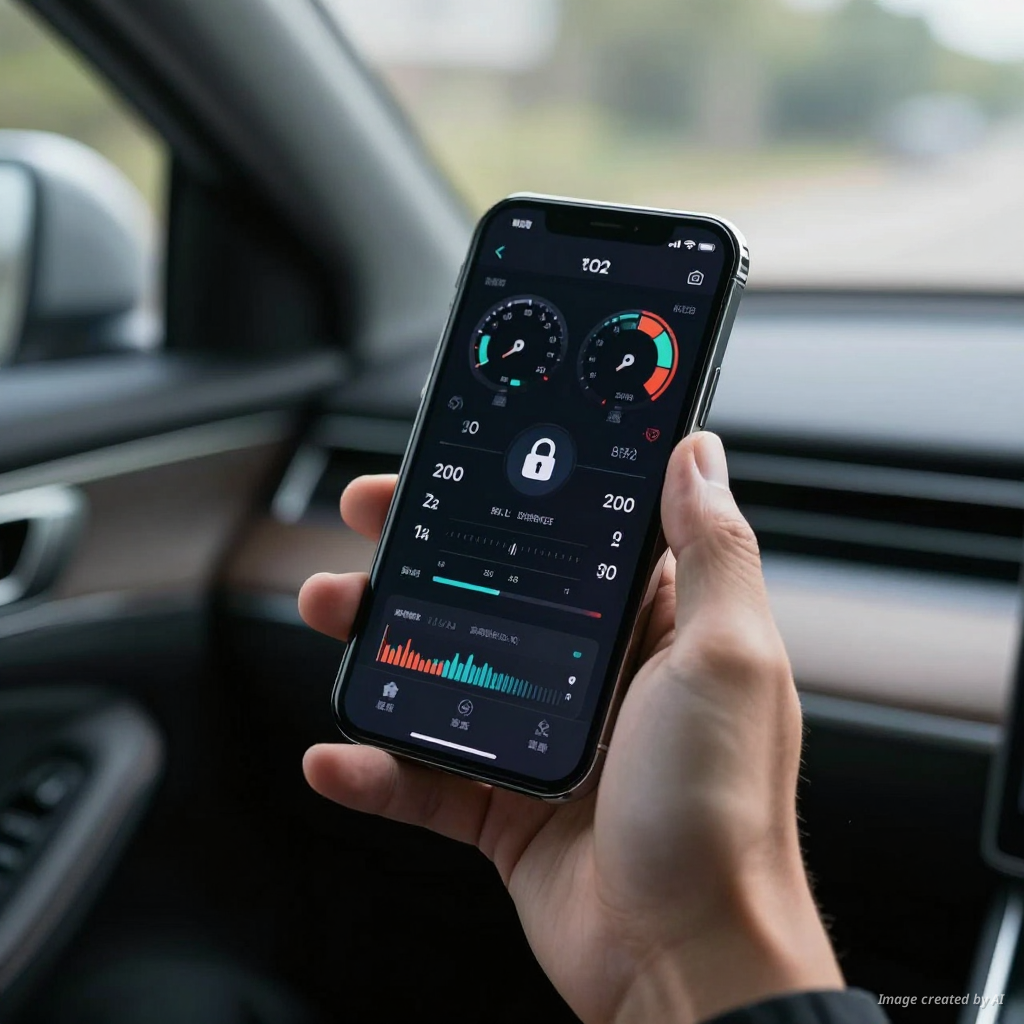
The importance of the connected car ecosystem
A connected car is more than just a means of transport. It is a mobile smart device that collects vast amounts of data. Developers need to integrate communication protocols to synchronize data between the vehicle and the phone [1]. This allows car owners to accurately monitor battery status, location, and trip history.
The application of technology in the potential electric pickup truck market in Vietnam also opens up many new directions. Developers can leverage this infrastructure to create personalized features. For example, car personalization: customizing to your lifestyle is becoming a strong trend among young people.
Core features required in the application
To be successful, a car management app needs to focus on essential technical features. Below are the requirements that Vietnamese users care about most:
- Remote control: Start the engine, turn on the air conditioning, or lock doors remotely [1].
- Trip monitoring: Use GPS positioning technology to manage routes, which is especially important for commercial transport vehicles [3].
- Smart navigation: Integrate online maps with traffic warnings such as Vietmap Live to avoid speed trap fines [2].
- Fault diagnosis: Read OBD-II error codes to notify the car owner of timely maintenance [2].
Challenges for developers in Vietnam
The biggest challenge for developers is the compatibility between hardware and software. Each car manufacturer has its own unique connection protocol. Building a cross-platform supported application requires a deep understanding of the Electronic Control Unit (ECU) [3]. In addition, compliance with legal regulations such as QCVN 31:2014/BGTVT is mandatory for trip monitoring applications [3].
Data security is also a critical factor. When an application has access to important vehicle systems, developers must ensure end-to-end encryption. All data transmitted over 4G/5G networks must be protected against cyberattack risks.
Integration trends for payments and utilities
Electronic Toll Collection (ETC) has become an indispensable part of the driving experience in Vietnam. Integrating VETC or ePass into the car management app will provide maximum convenience for users [2]. Users can check balances, top up, and view transaction history all on the same interface.
Furthermore, finding charging stations for electric vehicles is an essential feature. Developers should integrate a charging station map with a pre-booking function to optimize waiting times for car owners [1].
The future of mobile apps for cars
In the future, Artificial Intelligence (AI) will play a key role in these applications. AI can analyze driving behavior to offer fuel-saving advice or provide early danger warnings [2]. Developers should start researching the integration of Machine Learning to further personalize the user experience.
The combination of mobile applications and smart traffic infrastructure will create a revolution in how we use cars. Developers in Vietnam need to quickly seize this opportunity to create products that bring practical value to the community.
More Information
- Connected Car: A type of vehicle integrated with an internet connection module, allowing for two-way data exchange between the vehicle and mobile applications [1].
- OBD-II: An on-board diagnostic port, allowing mobile devices to read error codes and operating data from the vehicle's central computer [2].
- QCVN 31:2014/BGTVT: The national technical regulation on cruise control devices, mandatory for commercial transport vehicles in Vietnam [3].
- ETC: An electronic toll collection system, helping vehicles pass through BOT stations without stopping to pay cash [2].
- Geofencing: Technology used to create a virtual safety zone on a map; the app will send an alert if the vehicle moves outside the established range [3].