The electric vehicle (EV) industry in Vietnam is experiencing a powerful boom. Driven by domestic brands like VinFast and the participation of numerous international automakers, production scale is growing rapidly. However, this development poses a major challenge for production managers and environmental engineers regarding industrial waste management [2].
Waste control is not only a legal requirement but also a key factor in building a sustainable brand image. Businesses need to view waste as a renewable resource if they apply the right circular economy strategies [4].
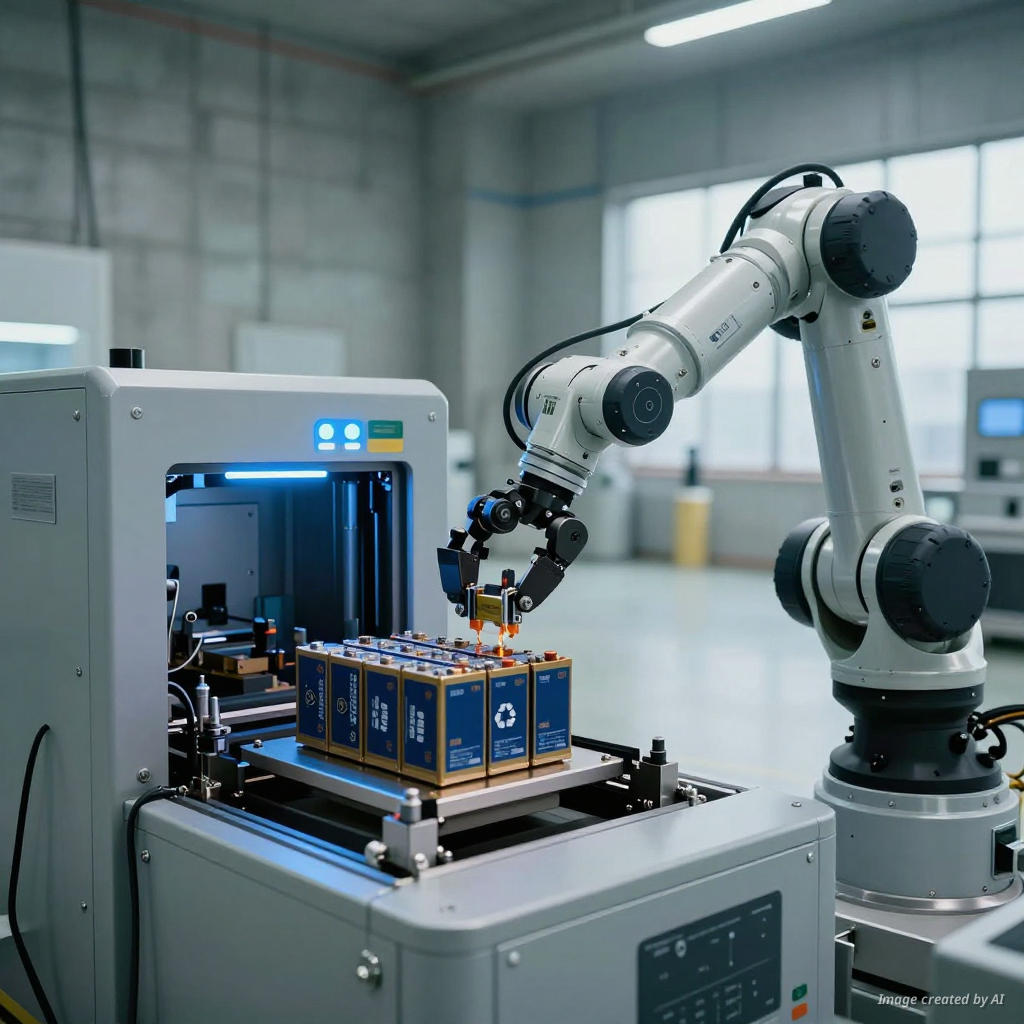
Current Status of Waste Generation in EV Production
During the EV assembly process, the volume of waste generated is diverse. We can categorize it into three main groups for easier management and processing [3].
- Common industrial waste: includes metal scrap such as steel and aluminum from frame stamping, as well as excess plastics and rubber.
- Hazardous waste: includes chemical solvents, sludge from electrodeposition (ED) coating stages, and metal surface treatment chemicals.
- Defective or expired lithium-ion batteries: this is a specific type of waste containing heavy metals such as Cobalt, Nickel, and Manganese, requiring strict processing procedures to avoid environmental pollution [2].
Legal Framework and Corporate Responsibility
The Vietnamese government has issued many important documents to guide green production. Notably, the 2020 Law on Environmental Protection and Decree 08/2022/NĐ-CP have officially implemented the Extended Producer Responsibility (EPR) mechanism [1]. Manufacturers and importers of batteries and vehicles are responsible for collecting and recycling discarded products according to stipulated ratios.
Additionally, the Government Portal also emphasizes Decision 876/QĐ-TTg. This program aims for a 100% transition to green energy vehicles by 2050, requiring factories to adopt clean production processes now [1].
Green and Smart Production Strategies
To minimize waste, managers need to apply "Eco-design" thinking. Designing EVs and battery packs modularly makes the dismantling and sorting of components simpler when the product reaches the end of its lifecycle [4]. You can refer to further information on sustainable EV design with lightweight and easily detachable materials to optimize this process.
At the factory, material circulation is a vital strategy. Businesses should invest in systems to collect and recycle 100% of metal scrap. Furthermore, applying wastewater circulation systems in the electrodeposition process will help significantly reduce water consumption and liquid waste discharge into the environment [3].
Solutions for EV Battery Processing and Recycling
Lithium-ion batteries represent the biggest challenge but also the greatest opportunity. When battery capacity drops below 70-80%, they are no longer suitable for vehicles but remain very effective for Energy Storage Systems (ESS) [2]. This is known as a "second-life" application.
For batteries that cannot be reused, hydrometallurgy is an superior choice. This method uses chemical solutions to recover precious metals like Lithium, Cobalt, and Nickel with purity levels of up to 95% [3]. Exploring efficient and safe lithium-ion battery recycling technology in greater depth will provide environmental engineers with a more practical perspective.
Challenges and Development Directions
The biggest current challenge is the initial investment cost for high-tech recycling lines. Moreover, the nationwide collection network for old batteries is not yet complete. The Ministry of Natural Resources and Environment is actively developing national technical standards to support businesses [4].
In the future, building eco-industrial parks will be an inevitable trend. In these parks, vehicle assembly plants and component recycling plants will be closely connected, creating a closed-loop circular value chain. This not only helps minimize waste but also optimizes production costs for businesses [5].
More Information
- EPR (Extended Producer Responsibility): An environmental policy requiring manufacturers to be responsible for the entire product lifecycle, including collection and recycling after consumer disposal [1].
- Lithium-ion battery: A common rechargeable battery type in EVs, containing many precious metals and toxic chemicals, requiring specialized processing to avoid soil and water pollution [2].
- Hydrometallurgy: A recycling method using chemical solutions to separate and recover valuable metals from used batteries with very high efficiency [3].
- Circular economy: An economic model focused on extending product lifecycles and minimizing waste through the reuse, repair, and recycling of materials [4].
- Second-life: The utilization of EV battery packs with reduced capacity (typically below 80%) as energy storage systems for buildings or charging stations [5].