Vietnam is at a historic turning point in its energy transition roadmap. Applying a circular economy model to the electric vehicle (EV) industry not only helps reduce emissions but also opens up potential for green job creation [1].
This model focuses on extending product lifecycles through the reuse and recycling of battery materials. This is key to realizing the Net Zero commitment by 2050 [4].
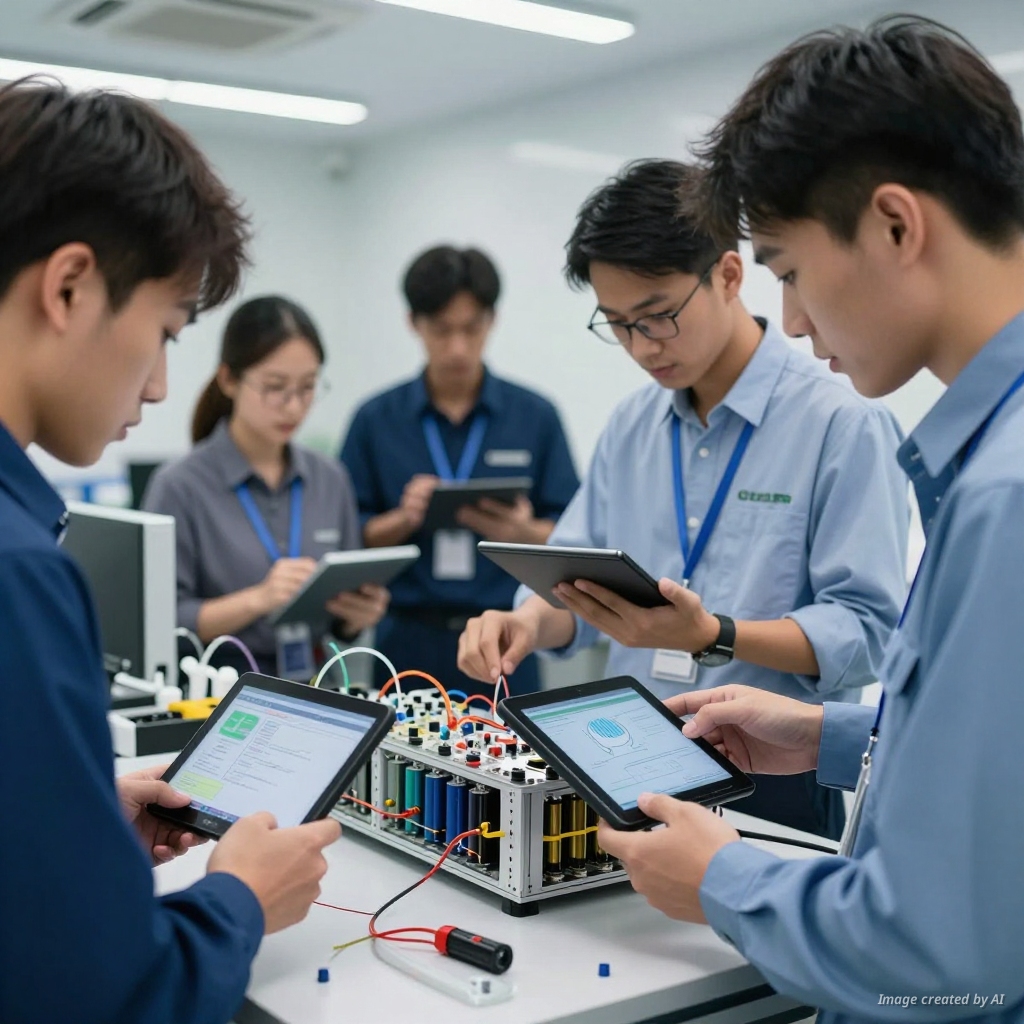
The role of the circular economy in the EV industry
The circular economy in the EV industry in Vietnam is more than just a theoretical concept; it is a practical strategy to optimize resources [3]. Instead of discarding old batteries, we can repurpose them for secondary energy storage systems.
This process requires close coordination between the government and non-governmental organizations. Developing a circular economy linked to green growth will create a solid foundation for a sustainable future.
The emergence of new green job categories
The shift to electric vehicles is creating a new wave of green jobs in the economy. These positions require high professional skills and the ability to adapt quickly.
- Circular Design Engineer: Experts focused on designing electric vehicles that are easy to disassemble and recycle.
- Battery Management Technician: Personnel responsible for inspecting and classifying used batteries.
- ESS System Operations Specialist: Engineers who integrate old batteries into solar or wind energy storage systems.
Furthermore, education and awareness regarding the circular economy in the Vietnamese EV industry play an important role in preparing a high-quality workforce.
Social impact and labor transition
The transition to electric vehicles brings positive social impacts to the community. First and foremost, it helps improve air quality in major cities like Hanoi and Ho Chi Minh City [1].
Additionally, retraining the traditional workforce is a top priority. Mechanics who repair internal combustion engine vehicles need to be equipped with skills in high-voltage electricity and EV software. This helps ensure they are not left behind during the economic development process [2].
Challenges in creating green jobs
Despite the immense potential, Vietnam still faces many barriers. The shortage of highly skilled technical personnel is a significant challenge for businesses today.
Moreover, the legal framework for the collection and processing of waste batteries needs further refinement [3]. The government needs to soon issue specific technical standards to support businesses. You can learn more about investing in EV battery recycling infrastructure: opportunities and challenges in Vietnam to better understand this issue.
Roadmap for the government and NGOs
The government needs to take a leading role through incentive policies. Promoting a circular economy in Vietnam requires the participation of many stakeholders. Non-governmental organizations can provide support through skills training projects for women and youth [4].
Collaboration between vocational schools and businesses is a key factor. This ensures that training programs remain closely aligned with the actual needs of the green labor market [2].
Conclusion
The EV circular economy is not only an environmental solution but also a powerful economic driver. Creating green jobs will help Vietnam achieve its sustainable development goals [1].
With careful preparation in terms of human resources and policy, Vietnam can absolutely become a bright spot for green transportation in the region. This is a journey that requires perseverance and the joint efforts of the entire society [5].
More Information
- Circular Economy: An economic model aimed at extending product lifecycles, minimizing waste, and optimizing resource use through reuse, recycling, and recovery processes.
- Green Jobs: Positions that contribute directly to protecting the environment, reducing greenhouse gas emissions, and using energy efficiently within economic sectors.
- Second-life battery: EV battery packs that have reduced capacity but are still capable of being used for stationary energy storage purposes instead of being immediately recycled.
- Net Zero: The goal of achieving net-zero emissions, meaning the amount of greenhouse gases emitted is balanced by the amount absorbed from the atmosphere.
- Reverse logistics: The process of retrieving products from consumers for reuse, recycling, or safe disposal, playing a vital role in the circular economy.