Public transportation systems are currently undergoing a massive transformation. The shift toward electric buses is no longer just a trend but a global necessity for sustainable urban mobility. Transportation managers now face the challenge of balancing infrastructure upgrades with operational efficiency to meet ambitious climate goals [2].
Electric buses offer a cleaner alternative to traditional diesel fleets. They significantly reduce greenhouse gas emissions and improve air quality in densely populated areas. As cities transition toward greener models, the integration of electric vehicles and smart cities for green transportation becomes essential for long-term success.
Defining the roadmap for electrification
Achieving a fully electric public transit network requires a clear strategic roadmap. Many governments have set aggressive targets to phase out diesel buses by 2030 [2]. Managers must align their procurement cycles with these national policies to ensure a smooth transition. This involves moving away from standard diesel-reliant operations toward sustainable, carbon-neutral alternatives.
The transition process is not uniform across all regions. It requires careful planning of charging infrastructure and grid capacity. Managers should prioritize routes that offer the highest impact on emission reduction. By shifting passengers from private cars to electric buses, cities can achieve the most significant environmental benefits [2].
The role of infrastructure and charging technology
Infrastructure is the backbone of any successful electric bus program. Without robust charging solutions, even the most advanced fleet will fail to perform. Managers must evaluate different charging scenarios, including depot charging and opportunity charging along routes [2]. These decisions directly impact the daily range and reliability of the service.
Furthermore, the debate between electric cars and public transit highlights the importance of mass transit efficiency [4]. While personal electric vehicles are popular, investing in public transit provides a more scalable solution for urban congestion. Modern transit models now incorporate flexible designs for closed residential areas and city centers [3].
Enhancing safety through smart technology
Safety remains a top priority for transit authorities. As we integrate new technologies, we must ensure that passenger security is never compromised. Advanced monitoring systems, such as high-definition network cameras, are becoming standard in modern fleets [5]. These tools help managers maintain oversight and respond to incidents in real-time.
While fully autonomous buses are still a vision for the distant future, the industry is moving toward smarter, connected systems [1]. Leveraging predictive traffic management: a new era for urban mobility allows for better scheduling and reduced wait times. By combining electric power with digital connectivity, managers can create a safer, more reliable experience for every passenger [1].
Overcoming operational challenges
Transitioning to an electric fleet introduces new operational complexities. Maintenance teams must be retrained to handle high-voltage systems and battery management. Additionally, energy costs can fluctuate, making it difficult to predict long-term operational expenses. Managers should explore innovative partnerships to stabilize these costs and ensure financial sustainability.
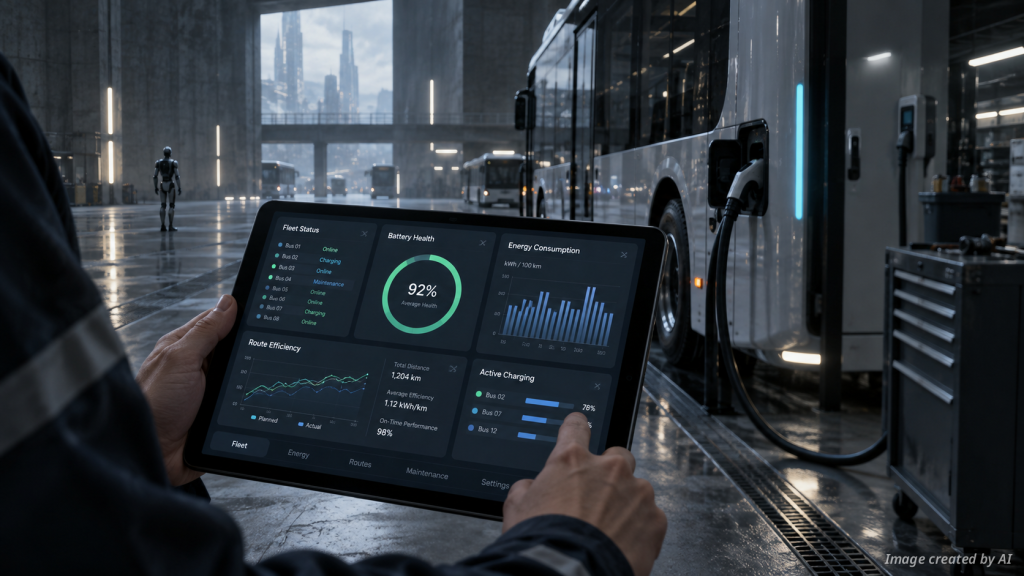
Data analytics play a crucial role in optimizing fleet performance. By monitoring battery health and energy consumption, managers can extend the lifespan of their assets. This data-driven approach is essential for meeting the 2030 targets and ensuring that the investment in electric buses pays off over the long term [2].
The future of urban mobility
The future of public transportation is clearly electric. As technology matures, we will see more efficient batteries and faster charging times. The goal is to make public transit the preferred choice for urban commuters, surpassing the convenience of private vehicles [4]. This shift will require collaboration between government agencies, technology providers, and urban planners.
Ultimately, the success of this transition depends on the leadership of transportation managers. By embracing innovation and focusing on sustainable infrastructure, they can lead their cities toward a greener future. The journey toward 100% electric transit is challenging, but the benefits for the environment and the community are undeniable [2].
More Information
- Autonomous transit: A future state of public transportation where vehicles operate without human intervention, currently considered a long-term goal for the industry [1].
- Electric bus (BEB): A public transit vehicle powered by an electric motor and battery, serving as a primary tool for reducing urban carbon emissions [2].
- Urban mobility: The collective system of transportation options within a city, focusing on efficiency, sustainability, and accessibility for all residents [3].
- Sustainable transport: Methods of travel that minimize environmental impact, often prioritizing public transit over private vehicle ownership to combat climate change [4].
- Network surveillance: The use of advanced digital camera systems to monitor transit environments, ensuring passenger safety and operational security [5].