The automotive industry is undergoing a massive digital transformation. Electric vehicles (EVs) are no longer just about battery efficiency or range. They are becoming sophisticated computing platforms on wheels. One of the most exciting developments for tech enthusiasts is the integration of augmented reality (AR) directly into the windshield.
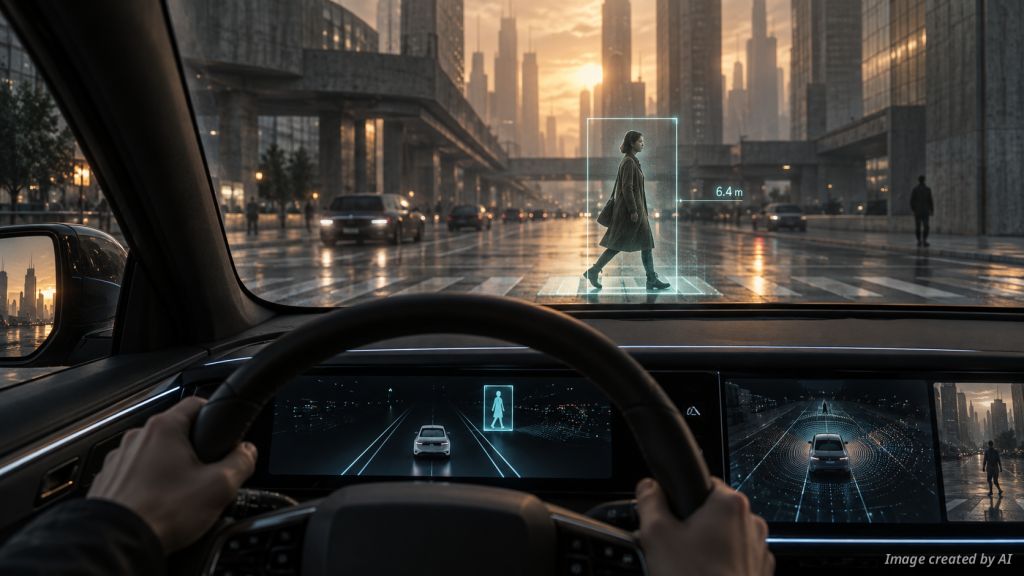
This technology transforms the standard glass into an interactive information hub. It provides critical data without forcing the driver to look away from the road. By overlaying digital graphics onto the physical world, AR enhances situational awareness and safety [1].
The rise of ar in the automotive sector
AR and virtual reality (VR) technologies are rapidly moving from niche gaming tools to essential industrial solutions. Recent market reports indicate that the global AR and VR market is poised for explosive growth. Experts predict the valuation could reach 96.32 billion dollars by 2029 [2]. This surge is driven by the need for smarter, safer, and more connected transportation systems.
Automotive manufacturers are investing heavily in these immersive technologies. The VR and AR market trends suggest that the automotive segment alone is seeing massive capital inflow. Companies are integrating these systems to solve complex safety challenges. For instance, AI-driven design tools are now being used to optimize how information is presented to drivers [3].
How ar windshields improve safety
Traditional dashboards often distract drivers. They require constant eye movement between the road and the instrument cluster. AR windshields solve this by projecting information directly into the driver's line of sight. This is often referred to as a heads-up display (HUD) on steroids.
Advanced systems can highlight lane markings, detect pedestrians, and display navigation paths in real-time. By using precision integration of lidar, radar, and camera sensors for ADAS, the vehicle can map the environment accurately. This creates a seamless blend of digital guidance and physical reality. The goal is to reduce cognitive load, allowing the driver to focus on the road ahead.
Advanced hardware and connectivity
The hardware behind these displays is becoming more compact and powerful. Modern advanced automotive glass technologies are designed to support high-resolution projections while maintaining durability [5]. These windshields are not just simple glass; they are complex optical components.
Connectivity is another pillar of this ecosystem. Vehicles must process massive amounts of data to render AR overlays accurately. This often involves high-speed 5G integration and local edge computing. Just as users seek seamless AR experiences with external devices, car manufacturers are working to make vehicle-integrated AR just as intuitive [4]. Users can also explore electric vehicles as the foundation for smart IoT mobility to understand how these systems connect to the broader smart city infrastructure.
Challenges and the road ahead
Despite the potential, several hurdles remain. Latency is the enemy of any AR system. Even a millisecond of delay between a sensor detecting an object and the display updating can be problematic. Engineers are working tirelessly to reduce this lag through optimized software architectures.
Furthermore, the design of the interface must be carefully considered. Too much information can lead to "information overload." The best systems prioritize minimalism. They only display what is necessary at the exact moment it is needed. As the technology matures, we will likely see more personalized interfaces that adapt to the driver's preferences and current driving conditions.
The future of the driving experience
The integration of AR into electric vehicle windshields represents a paradigm shift. We are moving toward an era where the car understands the driver's needs before they even ask. This technology will become a standard feature in luxury and mass-market EVs alike.
As we look toward 2030, the synergy between AI, sensor fusion, and AR will redefine the driving experience. It will make our roads safer and our journeys more enjoyable. For the tech enthusiast, this is the most exciting time to be involved in the automotive space. The windshield is no longer just a window; it is the gateway to a smarter, safer future.
More information
- Augmented reality (AR): A technology that overlays digital information, such as images or data, onto the real-world environment, enhancing the user's perception and interaction with their surroundings.
- Heads-up display (HUD): An optical display system that presents data without requiring the user to look away from their usual viewpoints, commonly used in aviation and modern automotive cockpits.
- Sensor fusion: The process of combining sensory data from disparate sources, such as cameras, lidar, and radar, to produce more accurate and reliable information for autonomous driving systems.
- Latency: The time delay between a physical event occurring and the digital system's response, which is a critical performance metric for real-time AR automotive applications.
- ADAS: Advanced driver assistance systems are electronic technologies that assist drivers in driving and parking functions, often serving as the foundation for future autonomous vehicle capabilities.