Modern road safety is undergoing a profound transformation through the integration of artificial intelligence. As global traffic density increases, the need for proactive, technology-driven solutions becomes critical for insurance companies and fleet managers alike. AI-driven surveillance systems now offer unprecedented levels of oversight, ensuring that drivers remain focused and compliant with traffic regulations.[1]
These advanced systems utilize high-resolution sensors and deep learning algorithms to monitor driver behavior in real time. By analyzing facial expressions, eye movement, and steering patterns, the technology can detect signs of fatigue or distraction before an accident occurs.[2] This shift from reactive to preventive safety is a cornerstone of modern smart traffic management solutions worldwide.
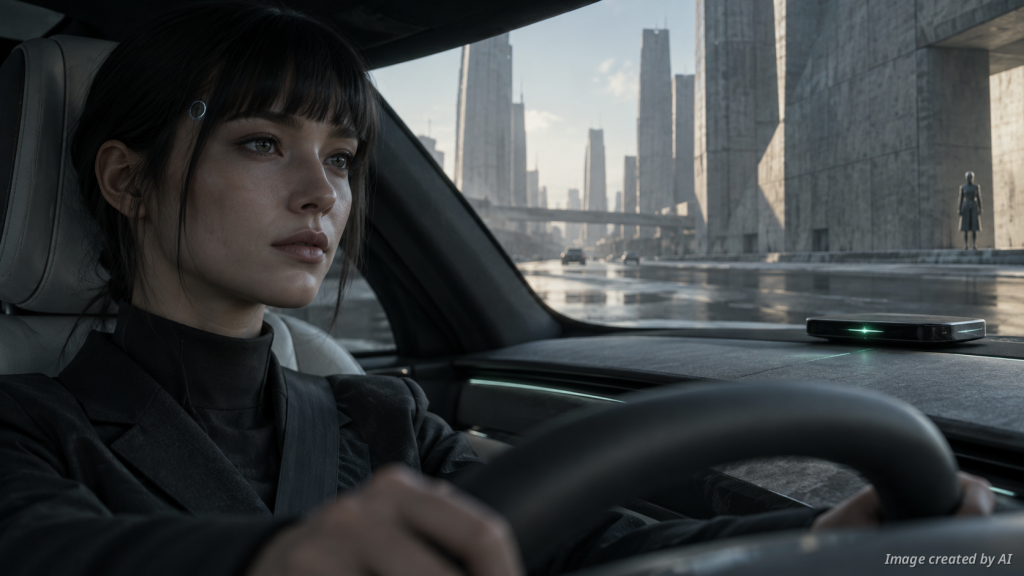
The evolution of traffic surveillance
Historically, traffic monitoring relied on manual observation or basic speed cameras. Today, the landscape has shifted toward intelligent systems that process massive amounts of data per second.[5] This evolution allows for a more nuanced understanding of urban mobility and driver conduct. By leveraging AI-based traffic monitoring, authorities can create a fairer and more transparent environment for all road users.[1]
Insurance companies are increasingly adopting these technologies to assess risk more accurately. When vehicles are equipped with AI monitoring, insurers can offer personalized premiums based on actual driving behavior rather than generalized statistics. This creates a direct incentive for drivers to maintain safer habits on the road. Furthermore, next-generation ADAS for superior active safety on every journey provides the necessary hardware foundation for these AI software solutions to function effectively.
Key components of AI safety systems
Effective AI safety systems rely on a multi-layered approach to data collection and analysis. These systems are not limited to simple speed detection; they encompass a wide range of analytical functions.[3] The primary components typically include:
- Real-time fatigue and distraction detection through facial recognition.
- Automated violation identification, including lane departure and illegal turns.[2]
- Vehicle identification and tracking across urban networks.[3]
- Incident detection to alert emergency services immediately.[3]
By integrating these components, fleet managers can oversee their entire operation from a centralized hub. This visibility ensures that safety protocols are followed consistently across all routes. It also reduces the operational risks that insurance companies often struggle to quantify.
Benefits for the insurance industry
The insurance sector stands to gain significantly from the widespread adoption of AI monitoring. Traditional risk assessment models are often static, failing to account for the dynamic nature of individual driver behavior. AI systems bridge this gap by providing continuous feedback loops.[5]
When an AI system detects a near-miss or a risky driving pattern, the data is logged and analyzed. This allows insurers to work with policyholders to improve their driving performance. Ultimately, this leads to fewer accidents, reduced claims, and a more sustainable business model for insurance providers. The application of AI to identify traffic violations also helps in creating a culture of accountability.[2]
Integrating AI with urban infrastructure
The true potential of AI safety systems is realized when they are integrated into the broader smart city ecosystem. Traffic lights, road sensors, and public transport systems can communicate with vehicle AI to optimize flow and safety.[3] This interconnectedness is essential for managing the complexities of modern urban traffic.[4]
For instance, if an AI system detects a high density of vehicles in a specific area, it can adjust traffic light timings to alleviate congestion. This reduces the frustration that often leads to aggressive driving behaviors. Additionally, V2X technology: connecting vehicles with smart traffic infrastructure allows for seamless communication between the car and its environment. Such integration is vital for the future of autonomous and semi-autonomous driving.
Challenges and future outlook
Despite the clear benefits, the implementation of AI surveillance faces challenges. Data privacy remains a significant concern for many drivers. Ensuring that personal information is handled securely is paramount for public trust.[5] Furthermore, the cost of retrofitting older vehicle fleets with advanced AI sensors can be prohibitive for some businesses.
However, the long-term cost savings from reduced accidents and improved efficiency are compelling. As technology becomes more affordable, we expect to see a rapid increase in adoption rates. The design of AI-based camera systems is already becoming more modular and scalable.[3] This modularity will allow for easier integration into various types of vehicles, from personal cars to heavy-duty trucks.
Conclusion
AI-driven driver monitoring systems represent the next frontier in road safety. By providing real-time insights and automating violation detection, these systems create a safer environment for everyone. For insurance companies, this technology offers a path toward more accurate risk management and better customer relationships. As we continue to refine these systems, the vision of zero-accident roads becomes increasingly attainable. The future of transportation is intelligent, connected, and, above all, safe.
More Information
- AI traffic monitoring: The use of artificial intelligence algorithms to analyze data from cameras and sensors to manage traffic flow and enhance safety on public roads.
- Violation detection: An automated process where AI systems identify and record traffic offenses, such as speeding or running red lights, to improve law enforcement and driver compliance.
- Smart traffic solutions: Integrated technological frameworks that combine hardware and software to optimize urban mobility, reduce congestion, and prevent accidents through real-time data processing.
- Intelligent transport systems (ITS): Advanced applications that provide innovative services relating to different modes of transport and traffic management, enabling users to be better informed and make safer use of transport networks.
- Data processing capacity: The ability of modern AI systems to perform trillions of calculations per second, allowing for the instantaneous analysis of complex traffic patterns and vehicle density.