Modern electric vehicles (EVs) are transforming how we think about automotive maintenance. Gone are the days of manual guesswork and lengthy diagnostic sessions at the repair shop. Today, advanced onboard systems allow vehicles to identify issues autonomously, significantly reducing downtime for owners.
This shift toward intelligent maintenance is a game-changer for busy EV owners. By utilizing built-in sensors and software, cars can now report their own health status in real time. This proactive approach ensures that minor problems do not escalate into expensive, time-consuming repairs [5].
Understanding the power of self-diagnosis
At the heart of this innovation is the vehicle's electronic control unit (ECU). This computer acts as the brain of the car, constantly monitoring various systems like battery health, motor performance, and electrical connections. When a deviation occurs, the system logs a specific error code [2].
For owners, this means clarity. Instead of wondering why a vehicle feels sluggish, the car provides a clear indicator of the fault. You can learn more about identifying these electrical faults to better understand your vehicle's internal communication. This transparency is the first step toward a more convenient ownership experience.
How diagnostic software optimizes repair
Professional technicians now rely on specialized diagnostic software to interface with these vehicles. By connecting to the onboard diagnostic (OBD) port, mechanics can pull detailed reports instantly [4]. This process eliminates the "trial and error" phase of traditional vehicle repair.
If you are interested in the broader impact of technology on transport, check out how smart electric vehicles with self-parking technology to reduce stress are also simplifying daily life. Efficiency is the core benefit here. When a technician knows exactly which component is failing, they can order the correct part immediately, saving days of waiting time.
The role of mobile diagnostic tools
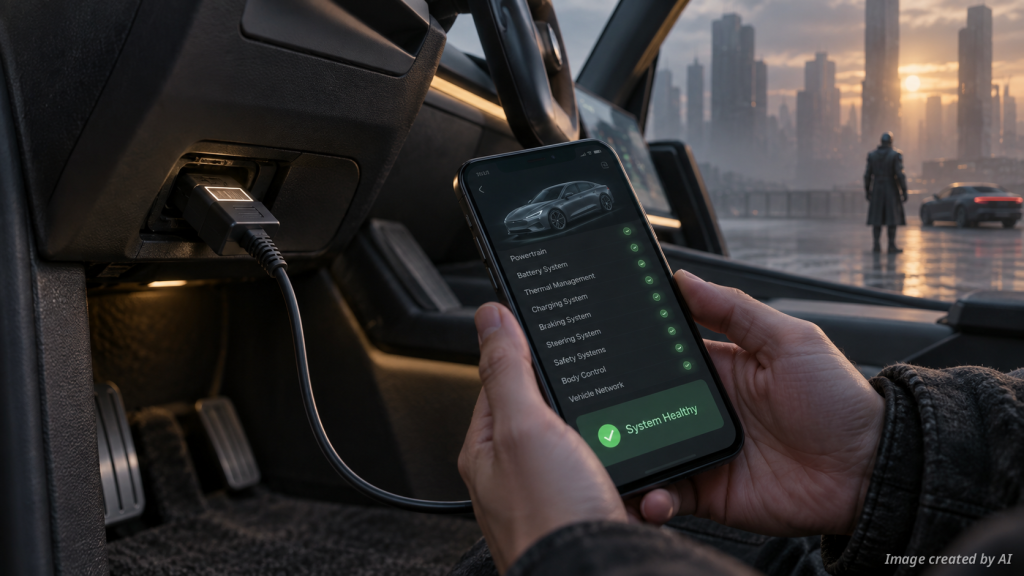
The convenience of self-diagnosis extends beyond the workshop. Many modern tools allow owners to perform preliminary scans using their smartphones [4]. While these tools may not fix the car, they provide enough information to determine if a professional visit is truly necessary.
For those who enjoy hands-on maintenance, understanding the basics is vital. You can find helpful resources on simple electric vehicle repairs to address minor issues safely at home. Always remember that safety protocols are essential when working with high-voltage systems [1].
Reducing downtime for commercial fleets
For businesses, time is money. Electric fleet operators are increasingly adopting advanced diagnostic systems to keep their vehicles on the road longer. Specialized equipment allows mobile teams to perform repairs on-site rather than transporting vehicles to a central hub [3].
This mobile approach is supported by precise data. By reading error codes on-site, technicians arrive prepared with the exact tools and parts required for the job [3]. This minimizes the operational footprint and maximizes the utilization of every vehicle in the fleet.
Benefits of proactive maintenance
Proactive maintenance is the ultimate goal of self-diagnostic technology. By catching issues early, owners avoid the cascading failures that often occur when small electrical problems are ignored. Regular health checks via professional diagnostic machines ensure that the vehicle remains in peak condition throughout its lifespan [5].
To further enhance your experience, consider how enhancing vehicle safety through OTA updates for electronic steering and braking can complement your existing diagnostic tools. Together, these technologies create a comprehensive safety net for the modern driver. Staying informed about your vehicle's health has never been easier or more effective.
Future trends in vehicle diagnostics
The future of EV maintenance lies in predictive analytics. Instead of waiting for an error code to appear, future systems will use artificial intelligence to predict when a part is likely to fail. This will allow for scheduled maintenance that fits perfectly into your busy lifestyle.
As vehicle connectivity grows, your car will likely communicate directly with service centers to order parts before you even notice a problem. This seamless integration will redefine convenience for electric vehicle owners globally. We are moving toward a world where vehicle maintenance is invisible, efficient, and entirely stress-free.
More Information
- OBD (On-Board Diagnostics): A standardized system that allows vehicle computers to communicate with external diagnostic tools, providing real-time data and error codes to identify mechanical or electrical issues [4].
- ECU (Electronic Control Unit): The primary computer system in a vehicle responsible for monitoring and managing various electronic components and performance metrics to ensure optimal operation [5].
- Predictive maintenance: A proactive strategy that uses data analytics and sensor readings to anticipate potential component failures before they occur, allowing for timely repairs and reduced downtime [3].
- Diagnostic software: Specialized digital programs designed to interface with a vehicle's ECU to read, interpret, and clear error codes, facilitating faster and more accurate troubleshooting [4].
- Error codes: Specific alphanumeric identifiers generated by a vehicle's onboard system when a fault is detected, pointing technicians to the exact area of the malfunction [2].