Living in areas prone to frequent power outages creates significant challenges for families. Reliable electricity is essential for daily tasks, communication, and safety. Many households now look toward innovative solutions to bridge these gaps. Surprisingly, your electric vehicle (EV) might be the key to energy independence during a blackout.
Modern electric vehicles are more than just transportation tools; they function as large, mobile battery packs. By utilizing vehicle-to-home (V2H) technology, families can tap into their car’s stored energy to power essential household appliances when the grid fails. This shift represents a major step toward resilient living and sustainable energy management [3].
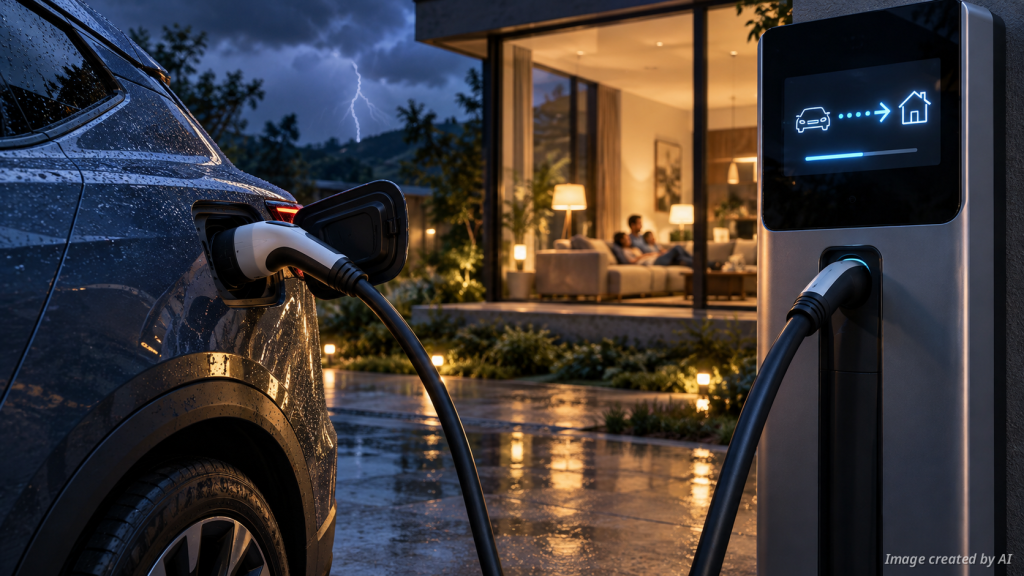
The evolution of electric vehicles as power sources
The concept of using EVs for energy storage is rapidly gaining traction globally. Manufacturers are increasingly integrating portable power supply functions into new models [1]. These features allow users to plug external devices directly into the vehicle. This provides immediate relief during short-term power interruptions.
Beyond simple portable power, advanced systems are being developed to balance local energy supply and demand [2]. By managing the charging and discharging cycles, households can optimize their energy usage. This approach not only supports the stability of the local grid but also promotes the effective use of renewable energy sources [2]. You can learn more about renewable energy management software for electric vehicle charging stations to understand how this ecosystem functions.
Benefits of vehicle-to-home technology
Adopting an EV as a backup power source offers several distinct advantages for families. First, it maximizes the utility of an asset you already own. Instead of purchasing an expensive, separate generator, you utilize the high-capacity battery already sitting in your driveway.
Second, it provides a cleaner alternative to traditional fuel-based generators. Traditional generators often require the storage of gasoline or diesel, which poses safety risks and environmental concerns. Transitioning to electric alternatives helps reduce dependency on fossil fuels and contributes to a smaller carbon footprint [3]. Moving toward electric mobility is a strategic step for families aiming for long-term sustainability.
Preparing your home for energy resilience
To fully leverage your EV during an outage, specific hardware and infrastructure are required. You need a bi-directional charger that allows electricity to flow from the car back into your home’s electrical panel. This setup ensures that your essential circuits remain powered when the main grid goes down.
It is also important to consider the capacity of your vehicle's battery. Smaller electric vehicles might provide enough power for lights and communication devices, while larger models can support heavier loads like refrigerators or medical equipment for extended periods [1]. Consulting with professionals is essential to ensure your home electrical system is compatible with these advanced charging technologies.
Overcoming infrastructure challenges
While the technology exists, widespread adoption faces hurdles. Many regions still lack the necessary infrastructure, such as universal charging standards and grid-connected bi-directional hardware [4]. Governments and private sectors are currently working to bridge these gaps by prioritizing the development of national charging networks [4].
Families living in rural or underserved areas should monitor local policy updates regarding energy storage. Strategic roadmaps for electric vehicle adoption often include incentives for homeowners to install smart charging equipment. These initiatives can make the transition more affordable and accessible for the average household.
Safety and maintenance considerations
Safety remains the top priority when integrating an EV into your home’s power system. Always use certified equipment and follow the manufacturer’s guidelines for charging and discharging. Improper installation can lead to electrical hazards or damage to your vehicle’s battery management system.
Regular maintenance of your vehicle’s battery is also crucial for its longevity and performance as a power source. Keep the software updated, as many manufacturers release OTA updates for adaptive suspension systems and battery management that can improve efficiency. Staying informed about your vehicle's health ensures it remains a reliable partner during emergencies [5].
The future of household energy
The integration of EVs into home energy systems is just the beginning. As technology matures, we will likely see more seamless connectivity between our vehicles and our homes. This creates a "smart home" ecosystem where energy is shared, stored, and used with maximum efficiency.
By viewing your electric vehicle as a mobile power plant, you gain a significant advantage in areas with unstable power grids. It empowers your family to maintain comfort and safety regardless of external circumstances. Ultimately, this technology is a vital component of a resilient and sustainable future for everyone.
More Information
- Portable power supply: A feature in electric vehicles allowing users to draw electricity from the car's battery to power external devices, appliances, or tools during emergencies or outdoor activities [1].
- Vehicle-to-home (V2H): A technology that enables electric vehicles to supply electricity back to a residential building, effectively turning the car into a backup power source for the home [2].
- Energy security: The reliable and affordable availability of energy sources, which electric vehicles help enhance by reducing dependence on imported fossil fuels and diversifying power consumption [3].
- Bi-directional charging: A charging system that allows electricity to flow in two directions: from the grid to the car, and from the car back to the grid or home [4].
- Sustainability: The practice of using resources in a way that meets current needs without compromising the ability of future generations to meet their own, often supported by electric vehicle technology [5].