Driving at night presents unique challenges for every motorist. Visibility often drops, and the risk of accidents increases significantly after sunset. Modern automotive technology is evolving rapidly to address these specific dangers. One of the most promising advancements is the integration of over-the-air (OTA) updates for adaptive lighting systems.
These systems adjust beam intensity and direction based on real-time road conditions. By utilizing specialized software tools to push updates, manufacturers can refine how headlights react to oncoming traffic. This ensures that your vehicle remains at the cutting edge of safety without requiring a trip to the dealership.[1]
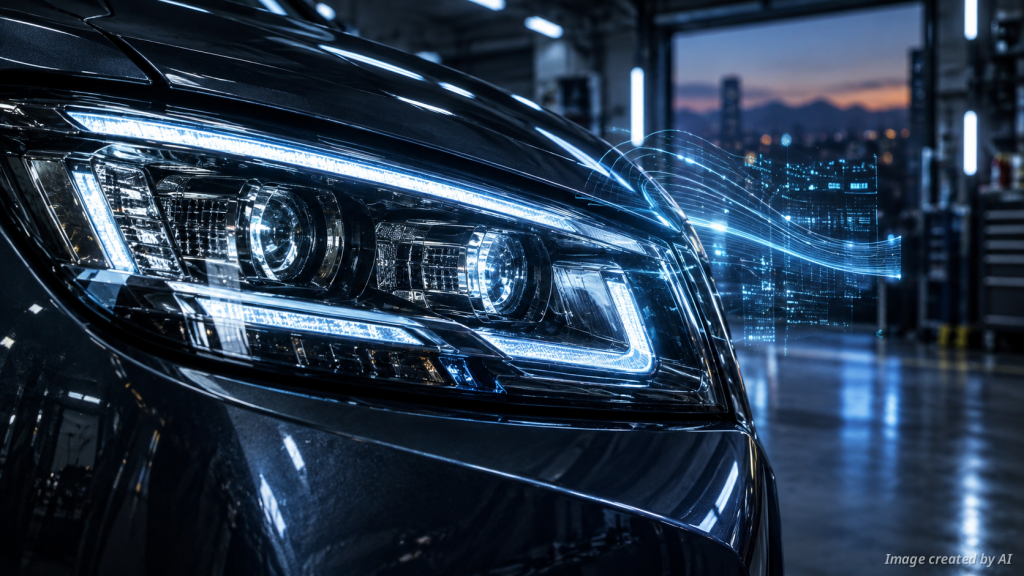
The mechanics of adaptive lighting updates
Adaptive lighting is not just about brightness. It involves complex algorithms that process sensor data to shape the light beam. When a manufacturer releases an OTA update, they are often refining these algorithms. This improvement process is similar to how embedded automotive programming evolves to handle new safety requirements.[4]
Incremental updates are particularly efficient for these systems. Instead of replacing the entire software stack, the vehicle receives small patches. These patches target specific areas like glare reduction or cornering sensitivity. This method keeps the system responsive and reliable for the driver.[1]
Why night drivers need constant improvements
Night driving requires a high level of situational awareness. Fatigue and poor visibility are major contributors to accidents. Advanced driver assistance systems (ADAS) play a crucial role in mitigating these risks. Many modern vehicles now include enhancing vehicle safety through OTA updates for electronic steering and braking to complement their lighting systems.
When your vehicle receives an update, it might improve how the lights detect pedestrians or cyclists. This is vital for drivers who frequently navigate poorly lit rural roads. By keeping the software current, you ensure that your vehicle's "eyes" are as sharp as possible.[2]
The role of connectivity in vehicle safety
Connectivity is the backbone of the modern driving experience. Just as a smart wearable device can monitor your health and alert you to emergencies, connected cars monitor the road environment. This data loop allows manufacturers to identify common lighting issues.[3]
Manufacturers use this feedback to create better lighting profiles. These profiles are then pushed to your car via secure OTA channels. This process ensures that your vehicle's performance improves over time. It is a proactive approach to automotive maintenance that benefits every night driver.[1]
Security and reliability of OTA updates
Safety is the primary goal, but security is equally important. Every update must be signed with a private key to ensure authenticity. This prevents unauthorized access to your vehicle's critical systems. Manufacturers take these steps to protect the integrity of the lighting software.[1]
Drivers can feel confident knowing that these updates undergo rigorous testing. The goal is to provide a seamless experience that requires minimal input from the owner. You simply receive a notification, and the system handles the rest. This simplicity encourages more drivers to keep their software up-to-date.[2]
Future trends in automotive lighting
The future of night driving looks brighter than ever. We are seeing a move toward more intelligent, predictive lighting systems. These systems will likely integrate with GPS data to prepare for upcoming curves or intersections. As tech-focused employment opportunities grow in the automotive sector, we can expect even faster innovation in this field.[5]
We are also seeing the integration of how OTA updates for adaptive suspension systems enhance the driving experience alongside lighting. Together, these technologies create a comprehensive safety net for the driver. The ability to update these systems remotely is a game-changer for the industry. It transforms the vehicle from a static product into a dynamic, evolving machine.[4]
Summary of benefits for drivers
Updating your vehicle's lighting system via OTA offers several distinct advantages. It provides better visibility, reduces glare for others, and improves overall reaction times. These updates are easy to manage and ensure your car stays modern. Here is why you should prioritize these updates:
- Enhanced safety through improved beam patterns.
- Reduced risk of accidents caused by poor visibility.
- Seamless integration of new software features.
- No need to visit a service center for minor adjustments.
- Increased peace of mind during nighttime journeys.
Embracing this technology is a smart move for any night driver. By staying connected, you ensure that your vehicle is always ready for the challenges of the road. Keep your software updated to enjoy the safest possible driving experience every time you head out after dark.[3]
More Information
- OTA (Over-the-air): A wireless delivery method for software updates, firmware, or other data to mobile devices or vehicles, allowing for remote improvements without physical service visits.
- Adaptive lighting: An intelligent automotive system that automatically adjusts the direction and intensity of headlights based on steering angle, vehicle speed, and road conditions to maximize visibility.
- ADAS (Advanced driver assistance systems): Electronic systems in a vehicle that assist the driver with driving and parking functions to increase safety and reduce human error.
- Embedded programming: Specialized software development for hardware systems, focusing on real-time performance and reliability within automotive control units.
- Incremental updates: A software update technique that only downloads and installs the specific code changes between versions, making the process faster and more data-efficient.