The automotive industry is undergoing a powerful digital revolution. In this context, display technology acts as the "window" connecting the driver to the vehicle. For technology developers, optimizing the user experience (UX) on modern hardware platforms is a top priority.
The boom in electric and autonomous vehicles has fueled demand for intelligent display solutions. These systems not only provide information but also reshape how we interact with the vehicle's interior space[1].
The rise of next-generation display technologies
Component manufacturers are shifting toward more advanced technologies. OLED and MicroLED are the two leading names in this race. OLED technology provides infinite contrast, allowing for the creation of flexible, curved displays that follow the design of the dashboard[2].
Meanwhile, MicroLED stands out for its extreme brightness and superior durability. This technology ensures that displayed information remains clear even under harsh sunlight. This is critical for automotive safety systems[4].
Another trend shaping the market is pillar-to-pillar display solutions. This design creates a seamless look, turning the entire dashboard into a vibrant digital space.
Breakthroughs in augmented reality
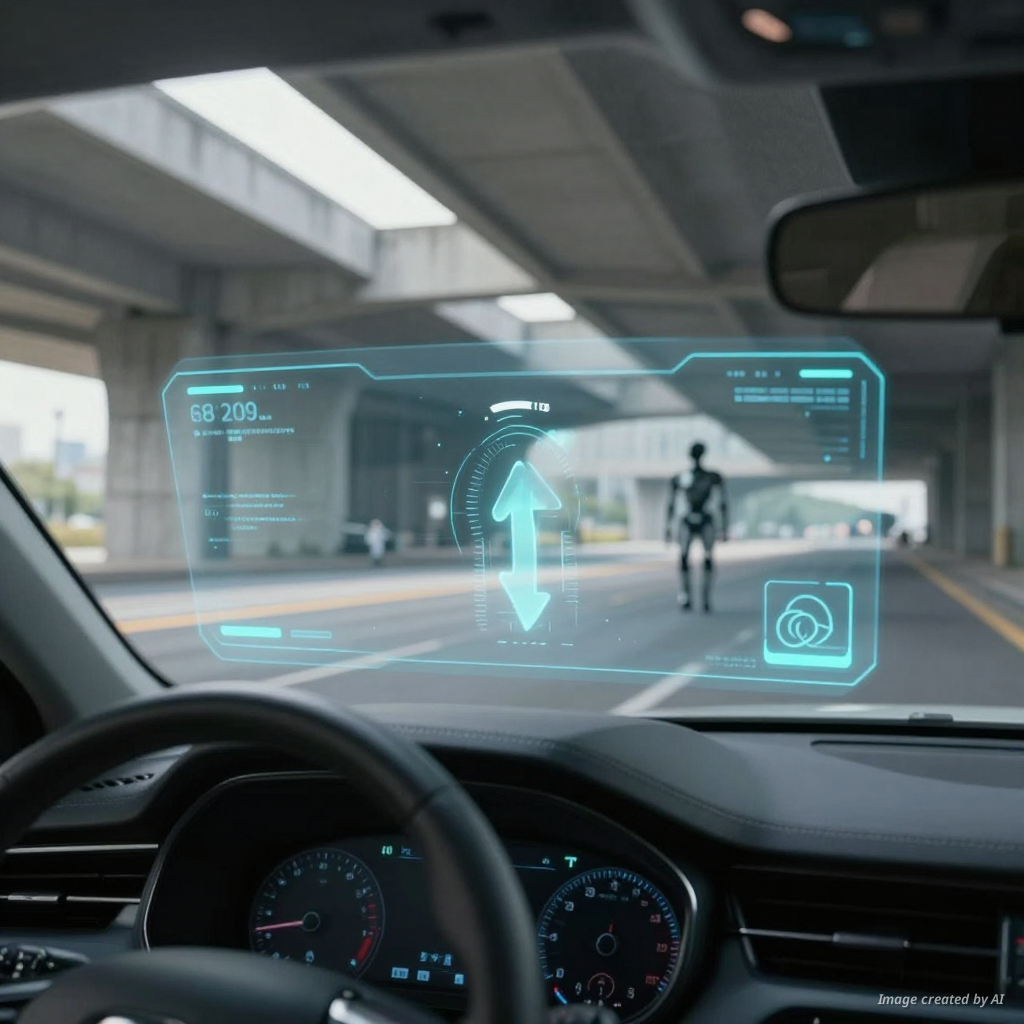
AR-HUD (Augmented Reality Head-Up Display) technology is changing how drivers receive data. Instead of looking down at the center screen, operational information is projected directly onto the windshield[3].
AR graphic layers integrated into the real-world environment help drivers stay more focused. Personalizing the HUD display on the windshield not only increases aesthetic appeal but also significantly enhances traffic safety.
The future of user interfaces and HMI
User interfaces (UI) are becoming increasingly minimalist. Physical buttons are gradually disappearing, giving way to touchscreens with haptic feedback. This technology allows drivers to confirm actions without taking their eyes off the road.
Artificial Intelligence (AI) also plays a key role. Intelligent virtual assistants can now understand natural language, helping to control climate, navigation, and entertainment. In Vietnam, solutions such as smart car accessories that upgrade the user experience are being warmly received by the market.
Status and potential in the Vietnamese market
Vietnam is becoming a bright spot on the global automotive technology map. Major corporations have established R&D centers here to develop In-Vehicle Infotainment (IVI) systems[4]. The pioneering efforts of domestic automakers like VinFast are also driving demand for large screens and Vietnamese-language virtual assistants.
Vietnamese users are increasingly favoring Android screen upgrades. Features such as speed warnings, 360-degree cameras, and voice control have become the new standard. This represents a major opportunity for local software and hardware developers.
Technical challenges for developers
Developing automotive displays requires strict standards. Devices must operate stably in temperature ranges from -40°C to 85°C. Additionally, anti-glare and anti-fingerprint capabilities are mandatory requirements[2].
Optimizing operating systems, such as Android Automotive OS, helps manage hardware in depth. This reduces latency and enhances system security. Developers need to focus on software-hardware compatibility to ensure the smoothest experience.
Conclusion
Automotive display technology is no longer just about showing information. It is a combination of aesthetics, safety, and artificial intelligence. In the future, user interfaces will become more intuitive and personalized than ever before.
For developers in Vietnam, this is a golden time to seize the trend. By focusing on AR-HUD, OLED, and AI technologies, we can contribute to the overall development of the global automotive industry.
More Information
- Curved OLED: Display technology using organic materials capable of bending, allowing for the design of display surfaces that hug the complex contours of modern automotive interiors.
- MicroLED: Next-generation display technology using ultra-small LEDs, providing superior brightness, high durability, and clear visibility under strong light, meeting the rigorous standards of the automotive industry.
- AR-HUD: An augmented reality system that projects information onto the windshield, helping to integrate navigation instructions and safety warnings directly into the driver's field of vision.
- Automotive-grade standard: Strict technical standards regarding durability, heat resistance, and stability that electronic components must achieve to ensure safety when operating in a vehicle.
- HMI (Human-Machine Interface): The interaction system between human and machine, focusing on interface design and control methods that help drivers easily operate vehicle features safely.