The Vietnamese automotive industry is at a historic turning point with a strong shift toward electric vehicles (EVs). For sustainable development, adopting a circular economy model in the production of motors and components is an urgent requirement. This is not only a solution for environmental protection but also a strategy to enhance national competitiveness [1].
The circular economy in the EV industry focuses on optimizing the product life cycle. Instead of the traditional "take-make-dispose" model, manufacturers are shifting toward reuse, remanufacturing, and recycling. This helps minimize industrial waste and conserve precious resources [2].
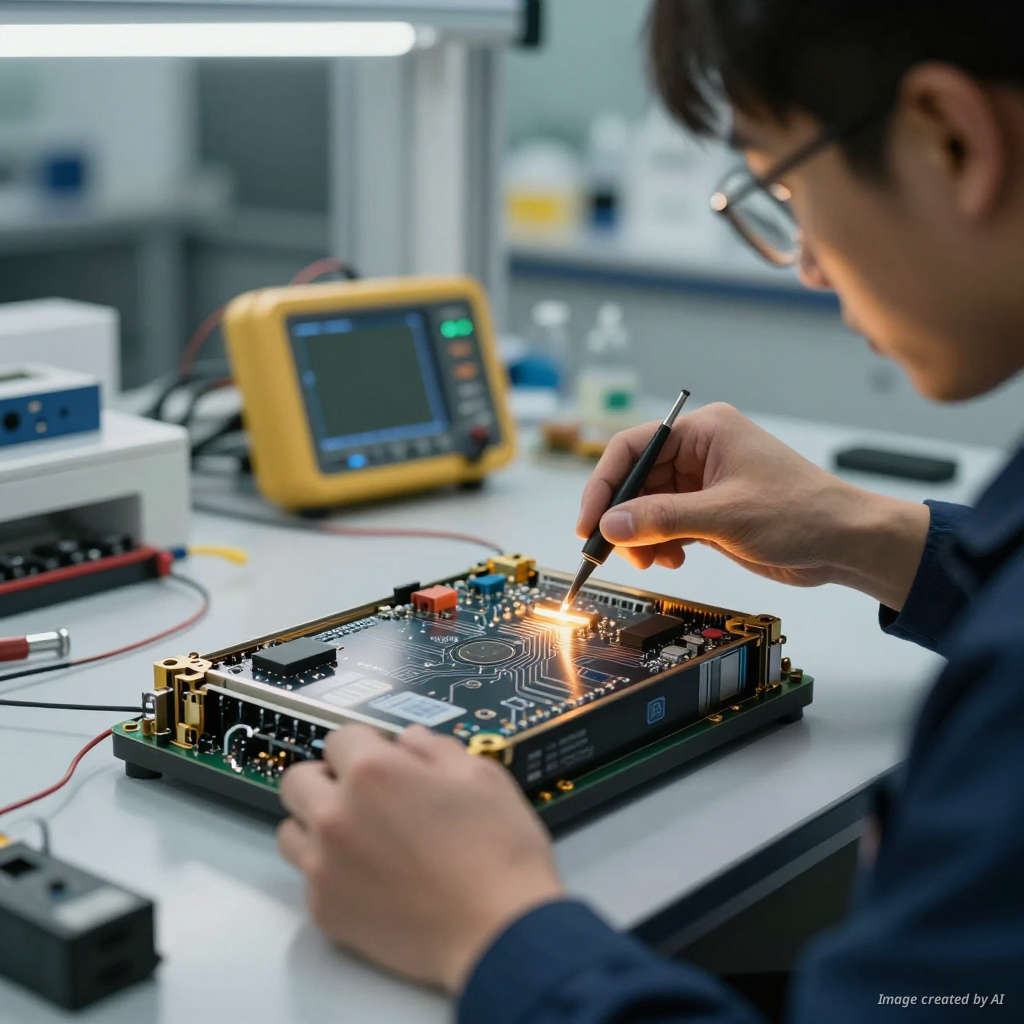
The importance of the circular economy to the EV industry
Vietnam has committed to achieving Net Zero by 2050. The transition to the electric automotive industry is key to fulfilling this commitment. A circular economy helps reduce dependence on imported raw materials such as lithium, cobalt, and rare earth elements.
By recovering and recycling components, businesses can achieve partial autonomy in their supply chains. This is particularly important as major export markets like the EU increasingly tighten green standards. Businesses that adopt these practices early will gain a significant advantage in the international market [3].
Legal framework and extended producer responsibility
The 2020 Law on Environmental Protection has laid a solid foundation for this model in Vietnam. The Extended Producer Responsibility (EPR) mechanism compels automakers to take responsibility for the product life cycle. Manufacturers are required to collect and process batteries and electronic components according to mandatory quotas.
Decision 687/QD-TTg also promotes the integration of circular thinking into product design. Engineers now prioritize designing components that are easy to disassemble, repair, and recycle. This is a major step forward in standardizing green production processes in Vietnam [1].
Remanufacturing of motors and electronic components
Electric motors are the heart of an EV and hold significant potential for remanufacturing. Instead of discarding old motors, factories can dismantle, inspect, and replace worn-out parts. Rewinding copper coils or reusing permanent magnets helps save up to 80% of the energy compared to new production.
Supporting industries in Vietnam are gradually mastering this technology. Developing EV batteries with high recyclability from the design stage is a prime example of this trend. This not only reduces costs but also creates added value for the supporting industry.
Second-life strategy for EV batteries
Lithium-ion batteries are the most expensive and complex components. When battery capacity drops below 80%, they are no longer suitable for vehicles but remain very useful for other purposes. This is the "second-life" model currently being strongly implemented.
Used batteries can be converted into stationary Battery Energy Storage Systems (BESS). These systems support the integration of solar and wind energy at charging stations. The EV battery recycling partnership model between domestic and international enterprises is proving its practical effectiveness [4].
Challenges and opportunities in recycling infrastructure
Despite significant potential, collection infrastructure in Vietnam remains nascent. We lack specialized systems to safely process discarded batteries and electronic components. Investing in advanced recycling technology requires substantial capital and in-depth technical expertise [2].
However, this challenge is also an opportunity for investors. Investing in EV battery recycling infrastructure: opportunities and challenges in Vietnam is a topic attracting much attention. The government is also encouraging joint ventures to transfer technology to enhance domestic recycling capacity [3].
The future of the green component manufacturing industry
The shift of the global supply chain into Southeast Asia is a major advantage for Vietnam. By effectively leveraging the circular economy, we can become the region's hub for green EV component manufacturing. This requires close cooperation between automakers and supporting companies.
Businesses need to proactively adopt international standards for ecological design. Training high-quality human resources is also a key factor. With a clear roadmap, the Vietnamese automotive industry can certainly achieve sustainable breakthroughs [5].
More Information
- Circular economy: An economic model focused on minimizing waste through the reuse, remanufacturing, and recycling of materials, helping to optimize product life cycles in industry.
- Extended Producer Responsibility (EPR): A policy requiring manufacturers to be responsible for the collection and recycling of products after they have been used by consumers, aimed at reducing environmental impact.
- Remanufacturing: The process of restoring used components to a "like-new" operating condition, helping to save resources and energy compared to producing from raw materials.
- Second-life usage: The use of components, especially EV batteries, for other purposes after they no longer have sufficient performance to operate in vehicles.
- Net Zero 2050: The goal of achieving net-zero emissions, a commitment by Vietnam to mitigate climate change through green energy and sustainable industrial solutions.