The global automotive industry is undergoing a historic shift toward electrification. Recent data shows that global electric vehicle (EV) sales surged by 25.6% in 2025 [1]. As these vehicles become more common, they generate vast amounts of real-time data. Data analysts play a critical role in transforming this raw information into actionable insights.
Manufacturers are leveraging this intelligence to refine vehicle performance and user experience. By analyzing driving patterns, energy consumption, and charging habits, companies can optimize their engineering processes [2]. This data-driven approach ensures that future models meet the evolving needs of drivers worldwide.
Understanding the data ecosystem
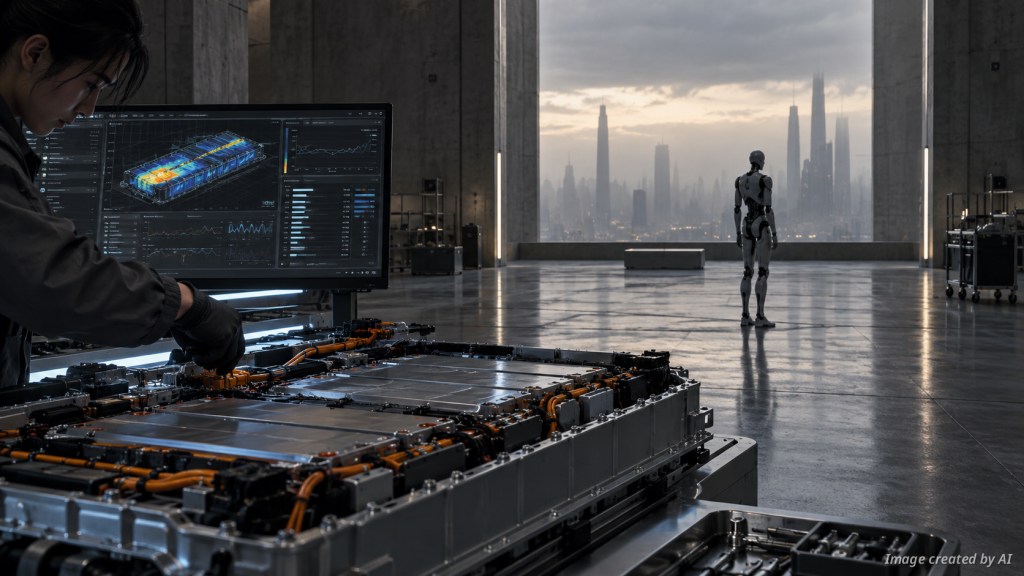
Modern electric vehicles act as sophisticated computers on wheels. Every trip provides telemetry data that informs manufacturers about hardware health and software efficiency. This digital transformation in automotive marketing relies heavily on the ability to process large datasets quickly. Analysts must categorize this information to identify trends in battery degradation and motor output.
The scale of this data is immense. With projections suggesting 23 million units sold globally by 2026 [2], the volume of incoming information is unprecedented. Analysts use machine learning models to predict maintenance needs before failures occur. This proactive strategy significantly enhances vehicle reliability and customer satisfaction.
Optimizing battery life and range
Battery performance remains the most critical factor for EV adoption. Data analysts study how different driving environments affect energy discharge rates. By optimizing electric vehicle battery life with AI to extend driving range, manufacturers can offer more competitive products. This process involves analyzing millions of charging cycles to identify optimal thermal management strategies.
Real-world data also helps engineers refine regenerative braking systems. Analysts observe how drivers interact with these features in various climates [5]. These insights lead to software updates that improve efficiency without requiring hardware changes. This iterative process is a hallmark of modern automotive engineering.
Improving charging infrastructure integration
The transition to electric mobility requires a seamless charging experience. Data analysis reveals where and when drivers prefer to charge their vehicles. This information is vital for simplifying the payment and charging process for consumers. By understanding load patterns, utility companies and manufacturers can better manage grid demand.
Advanced systems now use data to suggest the best charging times for users. This reduces stress on the electrical grid and lowers costs for the owner. Furthermore, analysts study the performance of fast-charging stations to improve throughput [5]. Such improvements directly contribute to a more robust and user-friendly charging ecosystem.
Safety and autonomous driving advancements
Data analytics is the backbone of modern safety features. By collecting sensor data from thousands of vehicles, manufacturers can train autonomous driving algorithms more effectively. This precision integration of lidar, radar, and camera sensors for ADAS ensures that vehicles react correctly to complex road conditions. Analysts continuously monitor these systems to identify edge cases that require further refinement.
Safety improvements are not limited to autonomous features. Data helps engineers understand how structural components perform in various crash scenarios. By simulating these events with real-world data, companies can design safer chassis and cabin environments. This commitment to data-backed safety is essential for gaining public trust in new vehicle technologies.
Market trends and consumer behavior
The growth of the electric mobility sector is influenced by diverse consumer preferences. Analysts track sales data to determine which vehicle segments are growing fastest [3]. This information guides product development teams in prioritizing features that matter most to the market. For instance, if data shows high demand for specific range capabilities, manufacturers can shift their production focus accordingly.
Regional variations also play a significant role. Different countries have unique regulatory environments and infrastructure capabilities [5]. Analysts help companies tailor their product configurations to comply with local laws while maximizing appeal. This strategic approach ensures that global brands remain competitive in local markets.
The future of data-driven automotive design
As we look toward 2030, the reliance on big data will only increase. With forecasts predicting 60-80 million electric vehicles sold per year [5], the potential for innovation is limitless. Data analysts will continue to bridge the gap between complex engineering and human-centric design. They are the architects of the next generation of mobility.
Future vehicles will be more personalized and efficient than ever before. Through continuous data collection and analysis, manufacturers can deliver over-the-air updates that improve the vehicle over its entire lifespan. This shift from static products to evolving platforms is the future of the automotive industry.
More Information
- Big data analytics: The process of examining large and varied data sets to uncover hidden patterns, correlations, and market trends that help organizations make informed business decisions [1].
- Electric vehicle (EV) telemetry: The collection and transmission of data from vehicle sensors to a central system for monitoring performance, battery health, and driver behavior [2].
- Regenerative braking: An energy recovery mechanism that slows a vehicle by converting its kinetic energy into electrical energy, which is then stored in the battery [3].
- ADAS (Advanced Driver Assistance Systems): Electronic systems that assist drivers in driving and parking functions, often using data from sensors to improve vehicle safety [4].
- Over-the-air (OTA) updates: The wireless delivery of new software, firmware, or other data to devices, allowing manufacturers to improve vehicle features remotely [5].