Technology is changing how we live and travel every day. The fusion of smart homes and electric vehicles is no longer a fantasy. In Vietnam, this trend is growing strongly thanks to the boom in IoT infrastructure and electric vehicles [1].
Users today desire a seamless experience between their living space and their means of transport. This integration helps enhance convenience and optimizes energy for the family. Below is detailed information about this exciting technological convergence.
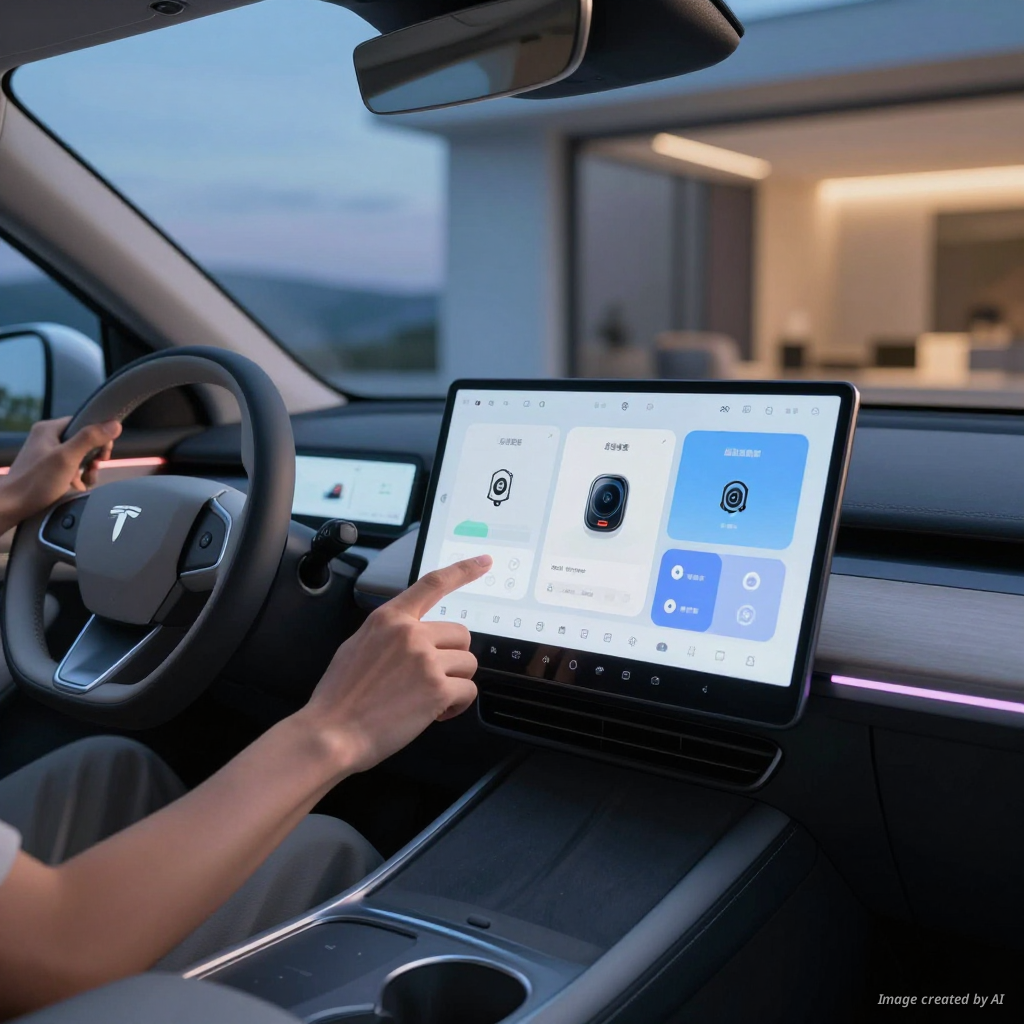
The connection between smart homes and cars
The current smart automotive ecosystem acts as a mobile control center. Through services such as VF Connect, drivers can interact with their homes remotely. This system uses cloud connectivity to transmit commands quickly and accurately [2].
Users can control household appliances right on the car's entertainment screen. You do not need to open your phone while driving. This helps increase focus and ensures safety on every journey. You can learn more about user-centric car interior design to better understand this experience.
Practical use cases
Location-based automation is a standout feature. When the car leaves the house, the system automatically activates security mode. Conversely, when the car approaches home, the system prepares the ideal living space. The porch lights will turn on and the air conditioner will cool the living room before you step inside [1].
Additionally, monitoring home security via cameras has become easier. You can view live footage from the front door camera directly on the car screen. This is a useful solution for busy people who want to manage their homes anytime, anywhere [2].
Bidirectional energy exchange technology
V2H (Vehicle-to-Home) technology is ushering in a new era of energy savings. Electric vehicles are not just a means of transport but also a backup power source. During a power outage, the car's battery can provide energy for essential household appliances [1].
Smart charging management also helps optimize electricity costs. Users can set a vehicle charging schedule during off-peak hours via the app. This helps reduce pressure on the national power grid and saves money for the family [2].
Virtual assistants and voice control
Virtual assistants play an important bridging role in this ecosystem. In Vietnam, the Vivi virtual assistant has supported users in controlling devices using natural Vietnamese. You just need to give the command: "Hey Vivi, turn on the air conditioner at home" to activate the device [1].
Support from platforms like Google Assistant also makes connectivity more flexible. Users can use simple voice commands via Android Auto or Apple CarPlay. To optimize travel routes to smart areas, you can refer to AI in route optimization and traffic congestion avoidance.
Challenges and security in the era of connectivity
Despite offering many benefits, integration still faces major challenges. Fragmentation between smart home protocols is a common technical barrier [1]. Car manufacturers need to make more efforts to support open connectivity standards like Matter.
Information security is a top priority for users today. Data regarding location and daily habits must be strictly protected. Electric vehicle manufacturers are investing heavily in data encryption solutions [2]. This ensures that your smart home system is not attacked from the outside.
Benefits for Vietnamese users
Integrating smart homes into cars brings unprecedented convenience. Users save time and effort in managing their homes. Every operation is automated to serve personal needs [1].
Safety is also a significantly improved factor. Reducing manual operations helps drivers focus more on traffic. Smart warning systems from the house also help you feel more secure when you are away on business [2].
Looking to the future
In the near future, the combination of cars and homes will become deeper. Household appliances will automatically adjust based on data from the car. For example, air purifiers will operate more strongly when receiving a signal that you are heading home [1].
5G infrastructure in Vietnam will be a lever for this development. Fast data transmission speeds mean control commands have almost zero latency. Users will enjoy a more convenient and modern life than ever before [2].
More Information
- Smart Home: A system of household devices connected to the Internet, allowing users to control them remotely or automate them via smartphone or voice [1].
- Automotive Ecosystem: A collection of services, software, and connectivity infrastructure surrounding a vehicle to optimize the user experience [2].
- V2H (Vehicle-to-Home): Technology that allows electric vehicles to provide power from the car's battery back to household appliances when needed [1].
- Geofencing: Technology using GPS to create virtual boundaries, helping to trigger automatic actions when a mobile device or vehicle enters/leaves that area [2].
- Cloud-to-Cloud API: A protocol allowing two different cloud platforms to communicate and transmit data, helping to connect cars and smart homes without wires [1].