The electric vehicle (EV) market in Vietnam is growing strongly with the participation of many major brands. This boom brings with it an urgent need to build sustainable EV battery recycling infrastructure. This is not only an environmental issue but also a strategic investment opportunity for businesses.
Managing batteries at the end of their life cycle requires long-term vision from the government and investors. As the volume of discarded batteries is set to surge after 2030, modern processing infrastructure will become a critical link in the green supply chain. EV battery recycling is opening up many new economic potentials.
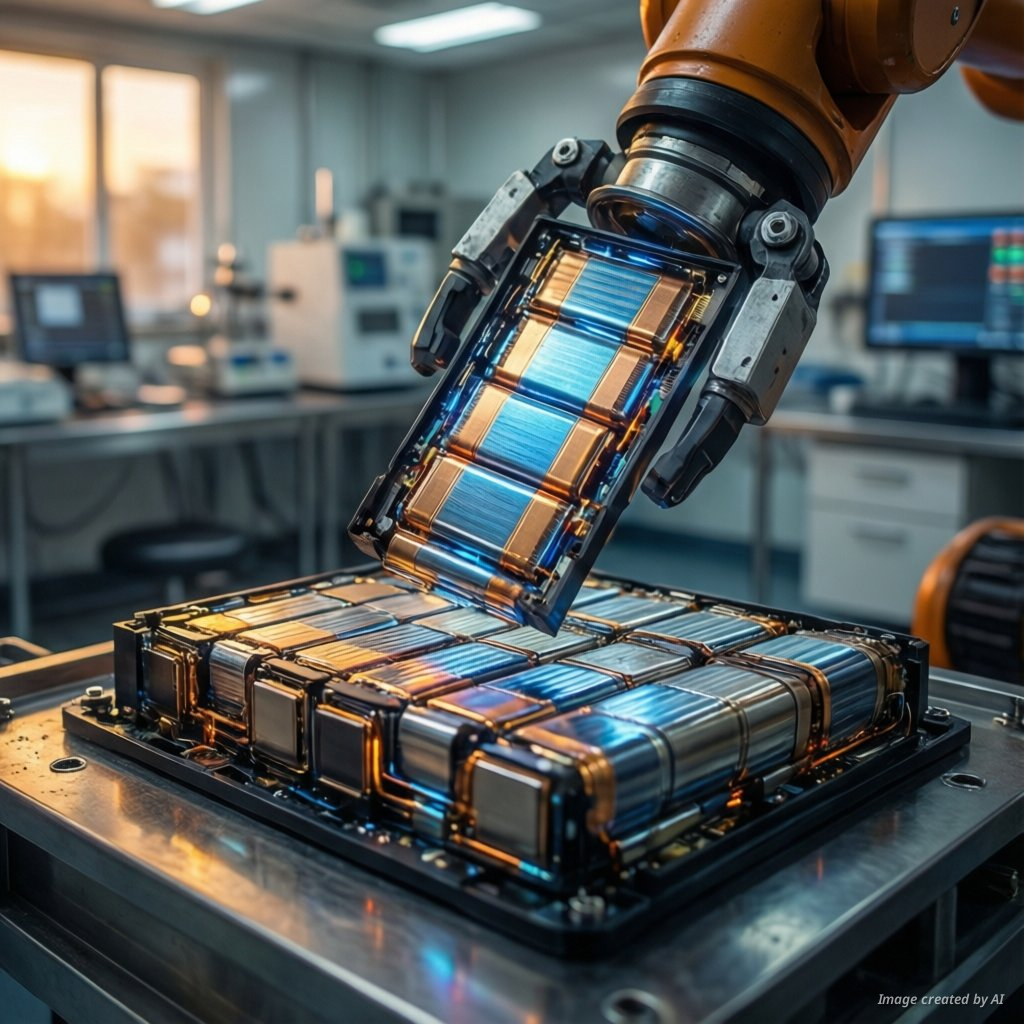
Potential from the circular economy model
Recycling EV batteries is not merely about disposing of hazardous waste. It is an "urban mining" activity aimed at recovering strategic metals such as Lithium, Cobalt, and Nickel [1]. Achieving autonomy in these raw materials helps reduce dependence on imports for domestic battery manufacturing plants.
Furthermore, the second-life battery model offers high economic value. EV batteries with reduced capacity can still be used as energy storage systems (ESS) for solar or wind power [2]. Businesses can exploit multi-tier business models, ranging from testing and repacking to recycling raw materials.
To better understand sustainable solutions, you can refer to developing the recycled material market for electric vehicles in Vietnam. This is an important stepping stone toward building a complete circular value chain.
Legal framework and extended producer responsibility
The Vietnamese government has issued the 2020 Law on Environmental Protection and Decree 08/2022/NĐ-CP to manage waste. The EPR (Extended Producer Responsibility) mechanism mandates that importers and battery manufacturers are responsible for collecting and processing products after they are discarded [3].
The roadmap for EPR implementation creates pressure but also acts as a lever for the market. Investors need to grasp these regulations to build appropriate business plans. Implementing EPR for the battery industry is a key factor in ensuring legal compliance.
Major challenges for recycling infrastructure
Despite the immense potential, this industry still faces many technical barriers. Currently, Vietnam lacks industrial-scale plants that apply modern hydrometallurgical or pyrometallurgical technologies [4]. Most existing facilities are limited to simple mechanical dismantling.
The initial capital expenditure (CAPEX) for standard-compliant recycling technology is very high. Additionally, the collection of Li-ion batteries—a type of hazardous waste—requires specialized logistics systems to ensure fire and explosion safety [2]. Processing EV batteries requires close coordination between the government and businesses.
The problem of economies of scale and technical standards
At the current stage, the quantity of discarded batteries is not yet large enough for plants to operate at full capacity. This leads to a risk of losses if there are no price support mechanisms or preferential policies from the government [1]. The battery recycling industry needs more time to reach the break-even point.
The lack of a detailed system of technical standards for assessing State of Health (SOH) is also a difficulty. Investors need to closely monitor the upcoming national standards. You can learn more about the circular EV battery supply chain from mining to recycling in Vietnam to gain a comprehensive overview.
Conclusion and orientation for investors
Investing in EV battery recycling infrastructure is a long-term journey with many challenges but is full of promise. Preparation in terms of technology and compliance with the EPR roadmap will help businesses capture market share in the future. The government plays an important role in creating a transparent legal corridor.
The combination of FDI capital and advanced technology will turn Vietnam into a regional battery processing hub. Investors should start by researching the market and building an effective collection network right now [5].
More Information
- Circular economy: An economic model aimed at extending the lifespan of materials and products, minimizing waste through the reuse, repair, and recycling of valuable components.
- Li-ion battery: The most popular type of rechargeable battery currently used in electric vehicles, containing many chemicals and heavy metals, requiring specialized processing to avoid environmental pollution.
- EPR (Extended Producer Responsibility): An environmental policy requiring manufacturers to take responsibility for the entire product life cycle, including collection and recycling after disposal.
- Hydrometallurgy: A method using chemical solutions to separate and recover metals from batteries, helping to achieve high efficiency and lower emissions compared to incineration methods.
- Second-life: The process of repurposing EV batteries that have reduced capacity for other applications, such as stationary energy storage systems.