The global automotive industry is undergoing a massive shift toward electrification. In this context, the Extended Range Electric Vehicle (EREV) architecture is emerging as a breakthrough solution. Many experts believe this is the key to a sustainable future for electric vehicle manufacturing [1].
Traditional electric vehicles (BEVs) often face barriers regarding operating range and charging infrastructure. The EREV architecture thoroughly addresses these concerns by combining the advantages of both worlds. Users get to enjoy a pure electric driving experience without worrying about running out of energy mid-trip [2].
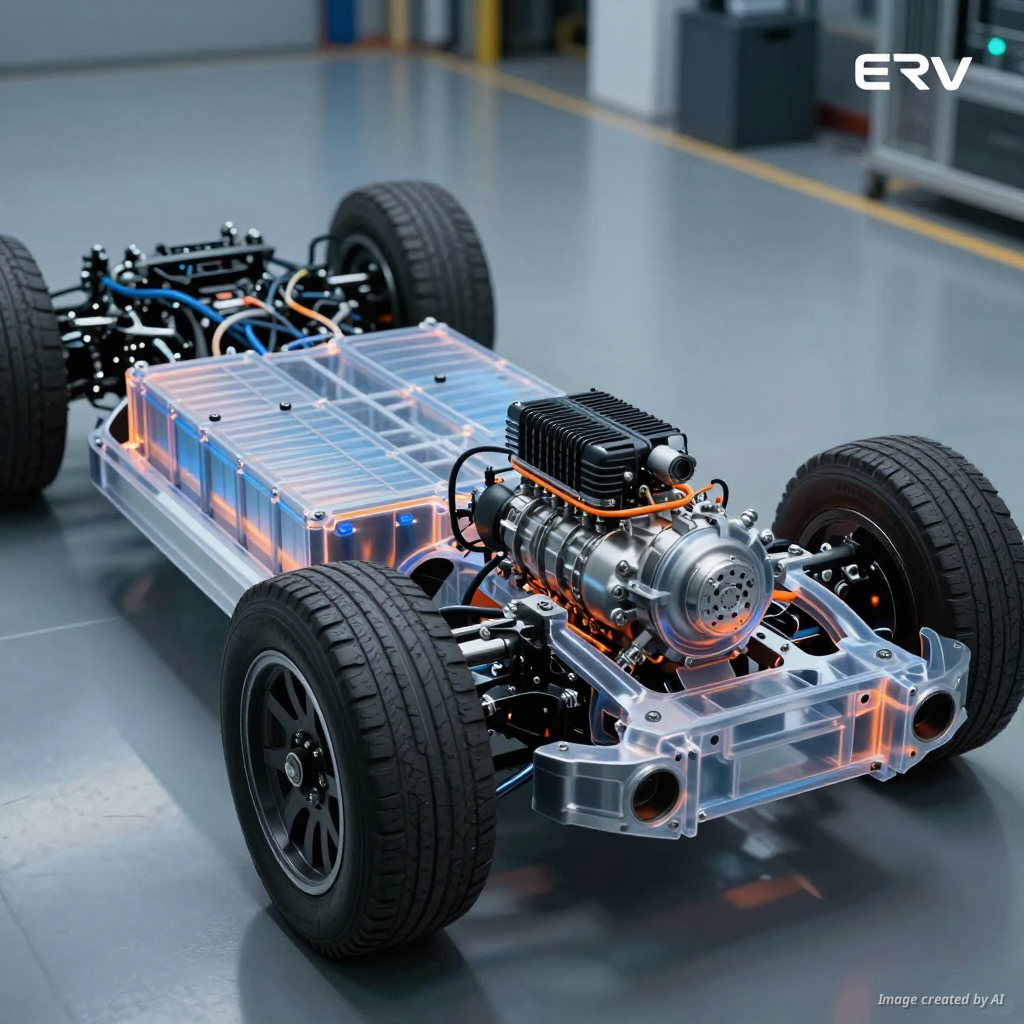
How EREV electric vehicles work
EREV electric vehicles operate on the principle of using an electric motor to drive the wheels directly. Unlike conventional hybrid vehicles, the gasoline engine in an EREV only acts as a generator. It does not directly participate in driving the vehicle [3].
When the battery charge drops to a certain level, the internal combustion engine automatically activates. It provides energy to charge the battery or supplies electricity directly to the motor. As a result, the vehicle can travel significantly longer distances than a standard pure electric vehicle [4].
Why EREV is a significant step forward
Flexibility is the greatest advantage of the EREV architecture during this energy transition phase. Users can take advantage of existing charging station infrastructure when driving in urban areas. At the same time, they can comfortably take long trips without worrying about finding charging stations along the way [5].
Furthermore, producing EREV vehicles helps manufacturers optimize battery costs. Instead of equipping vehicles with massive, expensive battery packs, manufacturers can fine-tune the battery capacity accordingly. This helps reduce product costs and increases accessibility for the mass market.
Optimizing modern production processes
Automakers are adopting Vinfast's automated production process: a modern technological advancement to improve quality. Integrating the EREV architecture into this assembly line helps increase efficiency. Components are more standardized, thereby minimizing errors and accelerating output speed.
This technology also allows factories to be more flexible in scaling production. When market demand changes, they can easily adjust vehicle configurations. This is a massive competitive advantage in today's volatile automotive market.
Driving experience and convenience
EREV drivers will experience the characteristic smoothness of an electric vehicle. The electric motor provides instant torque, helping the car accelerate smoothly and quietly. The difference only appears when the gasoline engine operates to maintain battery energy.
This system eliminates "range anxiety." This is a crucial psychological factor that makes many people hesitant to switch to pure electric vehicles. EREV acts as a perfect "bridge" for users during this transitional period.
A vision for a sustainable future
Although pure electric vehicles (BEVs) are the ultimate destination, EREV still plays a strategic role. It helps significantly reduce emissions compared to vehicles using traditional internal combustion engines. Using the gasoline engine at an optimal RPM range also helps reduce fuel consumption.
Manufacturers are continuing to improve this technology to achieve higher efficiency. In the future, range extenders could use biofuels or hydrogen. This will bring the EREV architecture closer to the goal of net-zero emissions.
Conclusion
The EREV architecture is not just a temporary technical solution. It is a smart strategy that helps accelerate the global electrification process. By combining convenience and performance, EREV is reshaping how we manufacture and use electric vehicles.
The development of this technology will continue to bring many benefits to consumers. With constant advancements, EREV will certainly make a significant contribution to the future of the transportation industry. This is a golden time for automakers to focus on researching and developing this high-potential vehicle line.
Additional Information
- EREV (Extended Range Electric Vehicle): A type of electric vehicle that uses an electric motor for propulsion, combined with a small gasoline engine that acts as a generator to maintain battery energy.
- Range: The maximum distance an electric vehicle can travel on a single full battery charge before needing to be recharged.
- Electric Motor: A device that converts electrical energy into mechanical energy to turn the wheels, providing the primary traction for modern electric vehicles.
- EV Battery: The main electrical energy storage component, which directly determines the driving range and the total weight of the vehicle.
- Charging Infrastructure: The system of public charging stations and home charging support equipment used to provide energy for electric vehicles.