The electric vehicle (EV) market in Vietnam has seen explosive growth in recent years. With the participation of many major brands, consumers have more choices than ever for their green transportation needs [3]. However, a major question remains: how to optimize operating costs after the warranty expires.
Instead of rushing to replace expensive components, the trend of repairing and upgrading is gradually becoming a smart choice. This is not only a cost-saving solution but also an important step toward a circular economy [2].
Why prioritize repair over replacement
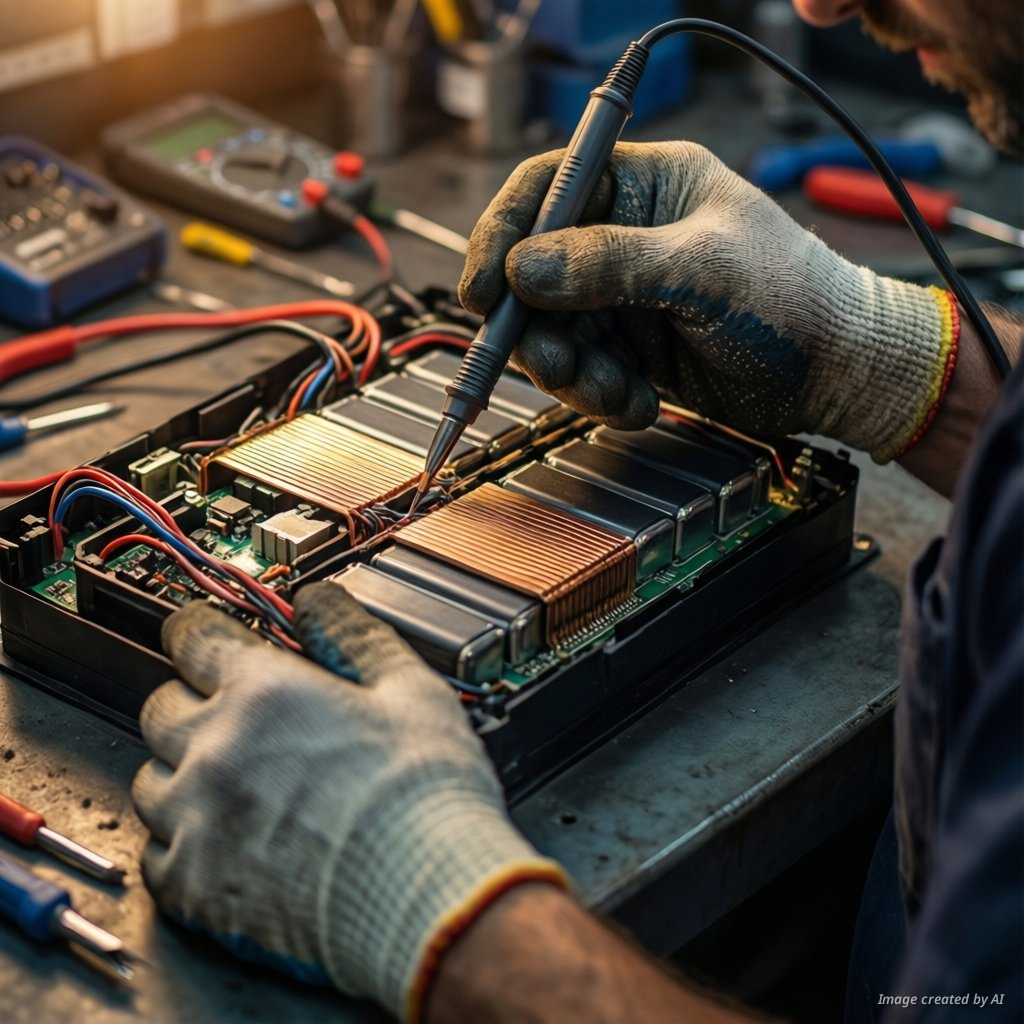
The battery pack is the most expensive component of an electric vehicle. Replacing the entire battery pack when a minor issue occurs places a significant financial burden on the user [1]. Instead of full replacement, service centers are now shifting toward component-level repair.
This method focuses on accurately identifying degraded modules or battery cells. By rebalancing the voltage or replacing faulty parts, costs can be reduced by 50% to 80% compared to a complete replacement [2]. You can learn more about the cost-benefit analysis of EV battery recycling to better understand the long-term economic value.
Battery diagnostic and restoration technology
Repairing electric vehicles requires deep expertise in high-voltage electrical systems. Technicians need to use specialized software to retrieve data from the Battery Management System (BMS). This helps detect risks early before they become serious [1].
Firmware upgrades also play a crucial role in performance optimization. Through over-the-air (OTA) updates, users can improve their driving range without complex mechanical intervention. Learn more about common myths regarding EV maintenance costs for a more accurate perspective.
Hardware upgrades and performance optimization
In the future, users may be able to upgrade to newer battery modules within older battery frames. This helps increase energy density and extend the lifespan of older vehicles. This is part of the strategy for developing the market for recycled materials for electric vehicles in Vietnam.
In addition, electric powertrains such as inverters or onboard chargers can also be repaired by replacing semiconductor components. This approach helps minimize electronic waste and heavy metals released into the environment. Refer to the details on electric car maintenance costs from manufacturers to grasp a reasonable maintenance schedule.
Safety and human resource challenges
Despite the immense potential, EV repair still faces many barriers. Electric vehicles operate at very high voltages, from 300V to 800V DC, requiring extremely strict safety protocols [3]. Currently, Vietnam still lacks a workforce of highly certified technicians for electric powertrain systems.
Automakers often keep diagnostic software proprietary, which creates difficulties for independent garages. However, the development of high-tech service centers will soon address this issue. Proper training will create new job opportunities for the future automotive industry [3].
Benefits for the circular economy
Extending the lifecycle of electric vehicles brings dual benefits to both consumers and the environment. Battery packs that are no longer suitable for cars can still be reused for solar energy storage systems [2]. This is the circular economy model that the EV industry is aiming for.
Shifting the mindset from "replacement" to "repair and upgrade" helps reduce the pressure of resource extraction. It also fosters innovation in the recycling and restoration of components in Vietnam [3]. See more about the development orientation of the EV industry in Vietnam to understand the government's long-term vision.
Conclusion
The future of repairing and upgrading electric vehicles in Vietnam is very promising. With the support of technology, users can save significant costs while ensuring operational performance. Choose reputable service centers to receive advice on the most optimal solutions for your vehicle [1].
More Information
- Battery Management System (BMS): The electronic brain that controls parameters such as voltage, current, and battery temperature, ensuring safety and optimal charging/discharging performance for the EV.
- Circular Economy: An economic model focused on extending product lifecycles through repair, reuse, and recycling, helping to minimize waste and conserve resources.
- Electric Vehicle (EV): A type of vehicle that uses an electric motor instead of an internal combustion engine, powered by a rechargeable battery pack, contributing to the reduction of greenhouse gas emissions.
- Battery Cell Balancing: A technical process of adjusting the voltage between battery cells in a module to ensure uniformity, which increases the capacity and lifespan of the entire battery pack.
- High Voltage: The electrical system in EVs is typically 300V-800V, requiring specialized protective equipment and highly qualified technicians when performing repairs.