Public transportation agencies face a shifting landscape today. Passengers now demand more than just a ride from point A to point B. They expect a frictionless, integrated journey that connects various modes of travel effortlessly. This concept is known as the seamless mobility experience. It aims to eliminate barriers between walking, public transit, and shared services [2].
Modern cities are increasingly complex environments. Commuters often struggle with poor infrastructure or long walks between stations. By leveraging advanced smart mobility services, agencies can bridge these gaps effectively [1]. A cohesive strategy ensures that public transport remains the backbone of urban movement.
Why integration matters for public transit
Integration is the secret to unlocking sustainable travel. When different modes of transport complement each other, the entire network becomes more efficient. Agencies should avoid viewing shared mobility as a competitor. Instead, they must treat it as a partner in the broader ecosystem [2].
The goal is to provide a coherent and sustainable network for all citizens. This approach reduces reliance on private vehicles, which helps lower carbon emissions significantly [4]. Data-driven insights allow agencies to optimize routes and improve service availability in real time.
The role of technology in mobility
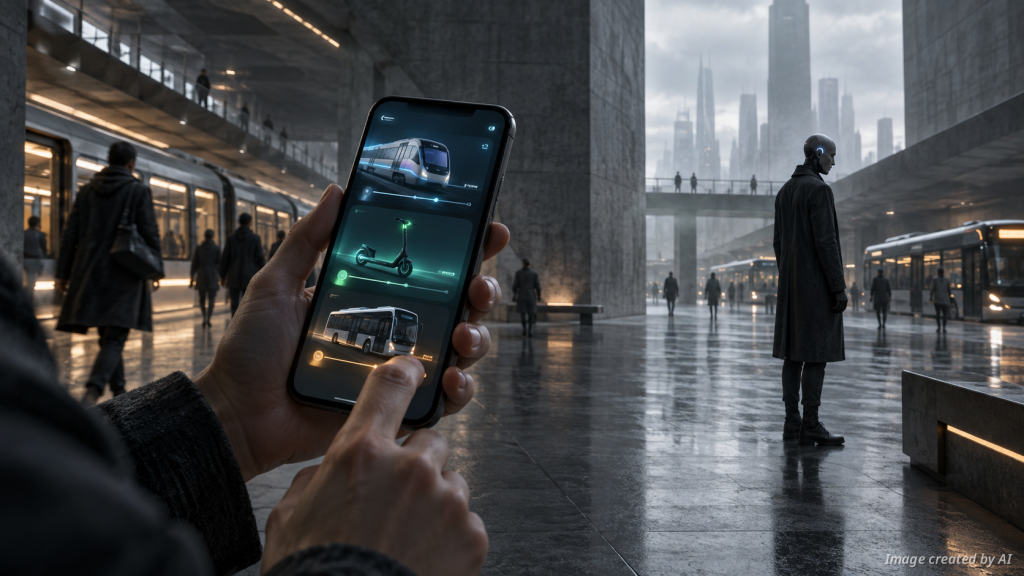
Technology acts as the glue for modern transit systems. Passengers now rely on mobile applications to plan, book, and pay for their entire trip in one go. This integrated ticketing approach simplifies the user journey significantly [3]. It removes the stress of managing multiple physical tickets or payment methods.
Artificial intelligence (AI) plays a critical role here. It helps predict demand and deploy vehicles exactly where they are needed most. For instance, demand-response services can fill gaps in areas where traditional bus lines are insufficient [1]. This ensures that even the last mile of a journey feels convenient and accessible.
Building a user-centric transport ecosystem
A successful strategy starts with understanding the passenger. People need accurate information at every stage of their journey. Providing real-time updates on delays or connections is essential for building trust [5]. When passengers feel informed, they are more likely to choose public transit over personal cars.
Agencies should also consider edge AI in electric vehicles to monitor vehicle health and passenger flow. This technology enhances safety and operational efficiency across the board. By focusing on the user, agencies can create a system that feels intuitive and reliable.
Overcoming common implementation challenges
Transitioning to a seamless model is not without its hurdles. Agencies must navigate complex regulatory environments and diverse stakeholder interests. Collaboration between private mobility providers and public authorities is a prerequisite for success [2]. Open platforms allow for better data sharing and service integration.
Financial sustainability is another key factor. Implementing new payment technologies requires upfront investment, but the long-term benefits are clear. Modernized systems lead to higher capacity and greater passenger satisfaction [4]. Agencies can also explore electric vehicles and smart grids to further enhance the sustainability of their infrastructure.
Strategies for long-term success
Agencies should prioritize scalability when designing new mobility solutions. A system that works for a small neighborhood should be adaptable to the entire city. This requires a modular approach to technology and infrastructure [3]. Connecting passengers with reliable information remains the most important service a transit agency can offer [4].
Finally, continuous feedback loops are necessary. By listening to passenger needs, agencies can refine their services over time. This iterative process is vital for maintaining a competitive and attractive public transport offering. The future of mobility is not just about moving people; it is about connecting communities through seamless experiences.
More Information
- Demand-responsive transport [1]: A flexible passenger transport system where vehicles alter their routes based on specific passenger requests, often utilizing AI to optimize pick-up and drop-off locations in real time.
- Multimodal mobility [2]: The practice of using different modes of transportation—such as trains, buses, bikes, and walking—within a single journey to create a more efficient and sustainable travel experience.
- Mobility as a Service (MaaS) [3]: A digital ecosystem that integrates various transport services into a single, on-demand mobility platform, allowing users to plan, book, and pay for trips seamlessly.
- Integrated ticketing [4]: A unified payment system that allows passengers to use a single account or card to access multiple different transport operators and services throughout their entire journey.
- Intermodal information [5]: The provision of accurate, real-time data regarding schedules, transfers, and transit options, which is crucial for helping travelers navigate the complexities of multi-stage journeys.