The process of urbanization in Vietnam is happening at a dizzying pace, changing the face of major cities like Hanoi and Ho Chi Minh City. The urbanization rate reached approximately 42.6% in 2023 and is expected to continue rising strongly in the coming years [2]. This change not only impacts infrastructure but also directly affects citizens' decisions regarding vehicle choice.
Urban planners need to clearly understand the relationship between living spaces and vehicle consumption behavior. Grasping this trend helps in optimizing sustainable transport infrastructure design for the future [3].
The shift from sedans to high-clearance vehicles
Previously, sedans were the preferred choice for many Vietnamese families due to their luxury and stability. However, urbanization has brought new challenges such as localized flooding and high curbs.
Consumers now prioritize high-clearance vehicle lines such as A-SUVs or B-SUVs. These models offer good ground clearance, helping drivers feel more confident when traveling during the rainy season [1]. Their compact size also makes navigating narrow alleys easier.
The boom of mini electric cars and electric motorbikes
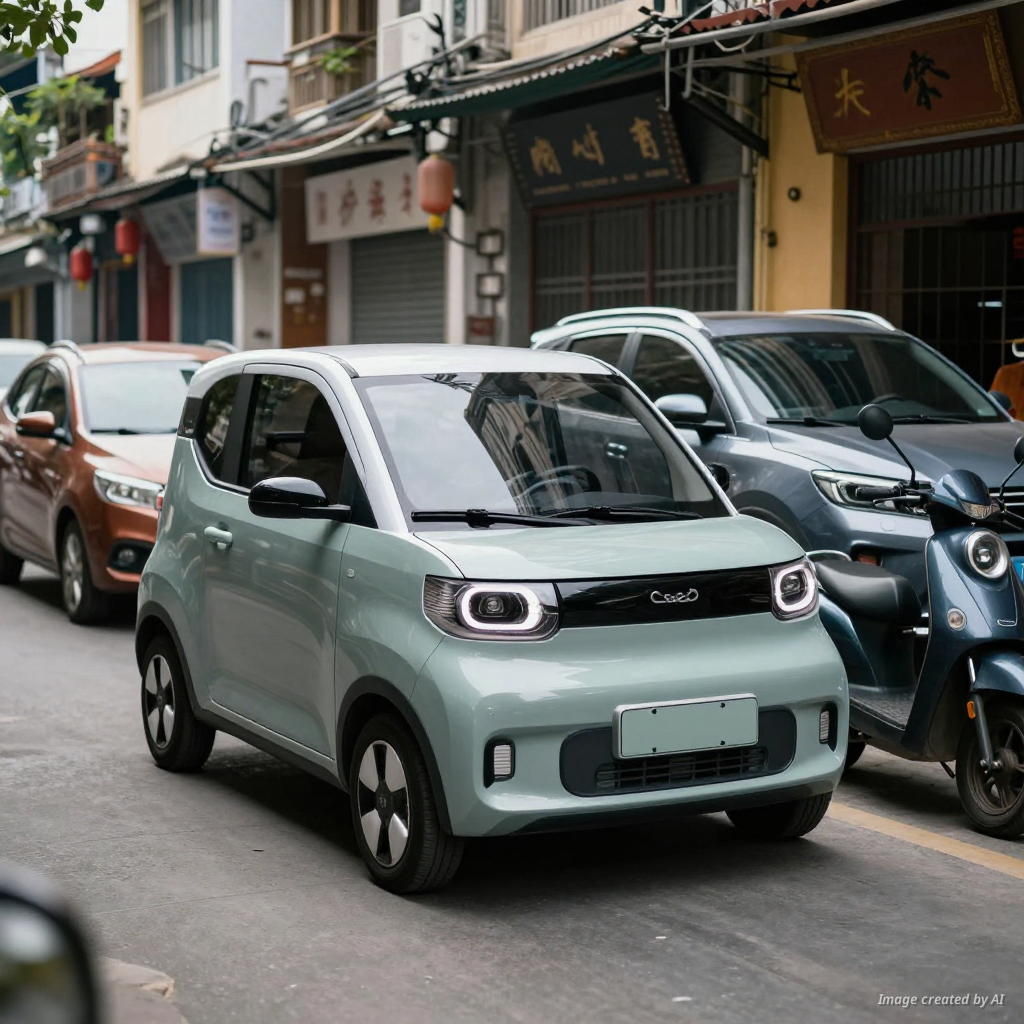
Urbanization is creating an increasing demand for short-distance travel within inner cities. Mini electric cars are becoming the perfect alternative to traditional motorbikes for young families.
Additionally, electric motorbikes are dominating the market due to low operating costs and smart features. The development of green transport is becoming an inevitable trend to minimize noise pollution and emissions in major cities [1].
Technology and connectivity infrastructure
Modern urban residents are particularly interested in driver-assistance technologies. Features like 360-degree cameras, blind-spot monitoring, and automatic braking are the new standards. You can learn more about mobile applications for smart vehicle management to better understand how technology is integrated into personal vehicles.
Charging station infrastructure also plays a key role in encouraging people to switch to electric vehicles. The planning of public charging stations needs to be synchronized with urban system planning to ensure convenience [2].
Multimodal connectivity in planning
Planners need to focus on multimodal connectivity. Combining personal vehicles, electric vehicles, and public transport systems like the Metro is the key to reducing congestion. Sustainable urban transport development solutions require close coordination between policy and practice [3].
People will be willing to give up bulky personal vehicles if the public transport system is convenient enough. This is a major challenge that policymakers need to solve in the coming decade.
Impact on purchasing behavior
The cost of vehicle ownership is a top deciding factor in the context of economic fluctuations. Consumers tend to choose Hybrid or pure electric vehicle lines to optimize fuel costs. Energy efficiency has become a strong competitive advantage for car manufacturers [1].
Furthermore, the trend of post-pandemic consumer behavior also shows a preference for safe and easy-to-maintain vehicle lines. Manufacturers need to grasp this sentiment to offer products suitable for the specific characteristics of the Vietnamese urban environment.
Conclusion
Urbanization not only changes infrastructure but also reshapes how Vietnamese people choose their means of transport. Prioritizing high-clearance vehicles, electric vehicles, and integrated technology is an inevitable trend. Urban planners play a crucial role in creating living spaces that harmonize vehicle development with the quality of life for citizens [3].
More Information
- Green transport [1]: A transport system that prioritizes the use of clean, environmentally friendly energy, helping to reduce emissions and noise in high-density urban environments.
- Urban planning [2]: The process of designing and managing the physical space of cities to ensure sustainable development, utility, and safety for citizens.
- Sustainable transport [3]: A transport system that meets current travel needs without compromising the ability of future generations to meet their own needs.
- Battery Electric Vehicle (BEV) [4]: A type of vehicle that uses energy entirely from batteries, without an internal combustion engine, helping to reduce operating costs and protect the environment.
- Multimodal connectivity [5]: A strategy of integrating various types of transport such as personal vehicles, buses, and electric trains to create a seamless and efficient travel network.