Urban planning is undergoing a radical transformation as cities embrace digital connectivity. At the heart of this shift lies vehicle-to-everything (V2X) technology. This innovation enables wireless communication between vehicles and their surrounding environment [1]. By creating a cohesive ecosystem, V2X serves as a foundational pillar for modern smart city development.
Urban planners must understand how these systems function within the built environment. V2X allows for the seamless exchange of data between cars, traffic lights, and road sensors [2]. Consequently, this connectivity optimizes traffic flow and significantly reduces congestion in dense metropolitan areas [1].
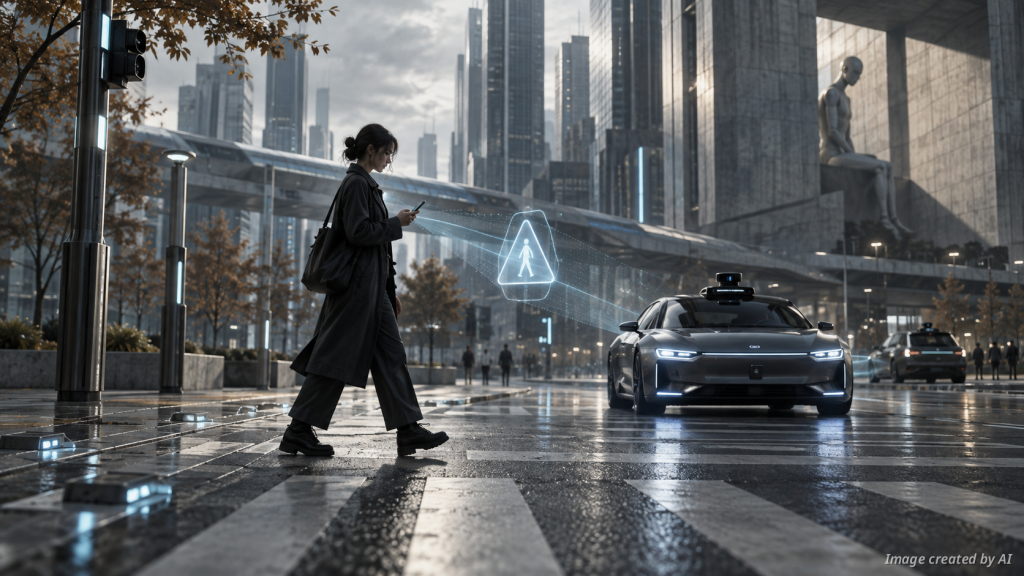
the core components of v2x communication
To implement effective urban strategies, planners should recognize the specific modes of V2X connectivity. These modes define how different elements interact within the intelligent transport system [3].
- vehicle-to-vehicle (V2V): vehicles share speed and position data to prevent collisions.
- vehicle-to-infrastructure (V2I): cars communicate with traffic signals and road sensors to improve efficiency [2].
- vehicle-to-pedestrian (V2P): this layer protects vulnerable road users by providing alerts to both drivers and pedestrians [5].
- vehicle-to-network (V2N): cloud-based systems provide real-time traffic updates and route optimization [3].
integrating ai and 5g for urban efficiency
V2X does not operate in isolation. It relies on the synergy between artificial intelligence, big data, and high-speed networks like 5G [1]. For urban planners, this means electric vehicles as the foundation for smart IoT mobility is no longer a distant vision. It is an actionable strategy for today.
These technologies allow for real-time transactions and data processing [4]. When vehicles communicate with infrastructure, they provide planners with invaluable data sets. This data helps in identifying traffic patterns and planning future infrastructure expansions with precision.
the role of v2x in autonomous driving
Full autonomy requires more than just onboard sensors. While cameras and radar are essential, they have physical limitations in range and visibility. V2X acts as an "extended sensor" that sees around corners and through obstacles [1].
Without V2X, achieving fully autonomous driving is significantly more difficult [1]. Planners should account for this when designing road layouts. Dedicated lanes and smart signage can enhance the performance of autonomous fleets by providing cleaner data inputs.
improving safety through connectivity
Safety remains the primary objective of any urban planning initiative. V2X technology directly contributes to this goal by reducing human error, which is the leading cause of traffic accidents. By integrating digital components into the physical road network, cities can create an environment that actively prevents collisions [1].
Furthermore, V2P communication ensures that pedestrians and cyclists are visible to autonomous systems [5]. This creates a safer, more inclusive urban environment for all citizens. As planners, prioritizing these safety layers is essential for future-proofing our streets.
challenges and future considerations
Despite the benefits, the deployment of V2X faces challenges. Standardization is critical to ensure that vehicles from different manufacturers can communicate with various infrastructure systems. Additionally, cybersecurity must be a top priority to protect the integrity of the data being exchanged.
Planners should also consider the scalability of these systems. As the number of connected vehicles increases, the infrastructure must be capable of handling massive amounts of data. This securing electric vehicle data through OTA updates to prevent cyberattacks approach is vital for long-term urban resilience.
conclusion
V2X technology is a transformative force in urban planning. By bridging the gap between vehicles and infrastructure, it paves the way for smarter, safer, and more efficient cities. Urban experts must embrace these technologies to address the complexities of modern mobility. The future of urban design is not just about concrete and asphalt; it is about the digital threads that connect our world.
more information
- V2X (Vehicle-to-Everything): A communication system that allows vehicles to exchange data with other vehicles, infrastructure, pedestrians, and networks to enhance safety, traffic efficiency, and autonomous driving capabilities [1].
- UTMS (Universal Traffic Management Systems): A comprehensive framework used to manage traffic flow, reduce accidents, and minimize congestion through advanced electronic and communication technologies [2].
- V2I (Vehicle-to-Infrastructure): A sub-category of V2X where vehicles interact with road-side units, traffic lights, and other physical infrastructure to receive real-time traffic information and guidance [3].
- C-V2X (Cellular Vehicle-to-Everything): A specific communication standard that utilizes cellular technology to provide high-speed, low-latency connectivity between vehicles and the cloud for real-time data exchange [4].
- V2P (Vehicle-to-Pedestrian): A safety-focused communication protocol that alerts drivers and pedestrians to each other's presence, significantly reducing the risk of accidents involving vulnerable road users [5].