The rise of electric mobility demands a new approach to digital interaction. As vehicles become sophisticated computers on wheels, the dashboard interface must evolve rapidly. Designers now face the challenge of creating intuitive experiences that prioritize safety and clarity [3].
Electric vehicle (EV) interfaces must manage complex data like battery health and range. A cluttered screen distracts drivers and diminishes the overall experience. Therefore, modern design focuses on minimalism and visual hierarchy to ensure key information remains accessible at a glance [1].
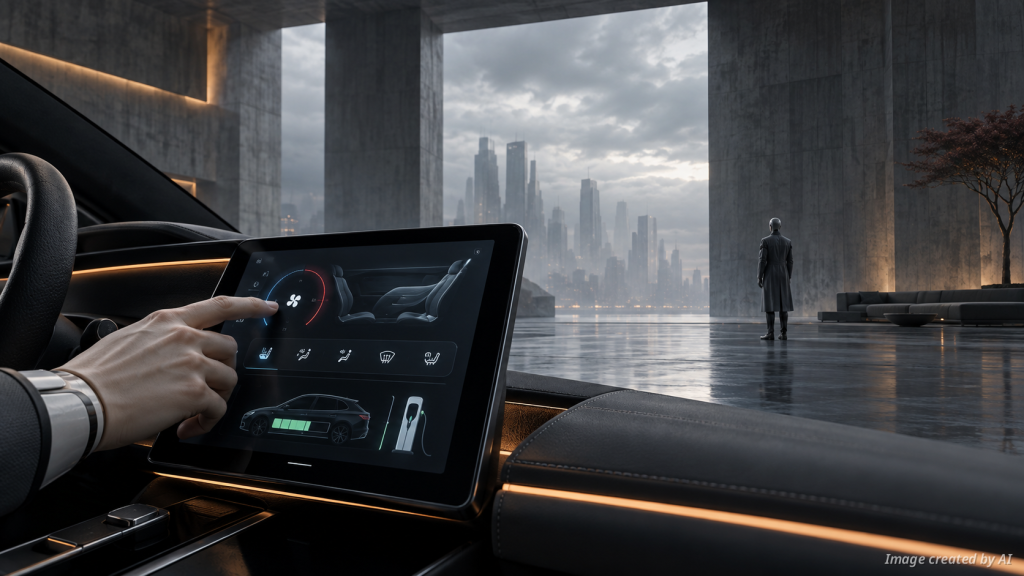
The importance of user-centric design in automotive tech
User experience (UX) design in the EV sector is not just about aesthetics. It involves understanding how a driver interacts with the machine in high-pressure environments. Effective design reduces cognitive load, allowing the driver to focus on the road [5]. By applying principles from professional UI/UX standards, manufacturers can turn complex vehicle data into actionable insights.
User interface (UI) design focuses on the visual elements that facilitate this interaction. This includes color palettes, iconography, and typography that remain legible under varying lighting conditions. When these elements align, the vehicle feels like a natural extension of the driver [4]. You can learn more about the future of AI-driven natural interaction in electric vehicles to see how these trends are evolving.
Key principles for intuitive EV interfaces
Designing for electric vehicles requires a shift in mindset. Unlike traditional cars, EVs offer constant connectivity and software-driven features. Designers should prioritize the following core strategies:
- Visual hierarchy: Place critical driving data like speed and range in the primary field of view.
- Simplified navigation: Reduce the number of taps required to access essential features like climate control or charging maps.
- Consistent feedback: Use haptic or visual cues to confirm user actions, ensuring the driver knows the system has registered their command [3].
For those looking to enter this field, specialized roles are becoming more common in the automotive industry. Companies are actively seeking talent to bridge the gap between software and hardware as seen in recent recruitment trends. Developing mobile applications for the expanding electric vehicle ecosystem is also a critical skill for modern designers.
Bridging the gap between software and hardware
The integration of hardware sensors and software interfaces is the hallmark of a great EV experience. Designers must work closely with engineers to ensure the UI reflects the vehicle's actual performance. This requires a deep understanding of how interface components interact with real-time vehicle data [4].
Consistency is vital. Whether the user is interacting with a mobile app or the built-in center console, the design language should remain uniform. This creates a seamless transition between the user's phone and their vehicle. By maintaining this professional design approach, brands build trust and loyalty with their customers [1].
Future trends in automotive UX
As autonomous driving technology advances, the role of the interior interface will shift. The vehicle will transition from a driving tool to a living space. Designers will need to create interfaces that support entertainment, work, and relaxation during transit.
Voice control and gesture recognition will play larger roles in this transition. These technologies reduce the need for physical buttons, creating cleaner and more modern cabins. However, the fundamental goal remains the same: to provide a safe, efficient, and enjoyable experience for all passengers [5].
Conclusion
The future of electric vehicles depends on how well we design the human-machine interface. By focusing on intuitive layouts and user-centric workflows, designers can make EV ownership more accessible. As technology evolves, the commitment to clarity and safety must remain the top priority for every UX/UI professional in the automotive space.
More Information
- UI Design: The process of creating the visual components of an interface, such as buttons, icons, and color schemes, to ensure a product is both aesthetically pleasing and functional for the user [1].
- UX Design: A comprehensive approach focused on the overall feeling and satisfaction a user experiences while interacting with a product or service, ensuring it meets their specific needs [2].
- Visual hierarchy: An arrangement of design elements that guides the user's eye to the most important information first, which is critical for safety in automotive dashboard displays [3].
- Cognitive load: The amount of mental effort being used in the working memory; effective automotive UI design aims to minimize this to keep drivers focused on the road [4].
- Human-machine interface (HMI): The point of contact between a human user and a machine, which in the context of EVs, encompasses the displays, touchscreens, and control systems used to operate the vehicle [5].