Transitioning to an electric fleet is a strategic move for modern companies. However, managing these vehicles requires specialized digital tools to ensure operational efficiency. Businesses often face challenges in tracking battery health, charging schedules, and energy consumption patterns [1].
Implementing robust software solutions allows managers to monitor their assets in real time. These platforms help bridge the gap between traditional logistics and modern, sustainable transport requirements [2]. By utilizing advanced fleet management software, companies can significantly reduce operational overheads.
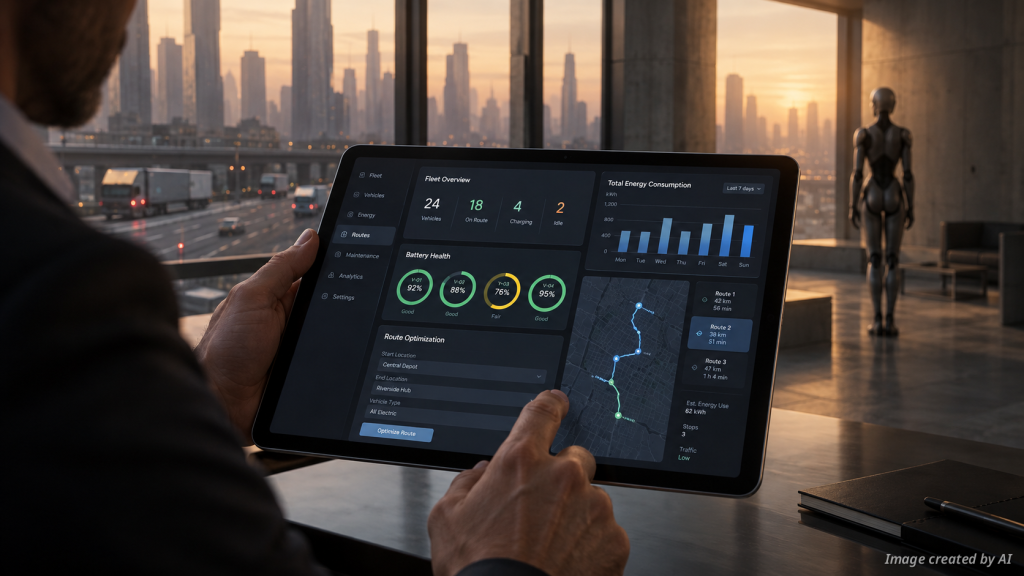
Why electric fleets require specialized software
Electric vehicles (EVs) operate differently than internal combustion engine vehicles. Traditional management systems may lack the specific metrics needed for electric charging and range optimization. A dedicated high-performance energy management software for electric vehicles becomes essential for success.
These systems track state-of-charge (SoC) and remaining range accurately. They prevent the risk of vehicles running out of power during critical delivery windows. Furthermore, integration with professional fleet management platforms ensures that maintenance schedules align with battery health data [2].
Key features to look for in management tools
Choosing the right software involves evaluating specific technical capabilities. A comprehensive solution should offer more than just basic GPS tracking. It must provide actionable insights into driver behavior and energy efficiency [1].
Real-time battery and charging monitoring
The core of any electric fleet platform is its ability to monitor energy. Managers need to see exactly when a vehicle needs to be plugged in. This AI predictive maintenance approach prevents unexpected downtime by flagging potential battery issues before they escalate.
Integration with performance metrics
Effective management often involves tracking key performance indicators (KPIs). Just as businesses use KPI management software for staff, they should apply similar rigor to fleet operations [3]. Monitoring metrics like cost-per-mile and energy-efficiency-per-route helps in data-driven decision-making [4].
Optimizing operational workflows
Software is not just about data collection; it is about improving daily workflows. By automating routine tasks, dispatchers can focus on high-level strategy. This is similar to how work management software simplifies complex business processes [5].
Automating dispatch and routing
Smart routing algorithms can factor in the proximity of charging stations. This ensures that vehicles take the most efficient path while maintaining adequate charge. Such automation reduces the burden on human coordinators and minimizes human error [1].
Managing driver performance
Driver behavior directly impacts battery longevity. Aggressive acceleration and heavy braking drain power faster than smooth driving. Software that provides feedback to drivers helps them adopt more energy-efficient habits, ultimately extending the life of the fleet [2].
The impact of data-driven decisions
Data is the most valuable asset for a modern transport business. By analyzing historical data, companies can identify trends in energy consumption. This allows for better planning regarding infrastructure investment, such as installing more chargers at specific depots [4].
Reducing maintenance costs
Predictive analytics can forecast when a vehicle requires service. By addressing issues early, companies avoid costly emergency repairs. This proactive stance is a hallmark of efficient fleet management [1]. It ensures that the fleet remains operational and reliable for clients.
Enhancing overall transparency
Manual tracking often leads to inconsistencies and lack of transparency. Digital solutions provide a single source of truth for all stakeholders. Whether it is finance, operations, or HR, everyone can access accurate reports on the fleet's status [2].
Choosing the right software provider
When selecting a software partner, consider the scalability of the platform. A good provider should grow alongside your business. Look for vendors who offer robust support and regular updates to their systems [4].
Evaluating user interface and ease of use
Even the most powerful software is useless if it is too difficult to operate. Prioritize platforms with intuitive dashboards that allow for quick data interpretation [1]. A user-friendly interface reduces training time and increases adoption rates across the organization [5].
Ensuring compatibility and integration
Your new fleet software should integrate seamlessly with existing ERP or CRM systems. This connectivity ensures a smooth flow of information across the entire enterprise. It prevents data silos and promotes a more unified business strategy [5].
Conclusion
Managing an electric fleet requires a shift in mindset and tools. By adopting specialized software, businesses can optimize their operations and maximize the benefits of electric mobility. Start by evaluating your current operational gaps and choosing a solution that addresses your specific needs. The future of logistics is electric, and the right software is the key to staying ahead.
More Information
- Fleet management software: A digital platform designed to track, manage, and optimize vehicle operations, including maintenance, fuel or energy consumption, and driver performance to improve overall efficiency [1].
- GPS tracking: A technology that uses satellite signals to determine the precise location of vehicles in real-time, allowing managers to monitor routes and improve delivery accuracy [2].
- KPI management: The process of defining, tracking, and measuring key performance indicators to ensure that business activities align with strategic goals and operational targets [3].
- Predictive analytics: The use of historical data and statistical algorithms to identify the likelihood of future outcomes, such as vehicle breakdowns or optimal charging times [4].
- Workflow automation: The implementation of software to automate repetitive tasks and business processes, reducing manual intervention and increasing productivity across the organization [5].