The modern era of connectivity has bridged the gap between our living spaces and our transportation. Integrating smart home systems with remote-controlled electric vehicles (EVs) is no longer a futuristic concept. It is a practical reality that enhances efficiency, safety, and convenience for homeowners worldwide.
By leveraging advanced communication protocols, your home can now "talk" to your vehicle. This synergy allows for seamless automation, from charging management to security monitoring. As these technologies mature, they create a cohesive ecosystem that simplifies daily routines [2].
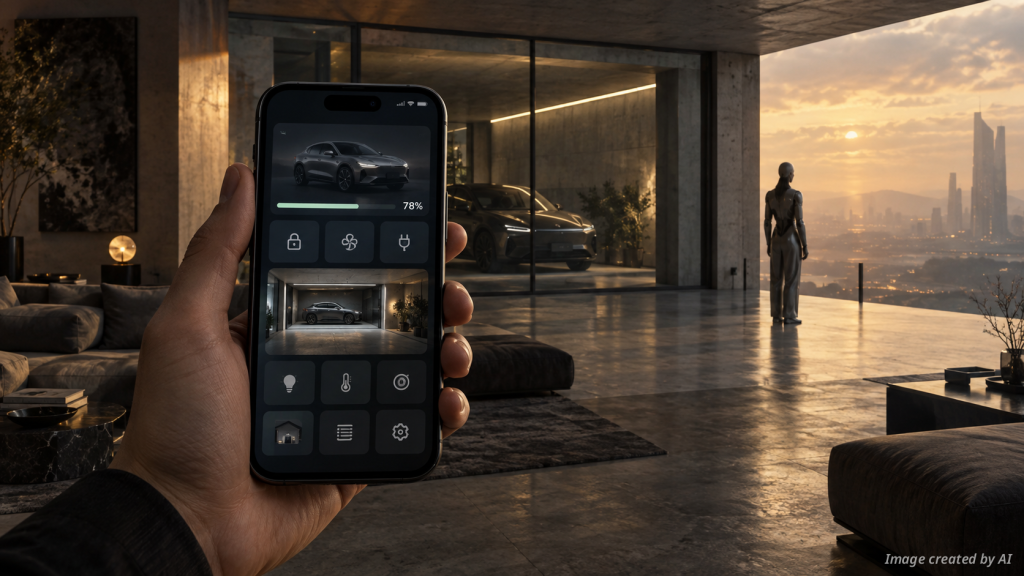
The role of V2X technology in connectivity
Vehicle-to-Everything (V2X) technology serves as the backbone for this integration. It enables real-time data exchange between your car and your smart home environment. This communication ensures that your vehicle is always ready when you need it most [2].
Through V2X, your home can optimize energy consumption by scheduling charging cycles during off-peak hours. This smart traffic infrastructure also helps in managing local power grids effectively. Consequently, homeowners save on utility costs while maintaining a sustainable lifestyle.
Enhancing security through smart integration
Security is a primary concern for any smart home user. Integrating your EV with your home security system provides an additional layer of protection. Modern AI driver monitoring systems and home surveillance cameras can work in tandem to monitor your property [1].
For instance, if your home security system detects unauthorized movement, it can trigger an alert to your vehicle. Similarly, advanced surveillance solutions can help track vehicle entry and exit points. This creates a unified safety perimeter around your residence [1].
Managing connectivity and hardware
Effective integration requires stable hardware communication. Many users rely on Bluetooth or Wi-Fi to link their devices. However, maintaining these connections is vital for consistent performance [4].
Users must ensure that their Bluetooth settings are correctly configured to prevent signal interference. Regular software updates for both your smart home hub and your vehicle are essential. These updates often include security patches that protect your data from potential vulnerabilities [4].
Autonomous capabilities and future trends
The industry is moving rapidly toward higher levels of automation. Current smart vehicles often operate between level 2 and level 3 autonomy [2]. As we approach level 4 and level 5, the integration with smart homes will become even more profound.
Imagine your vehicle autonomously parking itself in your garage after a long day. It could then initiate a charging sequence while simultaneously updating your home's energy profile. This level of autonomous driving convenience is the ultimate goal for developers and users alike [2].
Practical applications in daily life
Beyond technical specifications, the benefits manifest in everyday tasks. For example, families often use shuttle services for school transport or special events [3]. Integrating these services with smart home alerts ensures that parents are notified of arrivals in real-time.
Furthermore, specialized mounting and hardware accessories allow for better installation of sensors [5]. These sensors help in monitoring the environment around your vehicle. Proper setup ensures that your smart home remains a safe and efficient hub for all your connected assets [5].
Conclusion
Integrating smart homes with remote-controlled electric vehicles represents a significant leap forward in domestic technology. By utilizing V2X communication and robust security protocols, users can enjoy a safer and more efficient lifestyle. As the ecosystem continues to evolve, the possibilities for automation will only expand, making our homes and vehicles smarter than ever before.
More Information
- V2X technology: A communication system that allows vehicles to exchange data with their surroundings, including infrastructure and other vehicles, to improve safety and traffic efficiency.
- Autonomous driving levels: A classification system ranging from level 0 (no automation) to level 5 (full automation), defining the vehicle's ability to operate without human intervention.
- Smart home integration: The process of connecting various household devices and systems, such as security, lighting, and transportation, into a single, manageable network.
- Bluetooth connectivity: A short-range wireless technology used to link devices, often requiring stable signal management to ensure seamless communication between a smartphone and a vehicle.
- Surveillance hardware: Physical equipment such as cameras, brackets, and sensors that provide the visual and data-gathering foundation for smart home security and vehicle monitoring.