As a parent, your child's safety is your absolute priority. Modern life is often fast-paced, and even the most attentive caregivers can experience moments of distraction. Tragically, incidents where children are accidentally left behind in vehicles can lead to life-threatening situations due to heatstroke or dehydration. Fortunately, automotive innovation is stepping in to provide a crucial safety net for families worldwide.
New advancements in smart cabin sensing technology are designed to detect the presence of children left unattended in cars. These systems act as a silent guardian, ensuring that no child is ever forgotten, regardless of how busy or stressed a driver might be. By integrating sophisticated hardware directly into the vehicle architecture, manufacturers are helping to eliminate these preventable tragedies.
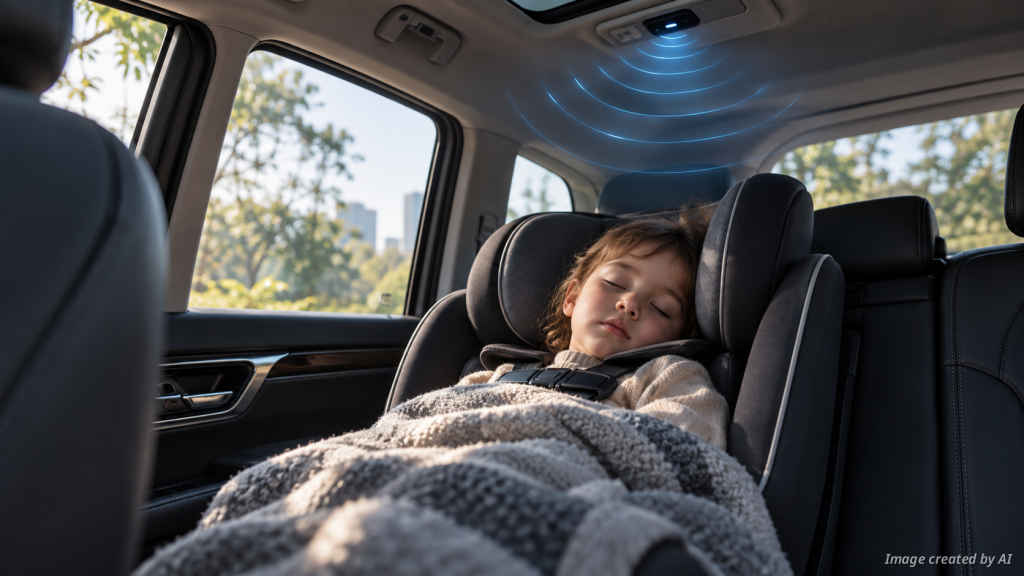
How radar and sensor technology works
The core of this safety revolution lies in high-precision detection. Unlike basic weight sensors that might be triggered by a heavy bag, modern systems use advanced radar and smart chips to identify human presence. For instance, companies are utilizing millimeter-wave radar that can effectively "see" through soft materials like blankets or upholstery [1].
This technology is incredibly sensitive. It can detect microscopic movements, such as a child’s rhythmic breathing or a heartbeat, even if the child is sleeping soundly [2]. By distinguishing these subtle biological signals from inanimate objects, the system minimizes false alarms while maximizing detection accuracy. This advanced sensor integration ensures that the vehicle remains aware of its occupants even after the engine is turned off.
Leading manufacturers and safety commitments
Major global automakers are racing to standardize these life-saving features. Tesla has pioneered the use of sensors that monitor the cabin environment to detect occupants [1]. Similarly, Toyota is developing its "Cabin Awareness" system, which uses 4D radar imaging to scan the entire interior of the vehicle [4]. These systems are designed to be proactive rather than reactive.
In the electric vehicle sector, companies like VinFast are also prioritizing this technology. By integrating Vayyar’s 4D radar imaging into models like the VF 6 and VF 7, they ensure that the vehicle can classify and identify passengers on every seat [5]. As the industry moves toward smarter AI driver monitoring systems, these cabin sensors are becoming a standard requirement for family-oriented vehicles.
The role of smart chips in detection
Hardware innovation is the backbone of these systems. Japanese firms, such as Asahi Kasei, have developed specialized smart chips, like the AK5818, specifically for this purpose [2]. These chips utilize proprietary frequency control to detect human presence with extreme precision. Because they are designed for mass production, they provide a scalable solution that can be implemented across various car models in the near future.
The benefit of using radar over cameras is significant. Radar technology protects passenger privacy while eliminating blind spots, as it can penetrate through seats and interior panels [3]. This creates a comprehensive safety net that works effectively in all lighting conditions, from bright sunshine to total darkness.
What happens when a child is detected
The primary goal of these systems is to alert the driver before a dangerous situation escalates. If the car is turned off and the sensors detect a child, the vehicle takes immediate action. Most systems follow a tiered warning process:
- Internal alerts: The car may sound a horn or flash its lights to attract attention from people nearby.
- Digital notifications: The vehicle sends an alert directly to the parent's smartphone via a dedicated app or SMS [4].
- System intervention: In some advanced configurations, the car may attempt to prevent the doors from locking or adjust the climate control to keep the cabin temperature safe while the parent is notified.
This multi-layered approach ensures that even if a parent is distracted, the technology provides multiple opportunities to rectify the situation. It effectively bridges the gap between human error and technological intervention.
The future of family vehicle safety
As we look forward, the integration of these systems will likely become mandatory in many regions. Industry associations are already pushing for rear-seat occupant alerts to be standard in almost all new vehicles [1]. This shift represents a broader trend in the automotive industry toward smart electric vehicles that prioritize the well-being of their passengers above all else.
Parents should consider these features when shopping for their next vehicle. While technology cannot replace parental vigilance, it serves as an essential backup. By choosing vehicles equipped with advanced cabin sensing, you are adding an extra layer of protection for your most precious cargo. The combination of radar, AI, and smart chip technology is successfully turning the modern car into a safer environment for every family member.
More Information
- Millimeter-wave radar: A high-frequency radar technology used in vehicle cabins to detect micro-movements like breathing and heartbeats, allowing the system to identify living beings even when covered by blankets or clothing.
- Smart sensor chip: A specialized electronic component, such as the AK5818, designed to process radar signals and distinguish human biological signatures from other objects within a vehicle's interior.
- 4D radar imaging: An advanced sensing technique that provides high-resolution spatial data, enabling the vehicle to map the entire cabin and track the exact location and status of every passenger.
- Cabin awareness: A safety feature developed by automakers to monitor the vehicle interior after the engine is turned off, designed to alert owners via smartphone notifications if a child or pet is left behind.
- Occupant classification: The process by which vehicle software analyzes sensor data to identify and categorize individuals inside the car, ensuring the system can distinguish between adults, children, and inanimate objects.