The rapid expansion of the electric vehicle (EV) market demands a corresponding evolution in charging infrastructure. As adoption rates climb, the industry is shifting toward automation to solve the challenges of convenience, accessibility, and high-speed energy delivery. Intelligent EV charging robots represent the next frontier in this transition.
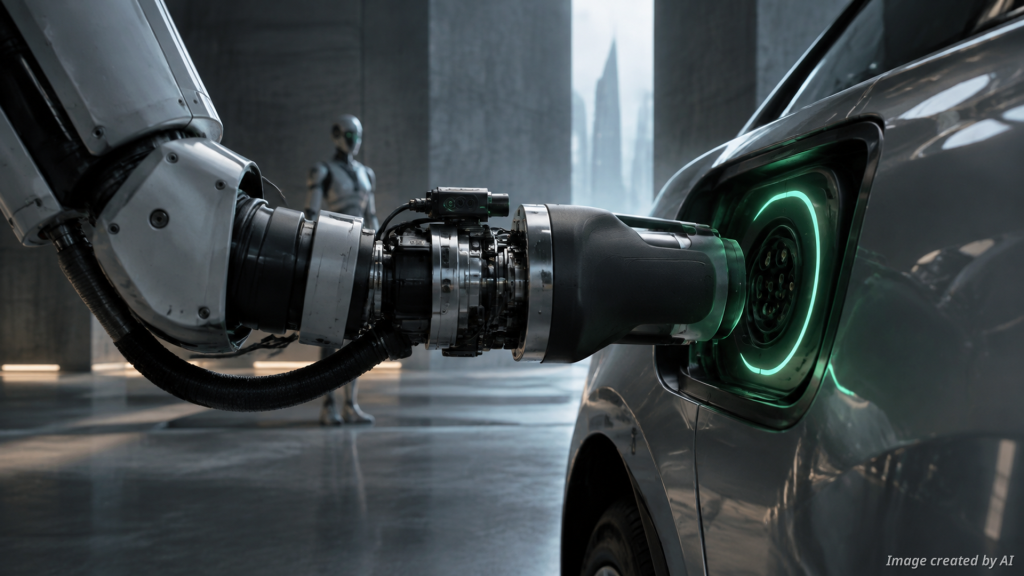
These systems utilize advanced robotics and artificial intelligence to automate the connection process. By removing the need for human intervention, they ensure that charging remains reliable, safe, and efficient across diverse environments. The global market for these robot charging stations is projected to grow significantly as infrastructure demands increase [2].
Engineering the autonomous connection
At the core of these systems is a sophisticated fusion of computer vision and control algorithms. Engineers must design robots capable of identifying charging inlets with millimeter-level precision. This is particularly difficult because vehicle designs vary, and environmental conditions change constantly.
To overcome this, companies like Rocsys combine AI-based computer vision with soft robotics [4]. This approach allows the robot to adapt to the vehicle’s position and orientation in real-time. The system communicates directly with the car to open the charging port automatically [4].
Overcoming environmental and physical variables
Reliability in all weather conditions is a primary engineering objective. Whether in a dark parking structure or an exposed outdoor lot, the robot must function without failure. Hyundai Motor Group has addressed these challenges by developing automatic charging robots that utilize 3D camera-based AI [3].
This technology calculates multiple variables simultaneously to ensure a secure connection. It is especially critical as charging cables become thicker and heavier to support high-speed power delivery [3]. By automating the physical handling of these cables, robots remove the burden from the end-user.
Improving accessibility and safety
Intelligent charging robots provide significant benefits for users with mobility barriers. Heavy cables and complex manual interfaces can be difficult for many drivers to navigate. Automated systems simplify this interaction, making context aware EV systems more inclusive for all demographics [3].
Safety is also enhanced through the integration of remote monitoring services. These systems can detect potential faults during the charging process and communicate status updates back to the vehicle. This creates a closed-loop system where the robot, the charger, and the car work in harmony to maintain optimal energy flow [4].
Deployment in transportation hubs
The application of these robots extends beyond residential or commercial parking. Large-scale transportation infrastructures, such as airports and seaports, are ideal testing grounds for this technology. For instance, Hyundai and Incheon International Airport have partnered to demonstrate the utility of these systems in high-traffic environments [1].
These demonstration projects are essential for validating the long-term durability of robotic arms in public spaces. As the industry scales, these robots will likely become standard features in EV fleet optimization and logistics depots [5]. They offer a path toward fully autonomous fleet operations where vehicles charge themselves during downtime.
Technical challenges for robotics engineers
Developing these systems requires expertise in several specialized domains. Engineers must focus on the following areas:
- Computer vision: Developing robust algorithms to detect charging ports under varying light and weather conditions.
- Control theory: Managing the kinematics of robotic arms to ensure gentle, precise insertion of connectors.
- Communication protocols: Establishing seamless handshake procedures between the robot and the vehicle’s onboard computer.
- Structural design: Creating hardware that can withstand years of repetitive motion and exposure to the elements [3].
The future of the charging ecosystem
The integration of artificial intelligence into charging infrastructure will continue to evolve. Future iterations of these robots may include predictive maintenance capabilities, allowing them to identify wear and tear on cables before a failure occurs. This proactive approach is vital for maintaining uptime in commercial fleets.
As the Rocsys ecosystem and similar platforms mature, the focus will shift toward standardizing communication between different vehicle brands and robotic chargers [5]. This interoperability is the key to widespread adoption. Engineers must prioritize open standards to ensure that any EV can connect to any robotic charger regardless of the manufacturer.
Conclusion
Intelligent EV charging robots are more than a convenience; they are a necessary evolution for the future of transportation. By automating the physical connection process, these systems solve critical issues related to weight, ergonomics, and efficiency. As the technology advances, we can expect to see these robots deployed in every major transportation hub globally, facilitating the transition to a fully electrified future.
More Information
- Automatic charging robot (ACR): A robotic system designed to autonomously perform the connection and disconnection of charging cables to electric vehicles without human intervention, often utilizing AI for precise positioning.
- Compound annual growth rate (CAGR): A financial metric used to measure the mean annual growth rate of an investment or market over a specified period longer than one year.
- Computer vision: A field of artificial intelligence that trains computers to interpret and understand the visual world, allowing robots to identify charging ports and navigate obstacles in real-time.
- Soft robotics: A subfield of robotics dealing with the design and construction of robots from highly compliant materials, similar to those found in living organisms, to allow for safer interactions with humans and vehicles.
- Fleet-ready infrastructure: Charging solutions specifically engineered to support the high-demand, continuous operation requirements of commercial electric vehicle fleets, such as taxis, buses, and delivery trucks.