In the context of Vietnam's industrial sector pushing for green transformation, optimizing electric motor system performance has become a top priority. Electric motors currently consume 60% to 70% of total electrical energy in factories [5]. Therefore, mechanical and electrical engineers need to master the use of control software to fine-tune operations.
Modern software solutions not only assist in monitoring but also proactively adjust technical parameters. This helps businesses significantly reduce operating and maintenance costs. Applying this technology is the key to achieving high energy efficiency standards such as IE3 or IE4.
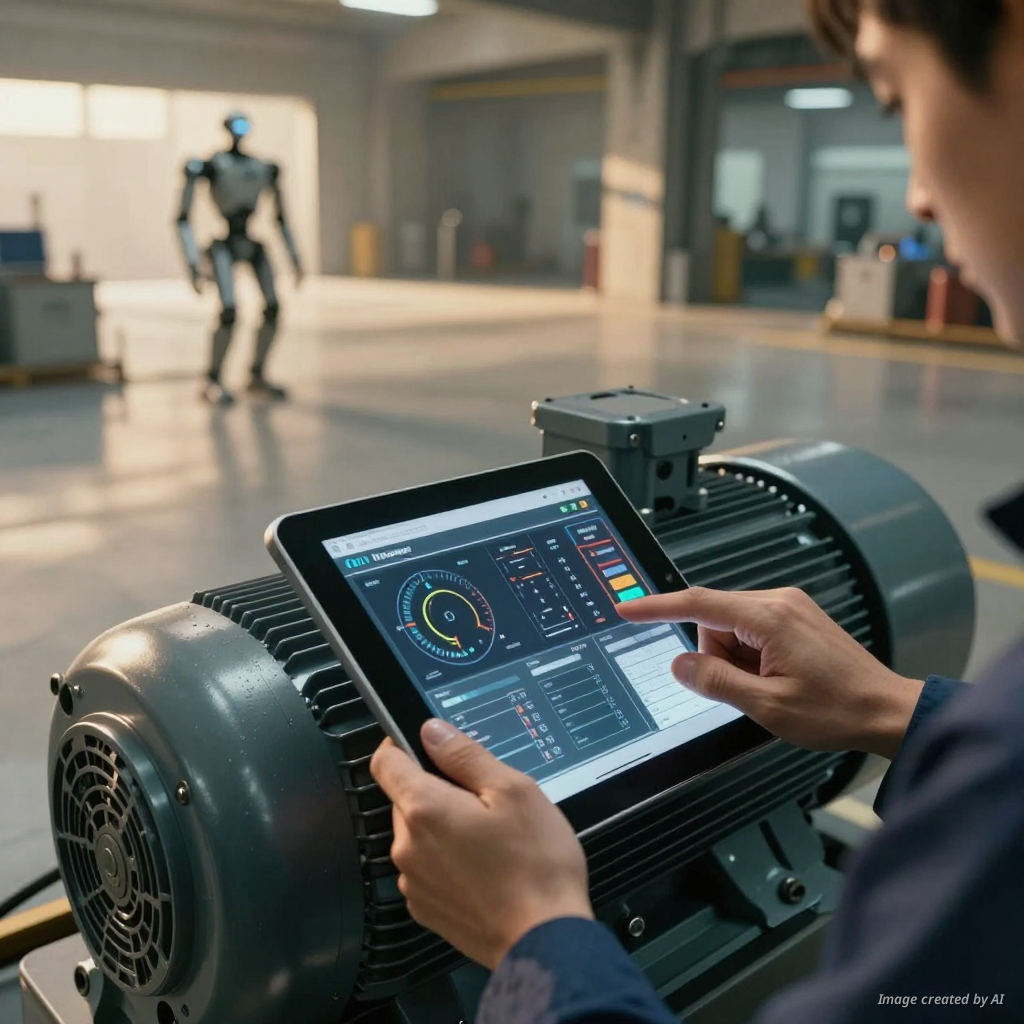
The role of software in motor control
Control software acts as the "brain" connecting the operator and the Variable Frequency Drive (VFD). Through intelligent algorithms, the software allows for flexible changes to input frequency and voltage [1]. As a result, the motor always operates at its peak efficiency point regardless of load variations.
Additionally, these tools help engineers perform quick configurations through intuitive graphical interfaces. You can learn more about SoMove software to see the convenience of parameter setup. Minimizing manual operations increases accuracy and reduces technical errors.
Core algorithmic technologies
To optimize performance, software often integrates advanced control algorithms. The V/f control method is a popular choice for pump and fan systems with variable loads. Conversely, vector control provides superior torque control at low speeds [2].
Flux optimization is another significant advancement. The software automatically adjusts the magnetizing current based on the actual load to minimize energy losses. This is an effective solution for motors that do not always run at full rated capacity.
Popular software solutions in Vietnam
The Vietnamese market currently offers many powerful software solutions from the world's leading brands. Each software has distinct advantages suitable for different production needs. Below are notable names that engineers should consider:
- Schneider Electric SoMove: A flexible configuration tool for VFDs and soft starters [1].
- Siemens TIA Portal: Deep integration, allowing for simulation and fine-tuning of drives in an automation environment [2].
- Danfoss MCT 10: Supports energy-saving efficiency calculations, helping to quickly evaluate payback periods [3].
- ABB Drive Composer: Provides real-time data visualization, helping to diagnose faults accurately [4].
Choosing the right software should be based on the ecosystem of equipment already available at the factory. You can refer to Danfoss's MCT 10 tool to understand how to optimize HVAC systems. Compatibility between software and hardware is the deciding factor for final efficiency.
Economic and technical benefits
Applying control software brings dual benefits to businesses. First, the ability to save 20% to 50% on electricity is an impressive figure for variable load systems [5]. Second, soft starting helps reduce mechanical shock, thereby extending the lifespan of drive components.
Furthermore, real-time diagnostic features help transform maintenance models. Instead of waiting for a failure to occur, engineers can perform predictive maintenance based on collected data [4]. This helps minimize unplanned downtime and optimizes production costs.
If you are interested in future technology trends, learn more about over-the-air (OTA) software updates for cars. Advancements in automotive control software share many principles similar to industrial control systems. Grasping these technologies will significantly enhance an engineer's professional capabilities.
Integration into the automation ecosystem
Modern control software does not stand alone but integrates closely with PLC and SCADA systems. Industrial communication standards such as Modbus, Profinet, or EtherNet/IP help data flow seamlessly [2]. Engineers can monitor the entire production line from a central screen.
Storing operational data (datalogs) also allows for long-term energy performance analysis. These reports are an important basis for businesses to implement further technical improvements. This is the foundation of the smart factory in the Industry 4.0 era.
To achieve maximum efficiency, training the technical team on software usage skills is essential. Regularly update knowledge from manufacturer manuals [3]. The combination of solid engineering thinking and modern software tools will make a big difference.
More Information
- SoMove: A specialized configuration software from Schneider Electric, allowing engineers to install, adjust, and monitor motor control devices such as VFDs and soft starters.
- TIA Portal: Siemens' digital environment, where SINAMICS drive configuration tools are integrated, helping to optimize coordination between PLCs and drive systems.
- MCT 10: Danfoss's management and diagnostic tool, supporting users in tracking operational parameters and calculating energy savings for motor systems.
- Drive Composer: ABB's specialized software for starting and maintaining drives, providing real-time data visualization for performance analysis.
- Performance optimization: The process of using software to fine-tune voltage and frequency parameters, helping motors operate more energy-efficiently and durably.