Parking in a busy urban environment is often a source of significant anxiety for modern drivers. Navigating tight spaces while managing heavy traffic requires immense focus and patience. Fortunately, the rise of smart electric vehicles is changing this experience entirely.[1]
Innovative manufacturers are now integrating advanced automated systems into their latest models. These features allow vehicles to handle complex maneuvers with minimal human intervention. By leveraging sensors and artificial intelligence, cars can now identify and execute perfect parking jobs autonomously.[1]
The evolution of parking assistance
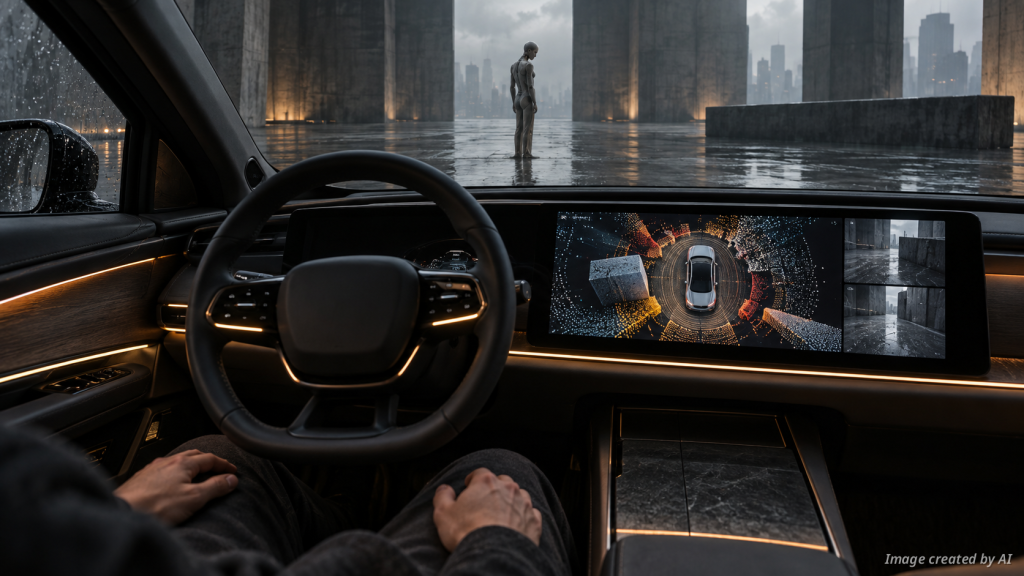
Parking technology has transitioned from simple proximity sensors to fully autonomous systems. Early versions only provided audible beeps when a bumper approached an obstacle. Today, smart parking systems utilize cameras and lidar to map the environment in real-time. This evolution ensures that the vehicle maintains a safe distance from surrounding objects.[1]
Drivers no longer need to fear the dreaded parallel park. Modern electric platforms, such as the GEA architecture, integrate these tools directly into the chassis.[1] This deep integration allows for smoother steering and braking control during the parking process. It represents a significant leap forward in enhancing vehicle safety through OTA updates for electronic steering and braking.
Reducing mental fatigue in cities
Urban driving involves constant micro-stressors that accumulate throughout the day. Searching for a spot and executing the maneuver are often the most taxing parts of a commute. Smart parking technology acts as a digital assistant, removing the pressure of precision from the driver.[1]
When the vehicle manages the steering, the driver can monitor the process with confidence. This shift allows the driver to remain calm, even in crowded metropolitan areas.[3] It is a major improvement for anyone who spends hours navigating city streets. Global economic trends show that efficiency in transportation is becoming a priority for all manufacturers.
Safety through advanced sensors
Safety is the cornerstone of these automated parking features. Systems are equipped with automatic emergency braking and collision warnings to prevent accidents.[1] Even if a pedestrian walks behind the car, the sensors detect the movement instantly. The vehicle stops immediately, ensuring the safety of everyone nearby.
These sensors are not just for parking; they provide a 360-degree view of the vehicle's surroundings. This constant vigilance helps drivers avoid blind-spot accidents during regular driving as well.[1] It is a comprehensive approach to safety that defines the modern electric car experience.
The role of artificial intelligence
AI is the brain behind the self-parking capability. It processes visual data and calculates the optimal path into a space within milliseconds.[1] The system learns from every maneuver, becoming more efficient over time. This continuous improvement is essential for handling unpredictable urban environments.
Furthermore, high-precision positioning software for autonomous electric vehicles ensures that the car aligns perfectly every time. The precision is often better than what a human can achieve manually.[1] This reliability builds trust between the driver and the machine.
Future outlook for urban mobility
As technology advances, we can expect even more seamless integration. Imagine a car that drops you off at the entrance and parks itself in a remote spot.[5] This level of convenience is already being tested in various urban development projects. It will redefine how we interact with our vehicles in the coming years.
While some might miss the hands-on control, the benefits of reduced stress are undeniable.[1] Urban living is becoming faster and more complex. Having a vehicle that takes care of the small details is a luxury that is quickly becoming a standard expectation.[3]
Challenges and considerations
Despite the advantages, users must remain aware of their surroundings. Technology is a tool, not a replacement for human judgment.[1] Drivers should always be prepared to take control if the system encounters an error. Maintaining the sensors is also crucial for optimal performance.[4]
As with any new technology, public awareness and education are key to widespread adoption. Understanding the limitations of the parking system helps users stay safe.[4] It is a learning curve that pays off in long-term comfort and convenience.
Conclusion
Smart electric vehicles are transforming the urban driving experience. By automating the parking process, they significantly reduce the stress associated with city commutes.[1] With continued innovation in AI and sensor technology, the future of driving looks much brighter and more relaxed. Embracing these features is the first step toward a more efficient and enjoyable journey.
More Information
- ADAS: Advanced Driver Assistance Systems are electronic technologies that assist drivers in driving and parking functions, designed to increase vehicle safety and improve the overall driving experience.
- Lidar: A remote sensing method that uses light in the form of a pulsed laser to measure ranges to the Earth, crucial for autonomous vehicle navigation.
- Urban mobility: The ability to move people and goods within a city environment, which is being optimized through smart electric vehicle technology and connectivity.
- Sensor fusion: The process of combining sensory data from disparate sources, such as cameras and radar, to reduce uncertainty and improve the accuracy of autonomous parking.
- Autonomous parking: A vehicle feature that enables the car to detect a parking space and maneuver into it without direct driver input, reducing stress in tight spaces.