The automotive industry is undergoing a radical shift as software-defined vehicles become the new standard. For marketing strategists, this evolution offers a unique opportunity to redefine the driver experience through hyper personalization. Unlike traditional vehicle customization, hyper personalization relies on real-time data to create individualized interactions at every touchpoint [3].
As electric vehicles (EVs) become more connected, the ability to tailor features to specific user behaviors is no longer a luxury. It is a competitive necessity. The global market for these advanced strategies is projected to reach $52.8 billion by 2034 [1]. To succeed, brands must move beyond basic demographics and embrace behavioral insights.
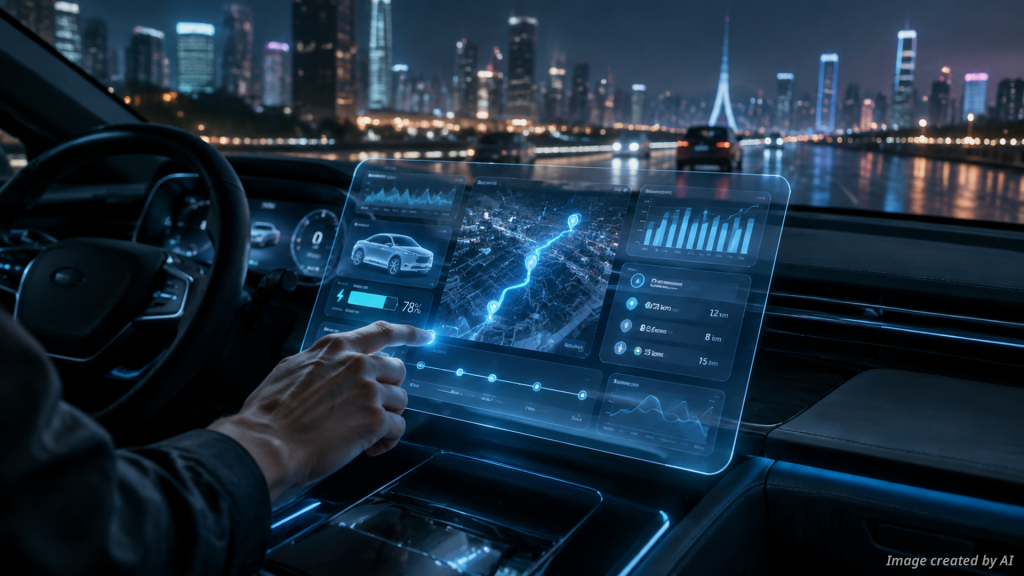
Defining hyper personalization in the automotive sector
Hyper personalization is the zenith of tailored marketing. It leverages artificial intelligence (AI), machine learning (ML), and behavioral science to deliver content and services uniquely aligned with individual preferences [3]. While traditional personalization segments customers into broad groups, this approach creates micro-segments of one.
Modern consumers now expect the same level of service from their vehicles as they do from digital giants. Companies like Netflix have pioneered recommendation systems that map users into dynamic taste clusters [2]. Automotive strategists should apply these same principles to the driving experience. By tracking how users interact with software and connected services in electric vehicles, brands can predict needs before they arise.
Moving beyond demographics with behavioral data
Age and gender are no longer sufficient for effective targeting. True hyper personalization requires a deep understanding of user behavior. For instance, Netflix analyzes completion rates and viewing velocity to lower churn [4]. Similarly, EV manufacturers can analyze charging patterns and route preferences to optimize the ownership experience.
This shift toward individualized experiences at scale is fueled by the proliferation of AI across enterprise platforms [1]. When a vehicle learns that a driver prefers specific climate settings or navigation routes at certain times, it builds long-term loyalty. This data-driven approach transforms the vehicle from a commodity into a personalized assistant.
The role of AI and machine learning
Artificial intelligence is the engine driving this transformation. By processing vast amounts of real-time data, AI enables vehicles to adapt instantly to the driver's environment [5]. This capability is essential for managing complex systems like battery health and energy efficiency.
Marketing strategists must collaborate with engineering teams to integrate these insights into the customer journey. For example, leveraging real-time data analytics allows brands to offer proactive maintenance alerts or energy-saving tips [3]. These interactions strengthen the relationship between the brand and the owner.
Building a strategy for the future
As the industry evolves, the transition from competitive advantage to fundamental requirement is accelerating [5]. Brands that fail to adopt these strategies risk losing market share to tech-forward competitors. Success requires a robust infrastructure that supports first-party data strategies [1].
Consider the following steps to implement a hyper personalization strategy:
- Invest in cloud-native infrastructure to handle real-time data processing.
- Develop dynamic user profiles that evolve based on driving habits.
- Integrate edge AI in electric vehicles to ensure privacy and speed.
- Create feedback loops that allow the vehicle to learn from user corrections.
The importance of data privacy
Hyper personalization relies heavily on user data. Therefore, trust is the foundation of any successful strategy. Strategists must ensure that data collection is transparent and provides clear value to the driver. When users see that their data improves their experience, they are more likely to engage.
Privacy-first design is not just a regulatory requirement; it is a brand differentiator. By prioritizing security, manufacturers can build long-term relationships with their customers. This trust is essential for the future of connected mobility.
Conclusion
Hyper personalization in EVs is more than a trend; it is the future of automotive marketing. By leveraging AI and behavioral data, brands can create deeply engaging experiences that foster loyalty and retention. As the market expands, those who master these technologies will define the next generation of mobility.
More Information
- Hyper personalization: A marketing strategy that uses real-time data, AI, and machine learning to deliver individualized experiences to customers at scale, moving beyond traditional demographic-based segmentation [1].
- Taste clusters: A method of grouping users based on specific behavioral patterns and affinities rather than broad demographic categories, commonly used by streaming services to personalize content [2].
- Micro-segments: Highly specific customer groups identified through advanced data analytics, allowing brands to tailor products and communications to the unique needs of an individual user [3].
- Viewing velocity: A metric used to measure how quickly a user consumes content, which helps systems predict engagement levels and potential churn risk for personalized recommendations [4].
- Real-time data analytics: The process of analyzing data as it is created, enabling systems to make instant decisions and provide immediate, relevant feedback to the user [5].