The automotive industry is undergoing a massive transformation. Electric vehicles (EVs) are no longer just mechanical machines. They have evolved into sophisticated IoT devices integrated into global data networks [1].
Software and connected services now define the user experience. These innovations allow manufacturers to provide real-time updates and personalized features [2]. As developers, understanding this ecosystem is critical for building the next generation of smart mobility solutions.
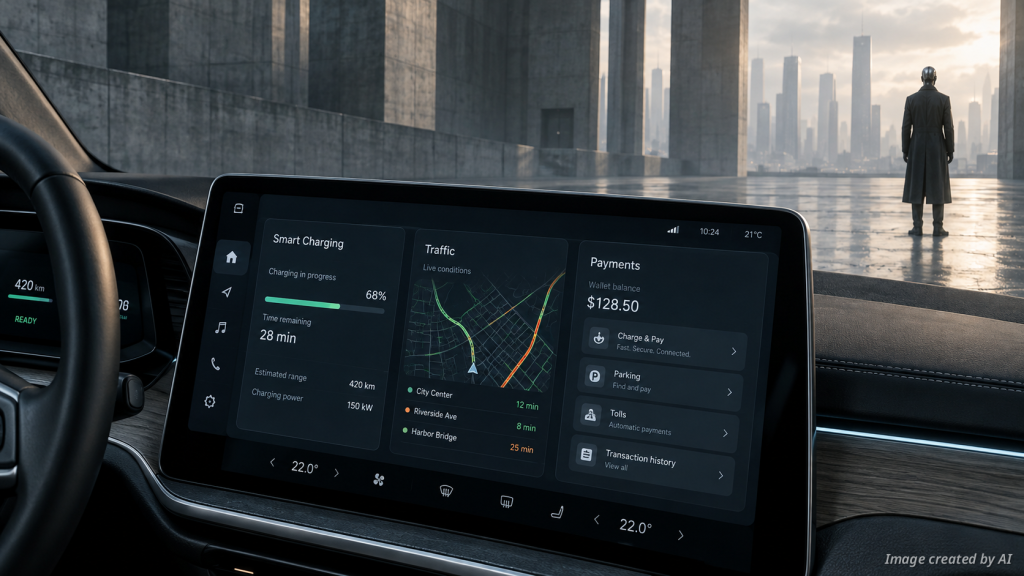
The rise of the software-defined vehicle
Modern EVs function as mobile nodes in a vast IoT network. They communicate constantly with cloud servers to optimize performance and safety [1]. This shift requires robust software architectures that can handle massive data streams efficiently.
Developers are now focusing on cloud-based platforms that enable real-time monitoring. These systems help identify driver behavior and potential hazards instantly. Furthermore, they facilitate seamless integration with infrastructure services like smart charging and parking [1].
Enhancing user experience through smart services
Connectivity is the backbone of modern driver satisfaction. Manufacturers are launching intelligent software packages, such as VF Connect, to elevate the driving experience [2]. These services often include AI-powered virtual assistants and remote vehicle management.
The ability to personalize a vehicle through software updates is a game changer. Users can unlock high-end features long after the initial purchase [2]. This approach allows developers to iterate on features continuously based on user feedback.
Integrating third-party ecosystems
Connectivity extends beyond the vehicle itself. It bridges the gap between automotive technology and external digital ecosystems. For instance, integrating e-banking features into various software platforms has become a standard for efficiency [5]. Similar principles apply to EVs, where secure payment gateways for charging and tolls are essential.
Developers must ensure that these integrations are secure and seamless. By leveraging electric vehicles and smart grids: the future of energy infrastructure, the industry can create a more cohesive energy management system. This interoperability is vital for the widespread adoption of green transport.
Data-driven development and community building
Software developers often use specialized tools to manage and grow user communities. While some tools focus on community engagement for ride-sharing, the underlying goal remains the same: connecting users to services [3]. In the EV sector, this data helps developers understand charging patterns and infrastructure needs.
Effective data utilization leads to better product design. It allows companies to anticipate maintenance needs and optimize traffic flow [1]. Consequently, developers must prioritize data security and privacy in every application.
The role of financial connectivity
Financial services are increasingly embedded in software solutions. We see this in electronic banking integrations across various enterprise applications [4]. Similarly, EVs are becoming financial hubs on wheels.
Drivers expect to pay for services directly through their vehicle's interface. This includes automatic payments for charging, parking, and toll roads [1]. Building these secure transaction layers is a primary challenge for modern IoT developers.
Future trends in connected mobility
The future of connected EVs lies in AI and edge computing. As vehicles become more autonomous, the demand for low-latency software will surge. Developers must focus on creating resilient systems that function reliably even with intermittent connectivity.
Furthermore, the integration of digital technology for tracking the lifecycle of electric vehicle components will become standard. This ensures better sustainability and easier maintenance. The synergy between software, hardware, and infrastructure will define the next decade of transportation.
Conclusion
Software and connected services are the heart of modern electric vehicles. They transform the driving experience from a simple commute into a personalized, intelligent journey. By focusing on cloud integration, secure financial services, and AI-driven features, developers can lead the charge in the green energy revolution.
More Information
- Cloud-wise services: A platform that connects vehicles to cloud-based data, enabling real-time monitoring of traffic, vehicle health, and automated payments for services like charging and parking [1].
- VF Connect: A smart software service package for electric vehicles that provides AI-powered virtual assistants, remote monitoring, and an entertainment ecosystem to enhance the user experience [2].
- Community engagement software: Digital tools designed to manage and grow user groups, often used in ride-sharing or transport services to connect drivers and passengers efficiently [3].
- Electronic banking integration: A software feature that allows direct connection between management systems and banking platforms, facilitating secure and automated financial transactions [4].
- ERP connectivity: The capability of enterprise resource planning software to integrate with external systems, such as e-banking, to streamline business operations and financial management [5].