The automotive industry is undergoing a radical transformation. Vehicles are no longer just modes of transportation. They are becoming sophisticated digital living spaces. As electric vehicles (EVs) gain popularity, the demand for immersive in-car experiences is skyrocketing.
Developers now face a unique challenge. They must integrate high-performance gaming and entertainment systems directly into the vehicle architecture. This shift requires a deep understanding of both hardware constraints and user experience design.
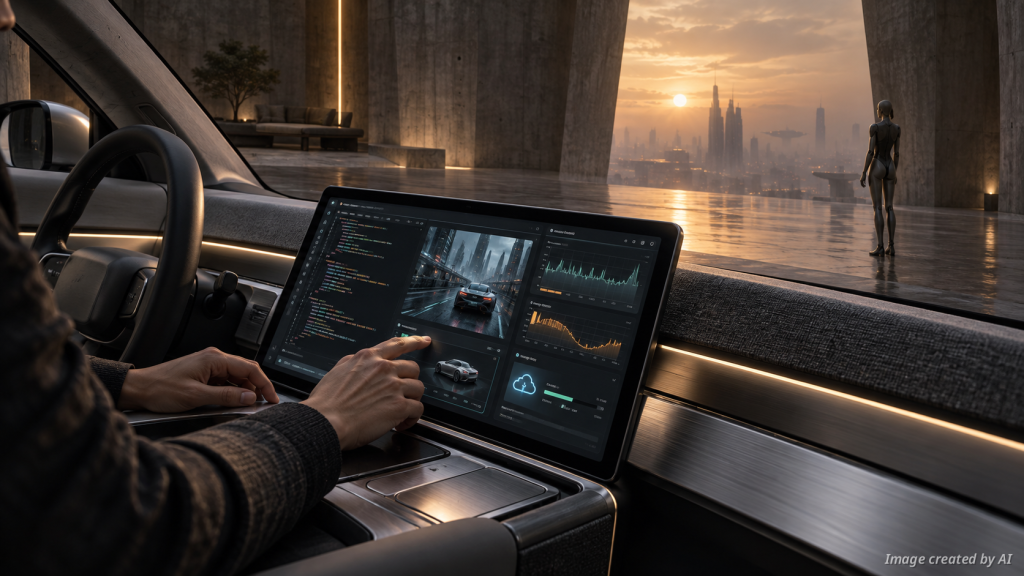
Transforming the cabin into a digital hub
The global video game market is a massive powerhouse, valued at approximately $220 billion in 2023 [3]. This growth is driving consumer expectations for high-quality entertainment inside the car. Forward-thinking manufacturers are already responding to this trend.
For instance, Hyundai has integrated its IONIQ lineup into popular racing games like Asphalt Legends Unite and KartRider Rush+ [1]. By visiting Hyundai's gaming portal, developers can see how brands bridge the gap between virtual and real-world driving experiences.
Other companies are taking a hardware-first approach. The Indi One, for example, features a built-in gaming computer designed for streaming and gameplay [2]. This development highlights the shift toward software and connected services in electric vehicles as a core differentiator.
Technical challenges for developers
Integrating gaming into an EV is not as simple as porting a mobile app. Developers must balance power consumption with performance. The vehicle's battery must support both driving range and high-end entertainment systems simultaneously.
Furthermore, hardware must be robust enough to withstand the automotive environment. Heat management and vibration resistance are critical factors. You can learn more about how to optimize these systems through edge AI in electric vehicles: transforming automotive intelligence.
Processors are getting faster, which improves graphics and the overall gaming experience [4]. However, developers must ensure that these powerful chips do not compromise the vehicle's primary safety systems. Reliability remains the top priority in automotive software engineering.
The role of connectivity and content
Gaming is just one piece of the entertainment puzzle. Streaming services, social media, and interactive media are all converging in the cockpit. The German Games Industry Association highlights how interactive entertainment is becoming a cornerstone of modern digital life [5].
Developers should focus on creating seamless ecosystems. Users expect their personal profiles and game progress to sync across devices. This requires cloud-native architecture that can handle low-latency data transmission.
The industry is also looking at the next dimension of gaming. This includes augmented reality (AR) and virtual reality (VR) integrations [4]. These technologies could turn a charging stop into an immersive entertainment session. You can explore further industry trends at EY's insights on the future of gaming.
Strategies for success
To succeed in this competitive space, developers must prioritize user-centric design. The interface must be intuitive and safe for use during stationary periods. Consider these strategies:
- Optimize for low-latency streaming to ensure smooth gameplay.
- Implement robust cybersecurity measures to protect user data.
- Design modular software that allows for over-the-air (OTA) updates.
- Collaborate with established gaming studios to bring high-quality titles to the dashboard.
The market for video games and e-sports continues to grow rapidly [3]. By aligning with these trends, infotainment developers can turn the car cabin into a premium entertainment destination. The future of the automotive experience is clearly digital, interactive, and highly engaging.
More Information
- IONIQ lineup: A series of electric vehicles by Hyundai that features advanced infotainment systems and has been integrated into global racing simulation games to engage younger demographics.
- Indi One: An all-electric vehicle model that includes a dedicated, built-in gaming computer, allowing passengers to play games and stream content directly through the car's interface.
- EV/Revenue multiple: A financial metric used to value companies by comparing their total enterprise value to their annual revenue, often used to assess growth in the tech and gaming sectors.
- Next dimension of gaming: A term referring to the evolution of gaming through emerging technologies like augmented reality, virtual reality, and advanced cloud-based processing power.
- Gamescom: A major international trade fair for interactive entertainment and video games, serving as a hub for industry trends and technological advancements in the gaming space.