The automotive industry is currently undergoing a massive shift toward electrification. Consumers often express concerns regarding range anxiety when considering a transition to electric vehicles [1]. The introduction of the VF Wild concept addresses these concerns through advanced engineering.
This vehicle utilizes a sophisticated powertrain architecture known as EREV. This technology combines the benefits of electric mobility with the convenience of traditional refueling [1]. By integrating these systems, the vehicle achieves an impressive range of nearly 1,000 kilometers.
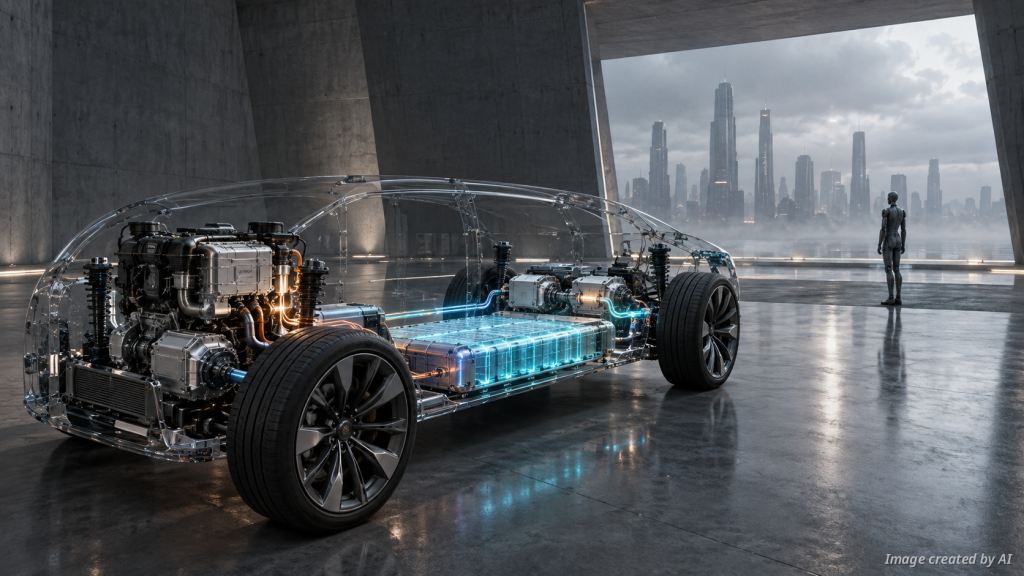
Understanding the EREV architecture
EREV stands for Extended Range Electric Vehicle. Unlike a standard battery electric vehicle, an EREV uses a small internal combustion engine as a generator [1]. This engine does not directly drive the wheels. Instead, it provides power to the battery pack while the vehicle is in motion.
This innovative powertrain configuration ensures that the electric motor always has a steady supply of energy. Drivers can enjoy the quiet, instant torque of an electric motor without worrying about finding a charging station every few hundred kilometers. This is a significant leap forward for EV design and production.
How the system extends range
The primary advantage of the EREV system is its flexibility. When the battery level drops, the onboard gasoline engine activates automatically to act as a range extender. This allows the vehicle to travel long distances without needing to stop for a full recharge [1].
Furthermore, the efficiency of this system is optimized through smart software. The vehicle constantly monitors energy consumption and adjusts the generator’s output accordingly. This AI-driven range management ensures that every drop of fuel and every watt of electricity is used effectively.
Comparing EREV to traditional EVs
Traditional electric vehicles rely solely on large battery packs to determine their range. While effective for urban commuting, these vehicles often struggle with long-distance travel due to charging infrastructure limitations [2]. The EREV model provides a bridge for users who are not yet ready to rely entirely on charging networks.
Many industry experts, including those analyzing modern automotive innovations, see this as a game-changer. It combines the environmental benefits of electric driving with the logistical freedom of a gas-powered car. It effectively removes the primary barrier to mass adoption.
Technological integration and future trends
The development of the VF Wild is part of a broader trend in the automotive sector. Manufacturers are now focusing on hybridizing technologies to meet diverse consumer needs [2]. This includes advancements in battery chemistry and energy recovery systems.
Even in educational contexts, students are learning about the importance of advanced technology in transportation [3]. From autonomous driving to efficient power management, the field is evolving rapidly. The VF Wild serves as a prime example of this progress.
Safety and performance considerations
Performance remains a priority for the VF Wild. Even with a range extender, the vehicle maintains the high-performance characteristics of an electric powertrain. The integration of modern battery technology, similar to that found in advanced electric bus platforms, ensures reliability [4].
Safety systems are also enhanced by the vehicle’s electronic architecture. Advanced sensors and control units manage the interaction between the engine and the motor. This creates a seamless driving experience that feels consistent regardless of the power source.
The impact on consumer behavior
The ability to travel 1,000km changes how consumers view electric vehicles. It makes the prospect of road trips and long-distance commuting much more appealing. As seen in online community discussions, users are always looking for ways to optimize their tools and vehicles [5].
By providing a solution that fits into existing infrastructure, the VF Wild encourages more people to switch to electric. It proves that sustainability does not have to come at the cost of convenience. This balance is essential for the future of global mobility.
Conclusion
The technology enabling the VF Wild to reach a 1,000km range is a testament to engineering ingenuity. By leveraging the EREV architecture, the vehicle successfully combines the best of two worlds. It provides a practical, efficient, and reliable solution for modern drivers.
As the automotive industry continues to innovate, we can expect to see more vehicles adopting these flexible power systems. The VF Wild is not just a concept; it is a vision of how we will travel in the coming years. It represents a significant step toward a cleaner and more connected future.
More Information
- EREV (Extended Range Electric Vehicle): A vehicle type that uses an electric motor for propulsion while utilizing a small internal combustion engine solely as a generator to charge the battery and extend range.
- Range anxiety: The fear or concern that an electric vehicle will run out of power before reaching a destination or a charging station, which is a major hurdle for EV adoption.
- Powertrain: The group of components in a vehicle that generate power and deliver it to the road surface, including the engine, motor, transmission, and drive shafts.
- Battery chemistry: The study and application of materials within a battery cell that determine its energy density, safety, charging speed, and overall lifespan in electric vehicles.
- Energy recovery system: Technology that captures kinetic energy during braking or deceleration and converts it back into electricity to recharge the battery, increasing overall vehicle efficiency.