The electric vehicle revolution is moving beyond simple range improvements. Today, owners prioritize seamless integration into their daily lives. Wireless charging technology for electric vehicles promises to make energy replenishment as effortless as charging a smartphone [2].
Imagine pulling into your garage and simply walking away. Your car begins charging automatically without the need for heavy cables or messy plugs. This emerging technology is set to redefine user convenience globally.
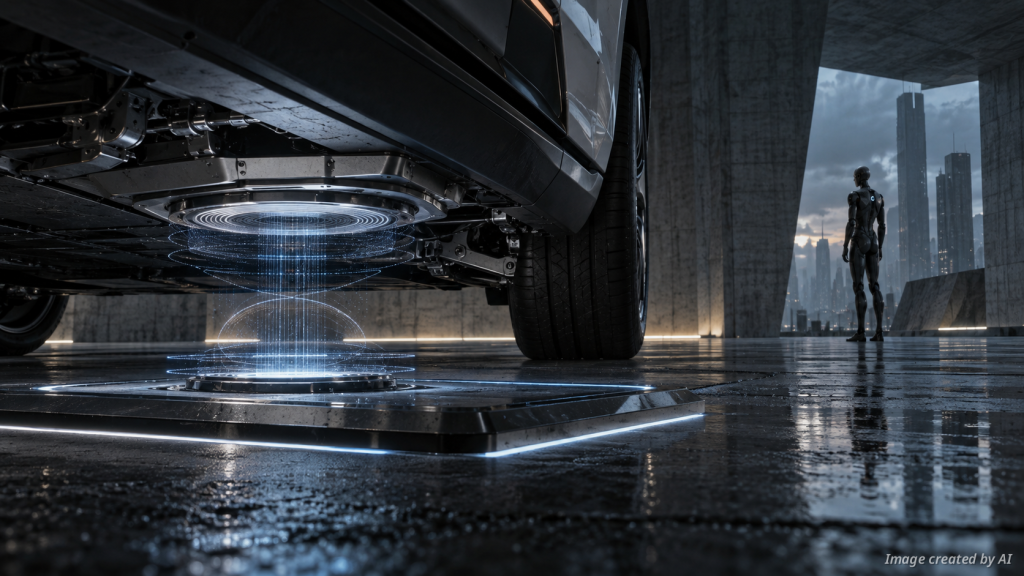
How wireless charging works
Wireless charging relies on magnetic resonance or induction. A transmitter pad sits on the ground, while a receiver coil is mounted under the vehicle. When the two align, energy transfers across the air gap [5].
This process eliminates the physical friction of traditional charging. Users no longer struggle with heavy, tangled cables in bad weather. It is a transformative step for the automotive industry.
Precision and ease of use
One common concern is parking accuracy. Manufacturers are solving this with advanced driver assistance systems. Cameras and sensors guide the driver to the perfect spot on the pad [2].
Some systems even use air suspension to lower the vehicle. This brings the receiver closer to the transmitter for maximum efficiency. It makes the entire process feel like a high-tech, automated experience.
Performance and efficiency
Critics often argue that wireless charging is slow or inefficient. However, modern systems are proving these skeptics wrong. Current technology can reach up to 11 kW of power [2].
This speed matches most standard home AC chargers. Efficiency rates now hover around 90 percent. This creates a performance profile nearly identical to plug-in charging [2].
The future of charging on the go
The vision extends beyond home charging. Researchers are actively developing dynamic wireless charging systems [4]. These systems would charge vehicles while they move along highways.
This could drastically reduce the need for large battery packs. It would also extend the range of electric vehicles indefinitely. Such innovative infrastructure represents the next frontier of mobility.
Global adoption and testing
Leading automakers are already running real-world trials. Volvo has begun testing wireless charging in urban environments like Gothenburg [1]. These tests prove that the technology is safe and scalable [1].
Porsche is also preparing to integrate this tech into upcoming models like the Cayenne EV [2]. As regulations tighten, these companies are investing heavily in wireless solutions to meet emission goals [1].
Why comfort matters for electric vehicle owners
Electric vehicle owners value technology that simplifies their lives. Designing intuitive and user-friendly UX UI for electric vehicles is essential for mass adoption. Wireless charging is the ultimate expression of this user-centric design philosophy.
It removes the "chore" aspect of owning an electric car. Instead of managing energy, the car manages itself. This creates a premium experience that aligns with the expectations of modern luxury buyers.
Safety and reliability
Safety is paramount for any high-voltage system. Wireless pads are designed to detect foreign objects. If a metal object is detected, the system shuts down immediately to prevent overheating.
Weather resistance is another key feature. These systems work in rain, snow, and extreme temperatures. They are built to be as durable as the vehicles they support [1].
Integrating with smart home ecosystems
Wireless charging fits perfectly into the smart home. It can be programmed to charge during off-peak hours. This saves money and reduces strain on the electrical grid.
With high-performance energy management software for electric vehicles, the charging process becomes intelligent. Your home and car communicate to optimize energy usage in real time.
Conclusion
Wireless charging is no longer a futuristic dream. It is a practical, efficient, and highly convenient reality. As major brands continue to innovate, we will see this technology become standard.
For those who love comfort, the future of electric driving is wireless. It is time to embrace a world where charging is truly effortless.
More Information
- Inductive charging: A method of transferring power between two objects through an electromagnetic field, allowing for charging without physical contact between the vehicle and the power source.
- Magnetic resonance: A sophisticated wireless power transfer technique that allows for higher efficiency and greater distance between the transmitter and receiver coils compared to basic induction.
- Dynamic charging: An advanced infrastructure concept where wireless power transfer pads are embedded into road surfaces, enabling electric vehicles to charge while driving.
- Receiver coil: The component installed on the underside of an electric vehicle that captures the electromagnetic energy emitted by the ground-based transmitter pad to charge the battery.
- Transmitter pad: The stationary unit installed on the ground, typically in a garage or parking space, that generates the magnetic field required to transfer energy to the vehicle.